
The next pipe on the table came to me in August of 2021 which I call the Lakewood Lot of 14. The Lakewood Lot came from a pipe man selling his collection because of health reasons. Ron had several pipes in his collection that I would consider higher shelf pipes – several were Freehands and most of these were of Danish origin. My  wife and I visited Ron to have a closer look at the pipes he wanted to sell. We had a great visit learning more about Ron as we talked. We discovered that Ron’s background was in the intelligence service. He served in the AirForce then with a government organization which will remain unnamed 😊. His family is in eastern US, but settled in Denver area after a government job brought him West. We learned that he goes to a Baptist church nearby after my wife saw his well-worn NIV Bible on the end table and devotionals. He shared that he had had a rough background but was thankful to the Lord for his life now. I discovered also that we shared some strong affinities – Ron loves single malts – Glenmorangie is his favorite (like mine), and he has dirty martinis – like me! Clancy books on the shelves 🙂 as do I.
Ron and I came to a mutually beneficial agreement and the Lot of 14 joined another Lot of 6 I acquired from Ron earlier. Here is the Lot when I got them home and spread them out on the worktable. From the worktable, they were placed online in the For “Pipe Dreamers” ONLY! collection for pipe men and women to commission benefiting the Daughters of Bulgaria – helping women and girls who have been trafficked and sexually exploited. Here is the Lakewood Lot of 14.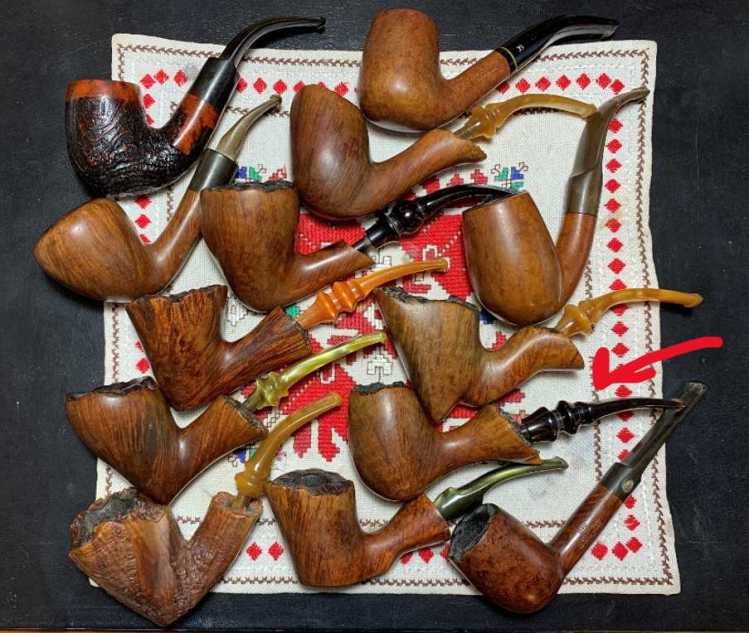 One of the Freehands marked above got John’s attention and he reached out to me to find out more. In our communications I found out that John is from Eastern Pennsylvania and works for a Medicare/Medicaid company helping to process claims. John and his wife have two boys in grade school, and she works as a traveling nurse. John also shared that they will be converting an outdoor patio into his office, and he hopes that this will be a fine place to smoke a pipe – a worthy hope! John is developing his collection and wanted to add the Freehand. The Freehand that John commissioned has no branding, but I indicated to him that it had the looks of a Danish made pipe – my guess. Here are pictures of the unbranded Freehand:

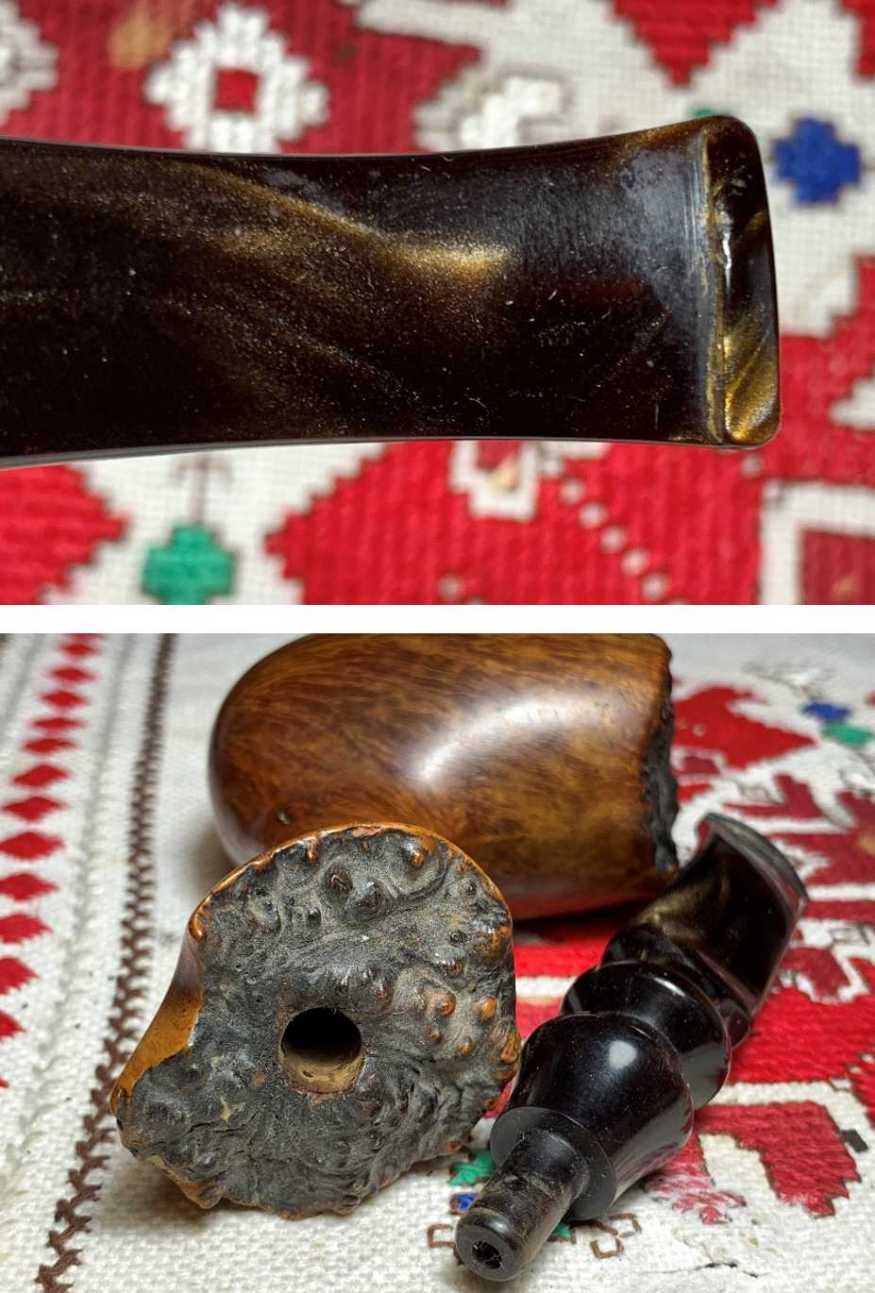 If one does not have a Freehand in one’s collection, it’s a good pipe to add! Freehands generally have larger bowls for longer times of fellowship and contemplation. The Freehand’s dimensions are Length: 6 5/16 inches, Height: 2 1/4 inches, Plateau width: 1 1/8 inches, Chamber width: 7/8 inches, Chamber depth: 1 5/8 inches. This Freehand has a brown and gold marbled acrylic stem which when refreshed, will have more pop. Bill Burney’s descriptions of pipe shapes is helpful (https://pipedia.org/wiki/Pipe_Shapes). This panel gives his description of what makes Freehands unique.
 The description above describes perhaps the hallmark characteristic that defines the Freestyle – “Follow the Grain”. This philosophy of pipe craftsmanship most believe was pioneered by Danish pipe maker, Preben Holm who allowed the grain in a block of briar define the shape that would emerge. We don’t know if the Freehand on the worktable is from Denmark, but we know that the design is.
Taking a closer look at the Freehand on the worktable, the cake build up in the chamber is moderate and will be removed. The plateau looks good except for some lava grime buildup. There is a blemish on the left side of the shank that needs to be addressed.
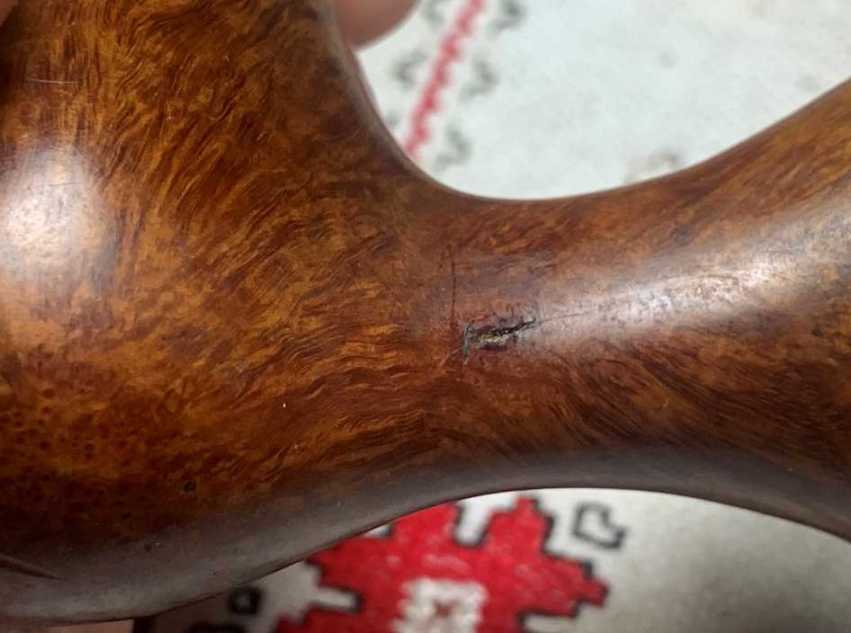 There are also some dents/cuts on the heel that look like the pipe spent some time in a coffee can.
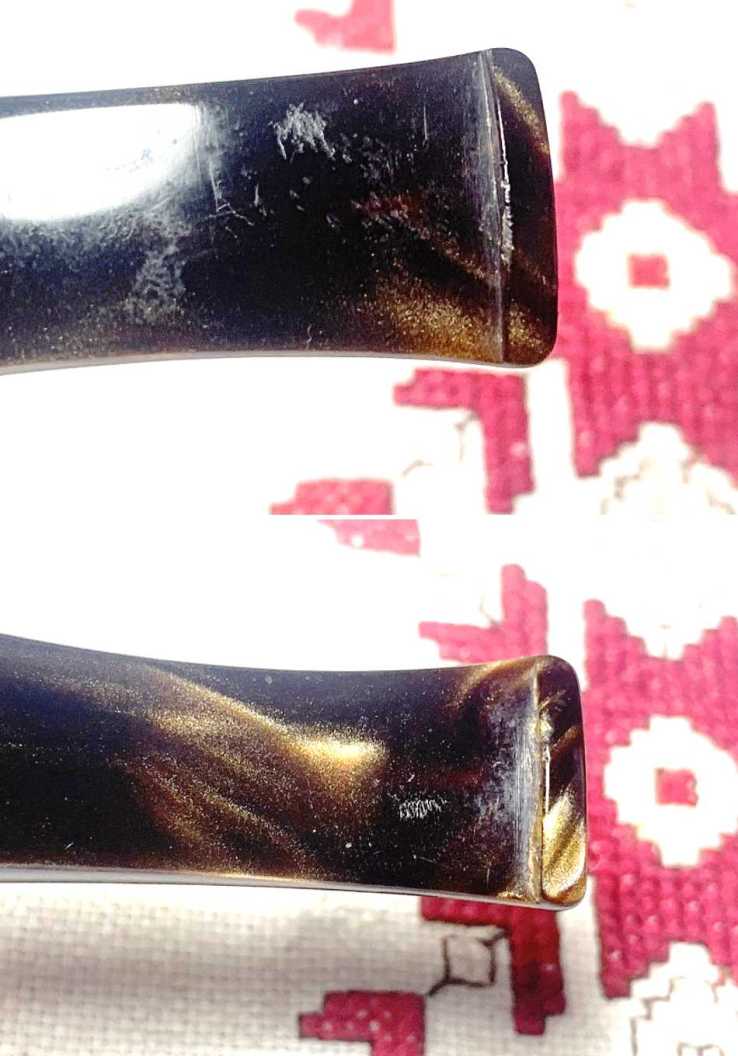
 The acrylic stem has scratching and tooth chatter on the upper and lower bit. The picture is lightened to make the issues more visible.
 The last issue – and I’m not sure yet that it’s an issue, but the wear of the tenon in the mortise has caused the fancy stem facing to butt against the shank facing. The result is that the stem doesn’t tighten and seat like it should. Yes, I’ve decided that this is an issue that needs addressing as well.
 To begin the restoration of this unbranded Freehand, the acrylic stem’s airway is first cleaned with isopropyl 99%. One cleaner was sufficient.
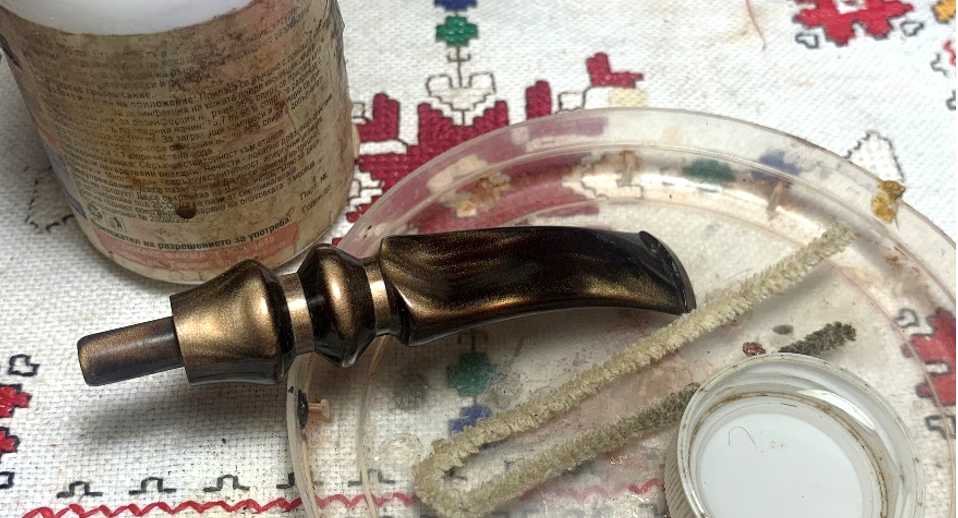 The upper and lower bit have tooth chatter that can be seen in the acrylic.
 To address the chatter, 220 grade paper sands both upper and lower bit.
 The 220 grade paper is followed by sanding with 470 paper only on the flat part of the stem – not on the ‘bubbles’.
  Following the 470 paper, the stem is wet sanded with 600 grade paper and then 0000 grade steel wool is applied – both the 600 and steel wool only sand the flat part of the stem.
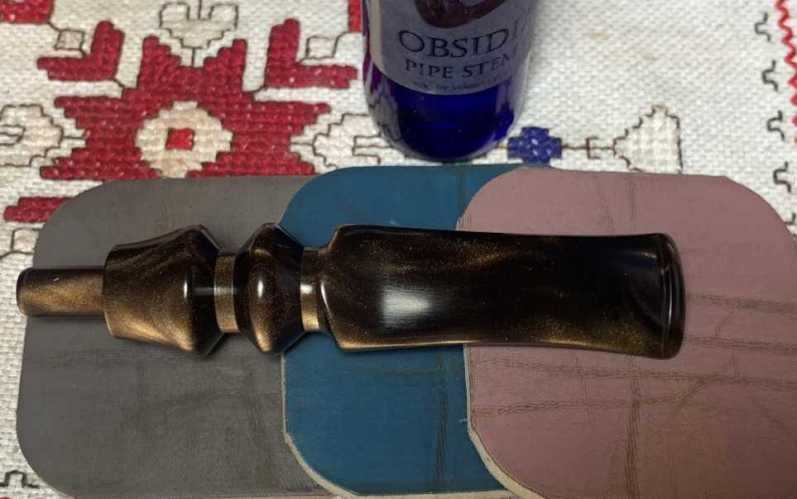
 The sanding is expanded now to the entire stem using micromesh pads. With pads 1500 to 2400 the stem is wet sanded. Following the sanding of these 3 pads, Obsidian Oil is applied to condition the acrylic. After the first 3 pads, the sanding continues with pads 3200 to 4000 and 6000 to 12000. Between each of these pads, Obsidian Oil is applied to condition the stem and I believe it gives more traction to the following pads. The stem looks great after the micromesh process.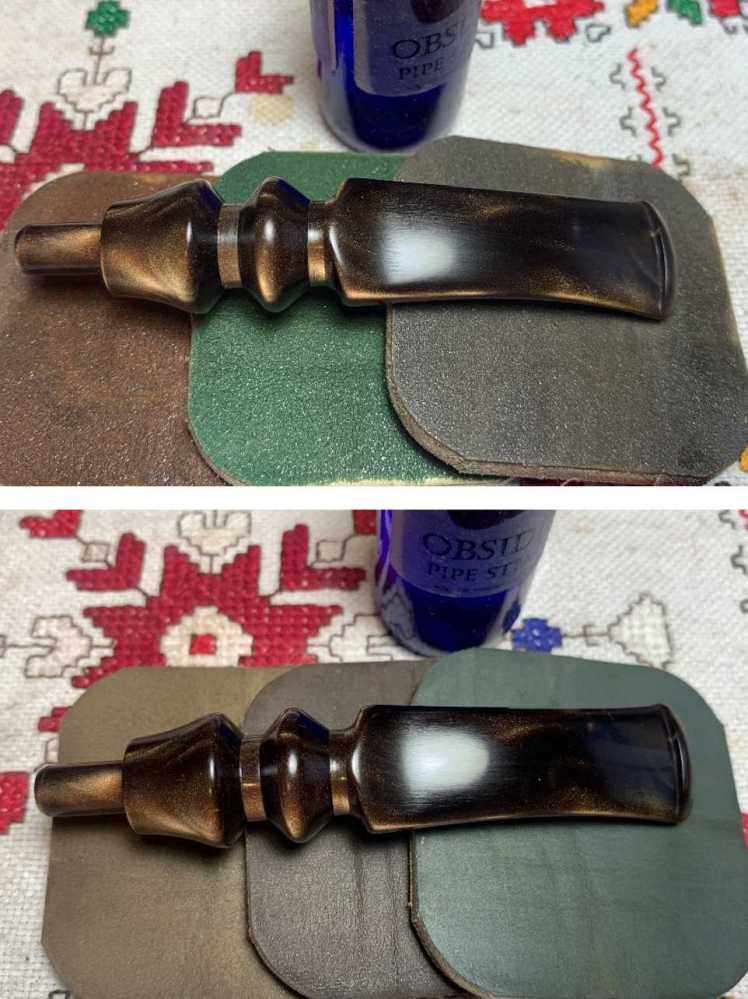
 The stem is put to the side for now and attention is turned to the stummel. The chamber has cake build up and the cleaning of the stummel starts with reaming the chamber.
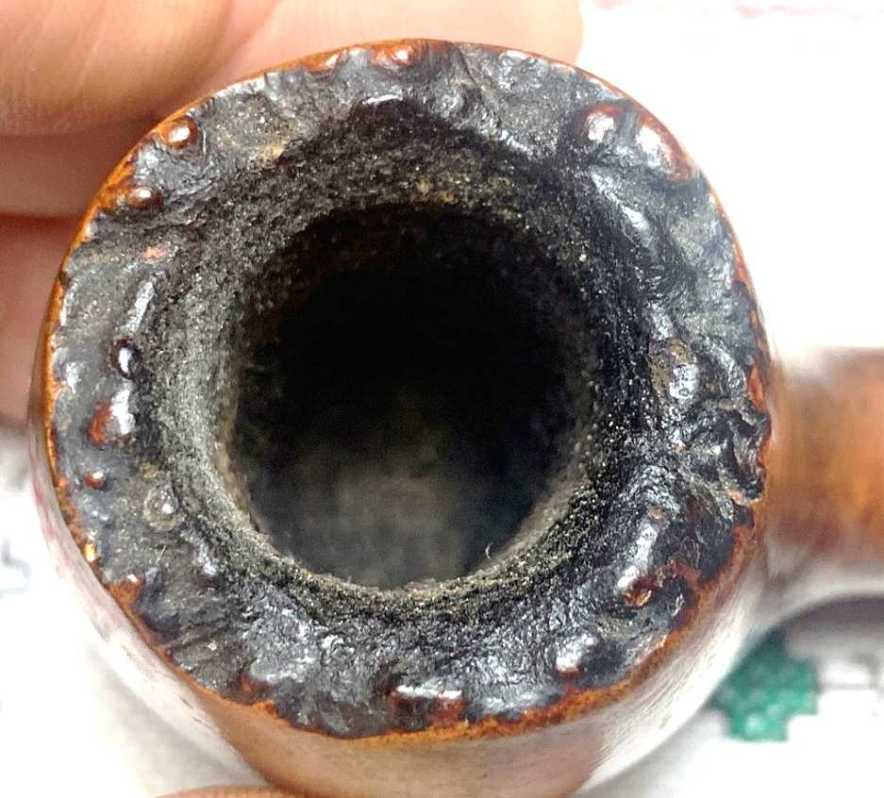 The reaming is done with the Pipnet Reaming Kit, but I discover that the floor of the chamber was deeper than the Pipnet blade heads could navigate without the reaming tool handle to collide with the plateau. Three blade heads reamed the chamber partially and then the Kleen Reem Pipe Tool was put into action. I found this old tool in a flea market in Kentucky on one of our trips east.
 The Kleen Reem Tool reached down to the chamber floor clearing away more of the carbon cake.
 Then, the chamber walls are scraped with the Savinelli Fitsall Tool. It does a good job reaching down to the bottom and navigating the contours of the floor.
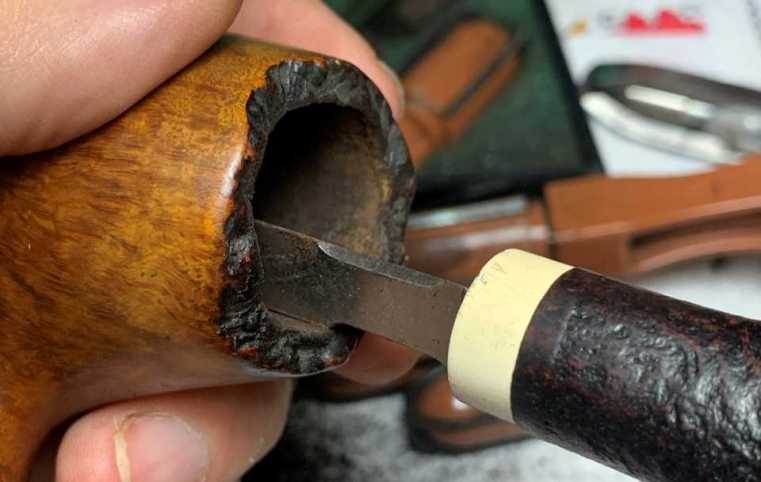 To clear away the last vestiges of carbon, 220 sanding paper wrapped around a Sharpie Pen sands the chamber.
 A pretty large pile of carbon dust piles on the paper towel. I always use paper towel while reaming to help in cleanup.
 An inspection of the chamber reveals healthy briar. I look for signs of heating problems but see none.
 Next, the internal mortise and airway are cleaned with cotton buds and pipe cleaners moistened with isopropyl 99%. A small dental spoon also excavates a lot of gunk by scraping the mortise walls. When the cleaners and buds start emerging lighter, I move on.
 The cleaning of the externals is next. The following few pictures show the grime on the briar and the crud in the plateaus.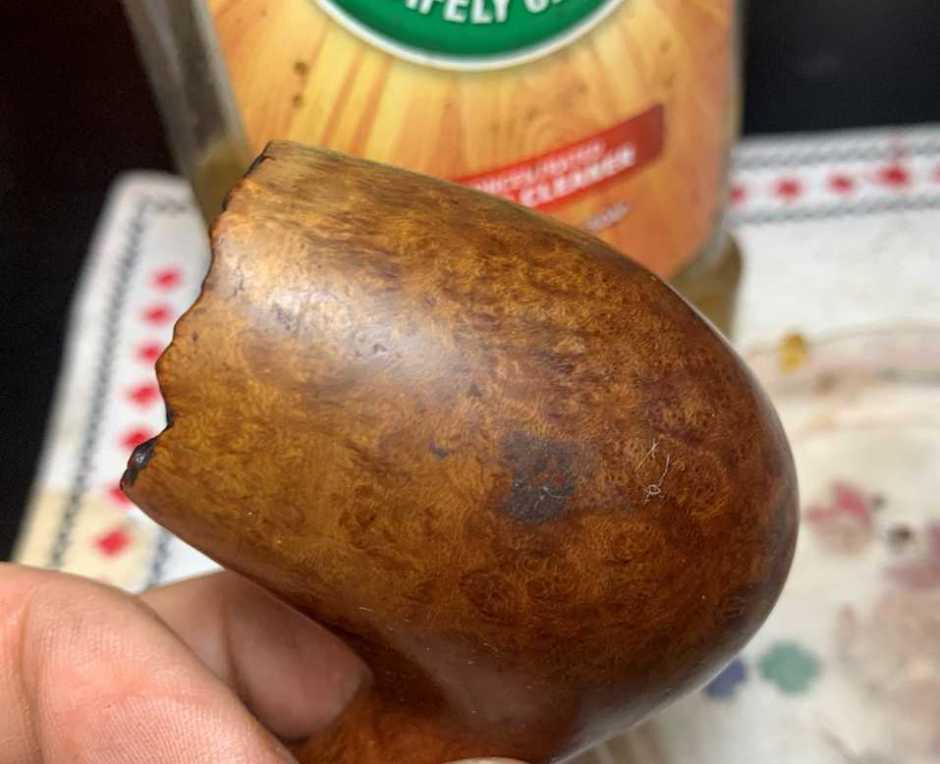
 The external briar surface and plateaus are cleaned using undiluted Murphy’s Oil Soap and cotton pads. Both a bristled toothbrush and a brass wired brush are used to clean the rim plateau. The shank facing is also addressed.
 The stummel is then taken to the sink and hot water with shank brushes scrub the internals using liquid, anti-oil dish washing liquid. After scrubbing, the stummel is thoroughly rinsed and brought back to the worktable.
 The cleaning eroded the black dye over the rim plateau and shank facing. These will need to be refreshed with black dye later.
 With the cleaning complete, the next step is to address the blemishes on the stummel. The first is a dark knotty blemish in the briar on the left side of the shank. A sharp dental probe digs out any loose debris and then the area is cleaned with alcohol.
 To fill the small crevasse, first regular, clear CA glue is spot dropped on the area. While wet, the patch is sprinkled with briar dust to help the patch to blend.
 After the patch cures, a rounded needle file goes to work on filing the patch mound flush with the briar surface.
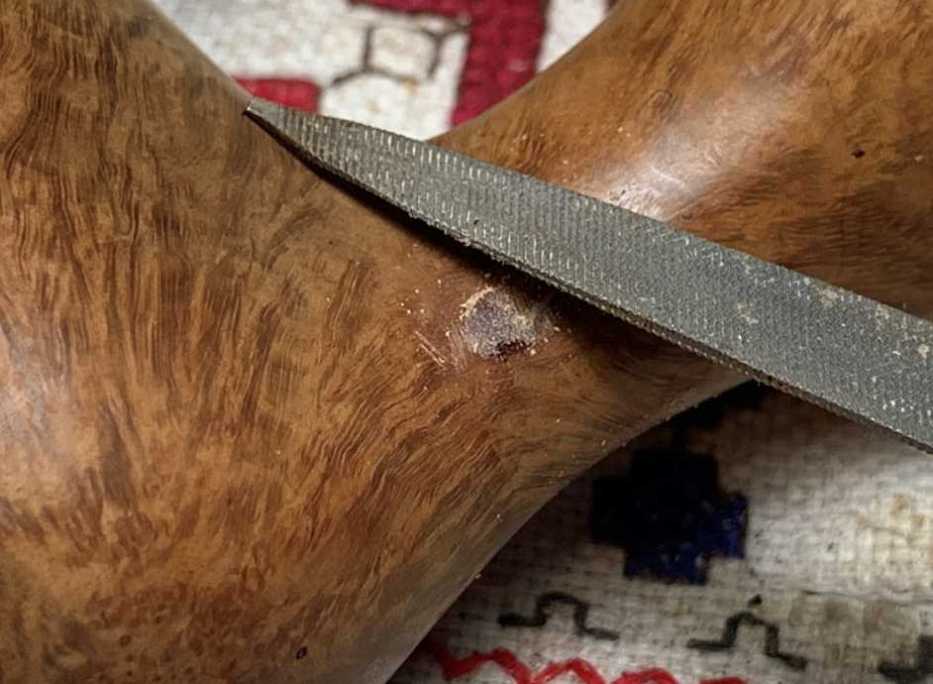 To further smooth and blend, 220 paper sands the patch area. This is then followed by sanding with 470 grade paper.
 Finally, 600 grade paper gives the final main sanding touch. The patch has lightened up. I’ll keep my eye on it to see how detracting this is as the pipe nears completion. I may touch it up with a darker dye stick to better blend the patch.
 There are two significant cuts or dents on the heel of the stummel. The first picture below shows what looks more like a cut, not a dent. Whereas the second I believe is a dent.
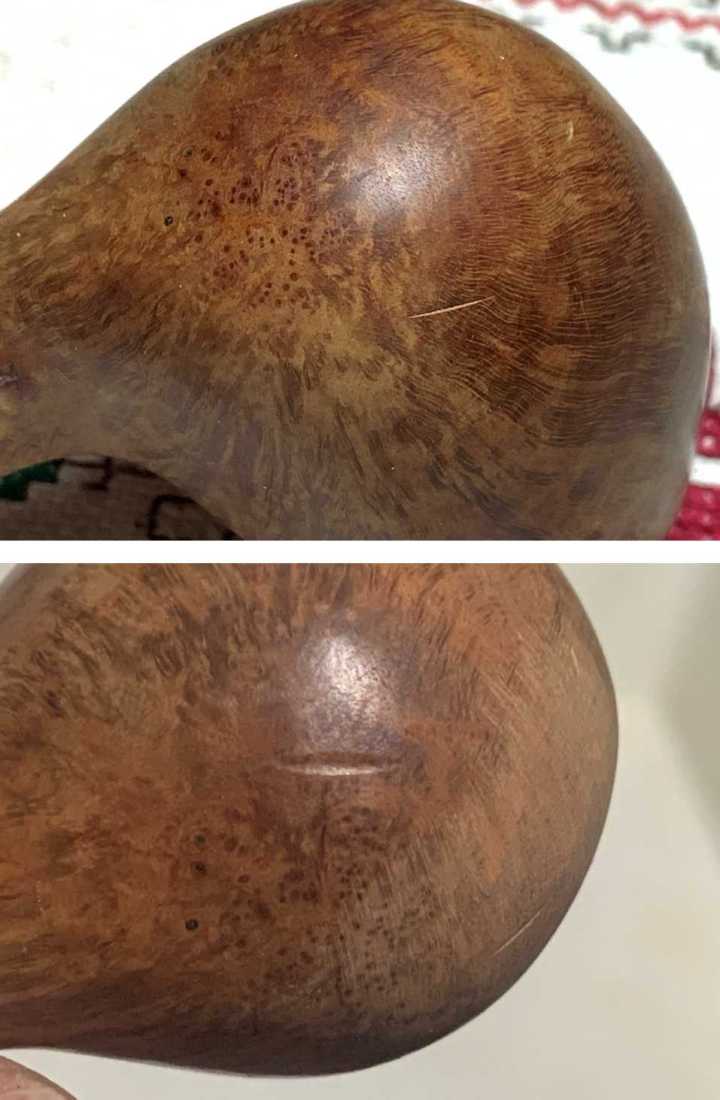 The following picture is of poor quality but what it is showing is a method to help minimize dents on the briar surface. It may not help the cut as much. The approach is to moisten a regular cotton cloth with water and then press the wet cloth against the dent with a hot iron.
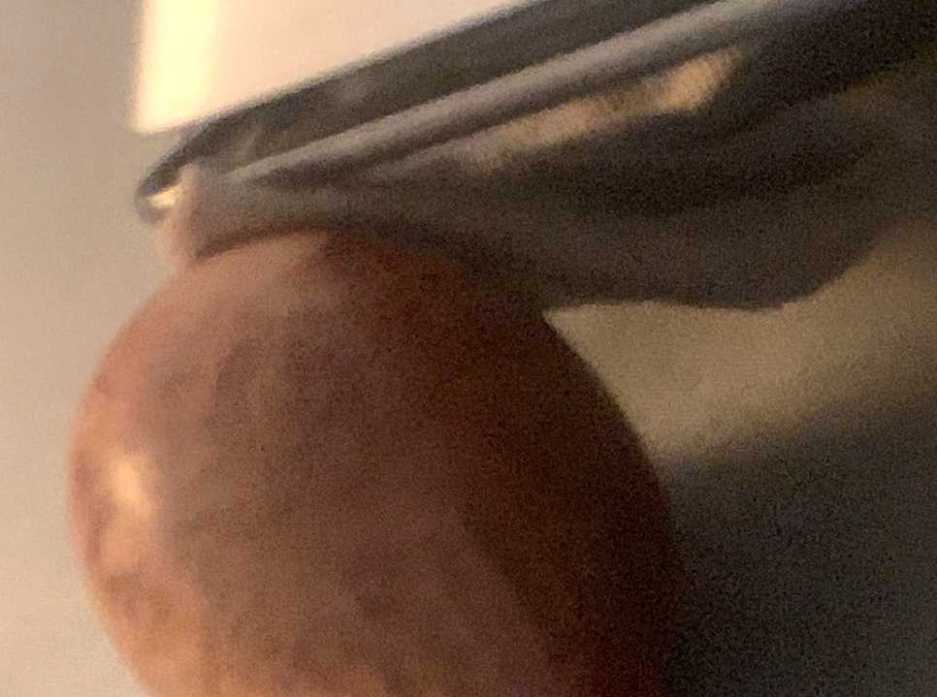 The iron super-heats the moisture in the cloth which turns it to steam. Microscopically, wood is very porous and when wet, it softens and expands. The steam targets the dent, and it causes the dent to lessen. The heating and steaming the dent and the cut is repeated several times.
 The cut pictured in the next picture is minimized and should sand out. The dent in the second picture has definitely shrunk and sanding should deal with it nicely.
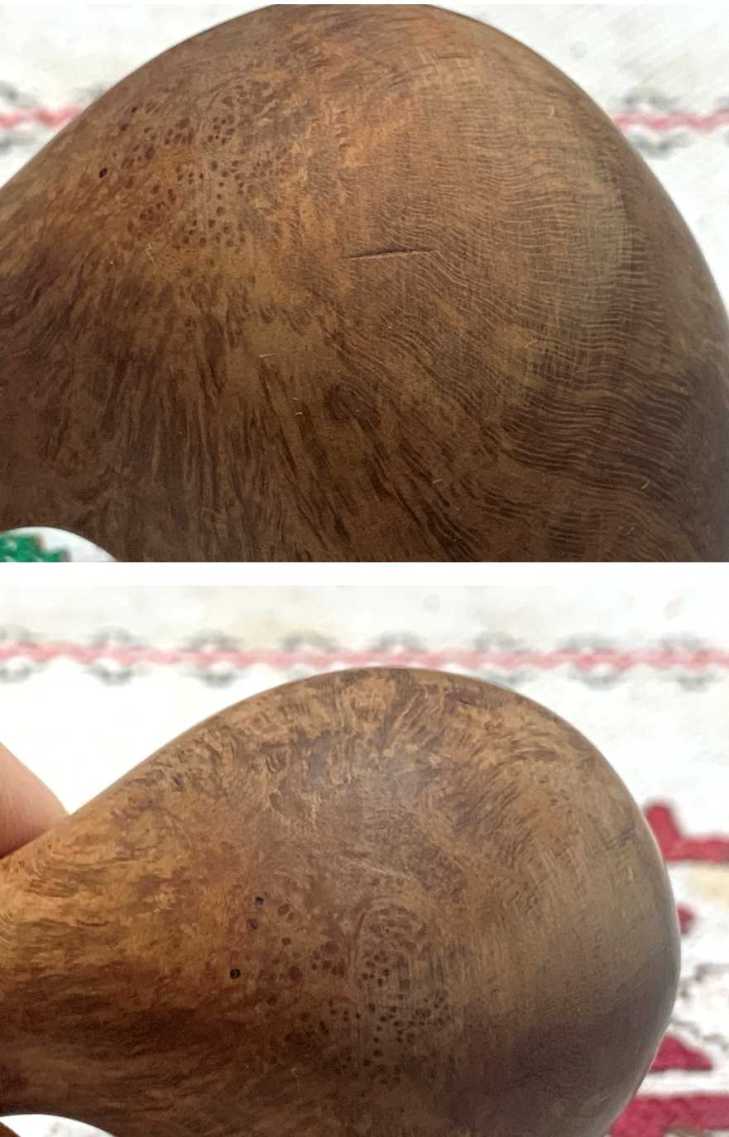 Next, sanding sponges are used to sand the stummel – minus the rim plateau and shank facing. Four sponges are used starting with coarser grades and moving to fine.
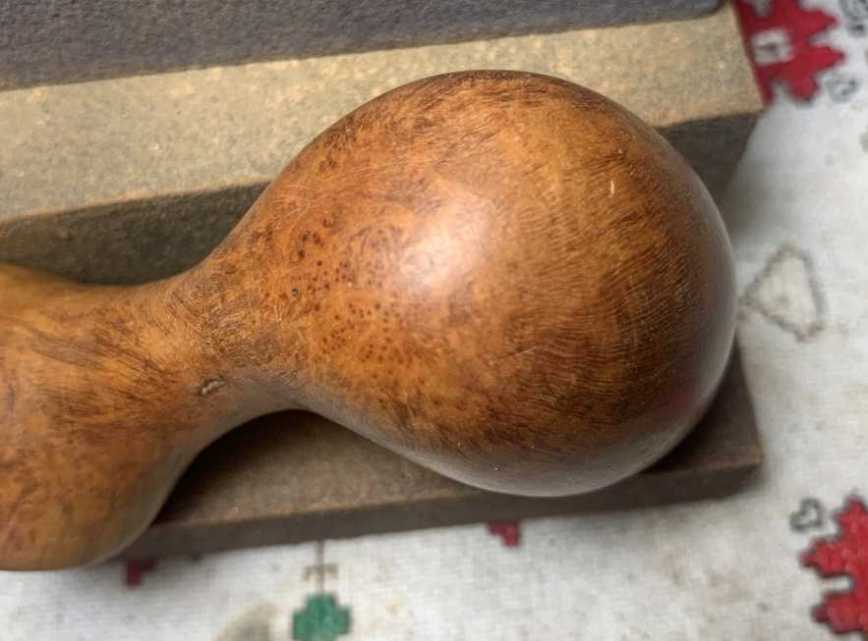 The sanding/polishing continues next with applying micromesh pads to the stummel surface. Pads 1500 to 2400, 3200 to 4000 and 6000 to 12000 are used. Between each pad, the stummel is wiped with a moist cotton cloth to clear away the dust and to give the following pad more sanding traction.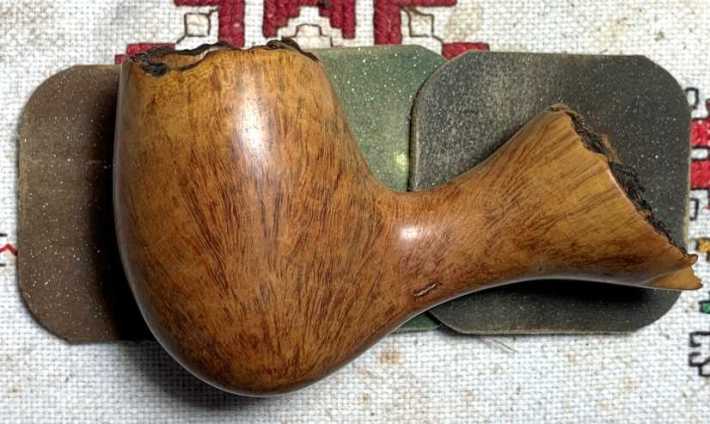
 Through out the sanding process starting with 220 paper through the micromesh pads, the upper edge of the chamber has also been sanded to show what I call, the ‘show off’ grain. Often, Freehands have briar grain reaching up the chamber and is visible to the steward. I enjoy that ‘surprise’ view of briar grain below the plateau while the pipe is in service.
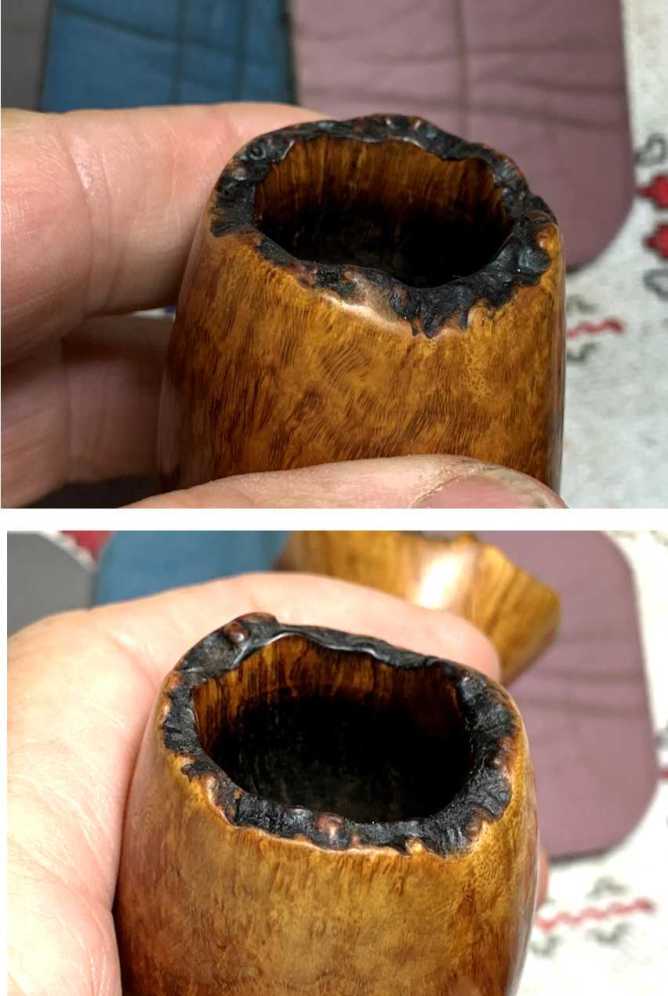 After the micromesh process, the briar has darkened as it normally does. The natural briar ‘shine’ starts coming out more. However, what has emerged is something that I don’t like. The pictures below show that the extremities of the upper bowl and shank are a lighter shade than the base of the stummel. A possible reason for this is that there was a thin original finish, and the lighter portions are where the finish has eroded through cleaning etc. That’s a guess.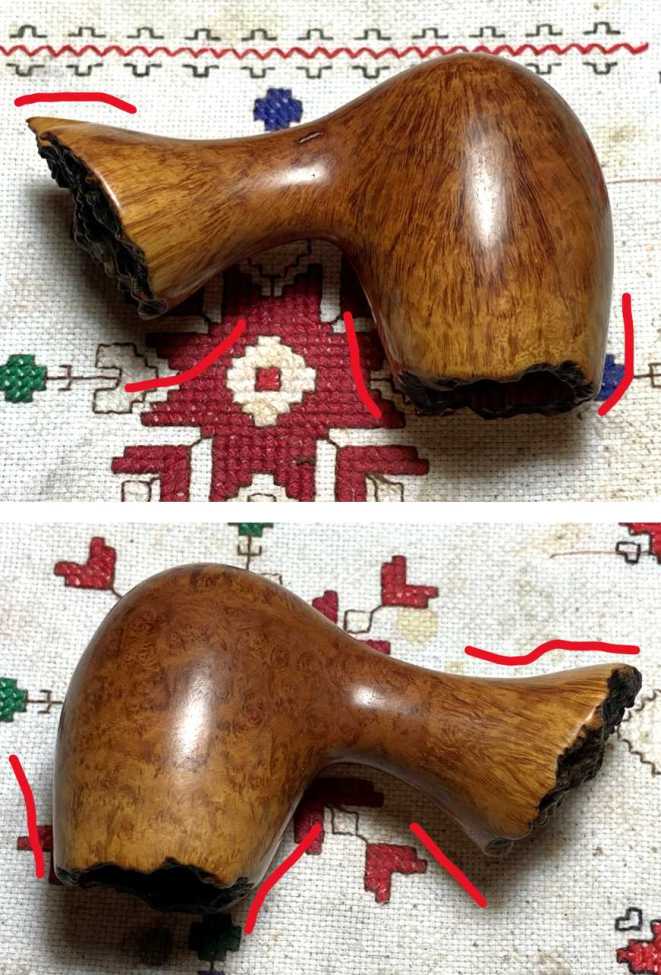
To even out the shades on the stummel, alcohol is first used to wipe the stummel to remove excess dye. This didn’t do anything. Next, acetone was used with a cotton pad, and this did the trick. There definitely were remnants of old finish that were clinging to the briar. The picture below shows the color of the dye on the cotton pad and less of a contrast with changing shades. After scrubbing with the acetone, a difference in shading is still evident – lessened but still there.
 As I look at the briar grain in the pictures above and the one below, the grain seems to be dull, tired, and subdued to me. There is some expressive grain on this Freehand, but it doesn’t pop the way I like it.
 To bring out the grain more, but keep the finish hue light, I decide to apply light brown dye as an undercoat – perhaps a bit more subdued than dark brown or black would be. This undercoat will then be removed except for what is absorbed by the grain. At that point, I will see what the stummel looks like. It could mean only the light brown is needed, but my intent is to then apply a light tan overcoat and see how it goes!
 First, the undercoat. The stummel is heated with the hot air gun which expands the grain helping it to be more receptive to receiving the dye pigment.
 Using Fiebing’s Light Brown Leather Dye, a folded pipe cleaner paints the dye on a patch of the Freehand stummel and then the wet aniline dye is ignited with the candle to ‘flame’ it. The alcohol in the dye combusts and burns off leaving behind the pigmentation in the briar. This painting and flaming process is repeated until the entire stummel has been covered. The process then is repeated for a second round over the stummel to make sure the dye has been applied over the entire surface.
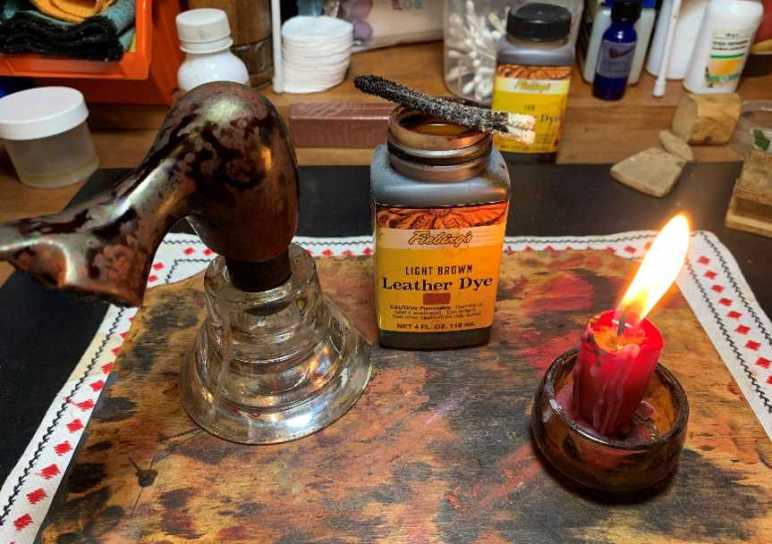 The newly dyed stummel is then put to the side to allow the dye to settle in before ‘unwrapping it’. It sits overnight.
 The next morning, it’s time to unwrap the crusted fired stummel. With a more abrasive felt buffing wheel mounted onto the rotary tool, the speed is set at about 40% full power. Brown Tripoli is then applied to the briar surface. Brown Tripoli is a more abrasive compound and with the combination of this and the felt wheel, the crusted wrapping is plowed off.
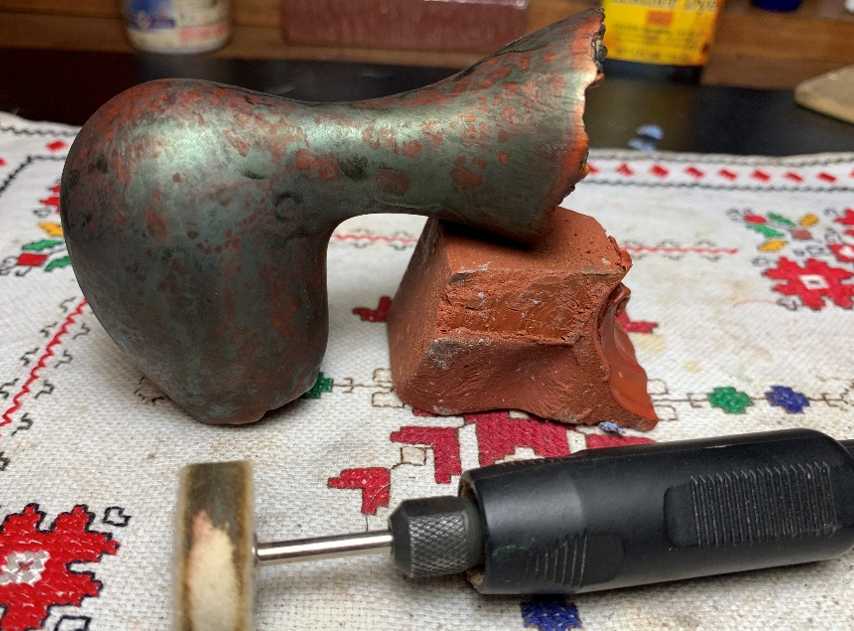 A few pictures illustrate the unwrapping process with the contrasting sides. The grain is emerging beautifully.
 After the application of the Brown Tripoli, the stummel is wiped extensively with a cotton pad soaked with alcohol. The purpose of this is to remove excess dye, to blend more and to lighten the stummel. At this point I’m reevaluating what I described as ‘plan A’ above. By not sanding with a coarser paper to remove the light brown dye, but using the Brown Tripoli compound and buffing wheel, more of the brown hue has been left on the stummel. My debate at this point is: do I go ahead and sand with a coarser paper to lighten the hue and then reapply all the micromesh pads? Yet, the new finish is beautiful, but has a darker hue than the original. To get a fresh set of eyes to look at the newly dyed stummel, my wife was called in. I explained my quandary – to sand to get a lighter hue or leave it as is. She noticed that the picture of the stummel that was shown above, showing the fading contrast (below right) actually was very close to the new light brown finish. She brought my attention to the crook of the stummel where the old finish clung more fiercely (circled) and observed that was close to the same hue as the new. That settled it for me. On with the new! The grain has popped with the new finish and the wow factor definitely went up a few notches in my book.
 Next, the rim plateau and the shank facing need to be refreshed. The old black dye has worn off through the cleaning.
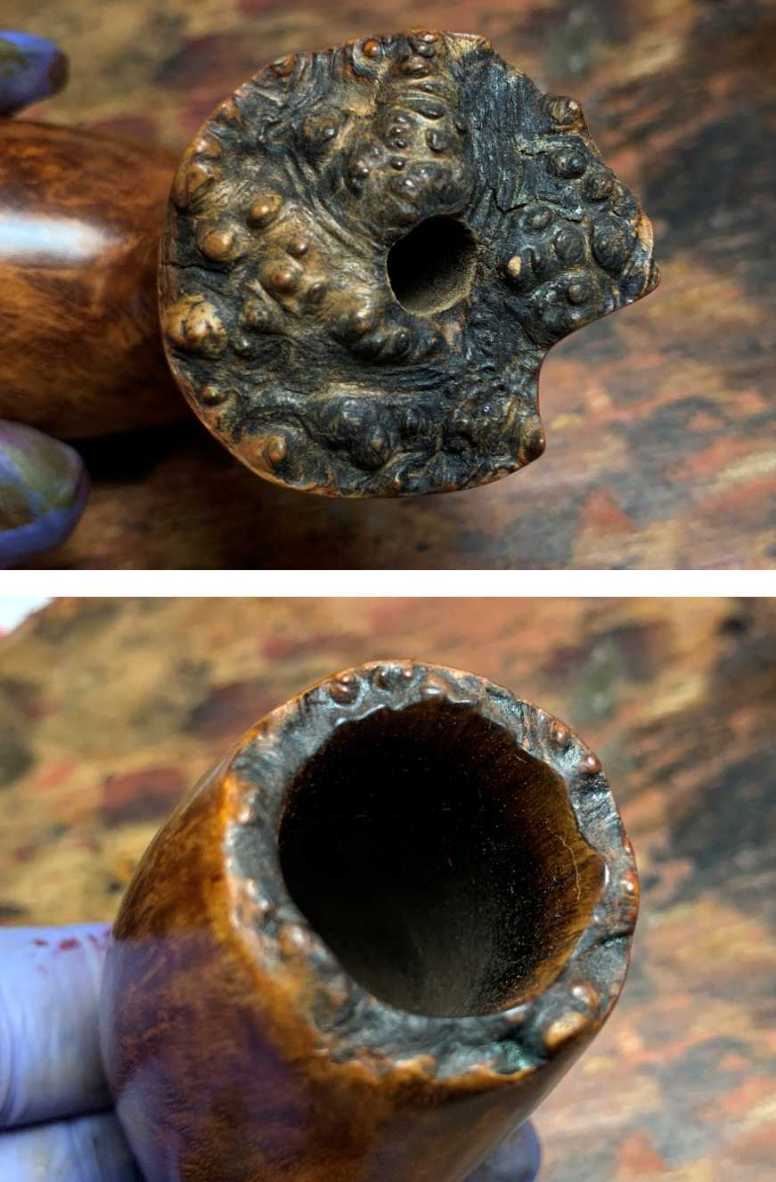 Using Fiebing’s Black Leather Dye with a cotton bud, black dye is carefully applied to the plateau and shank facing.
 After the dye has dried, the black is solid giving a ‘new out the shop’ look. To give a more, ‘lived in’ relaxed look, a 1500 grade micromesh pad is used to sand over the peaks to bare the briar. This gives more contrasting and better eye appeal. First the rim plateau – before and after.
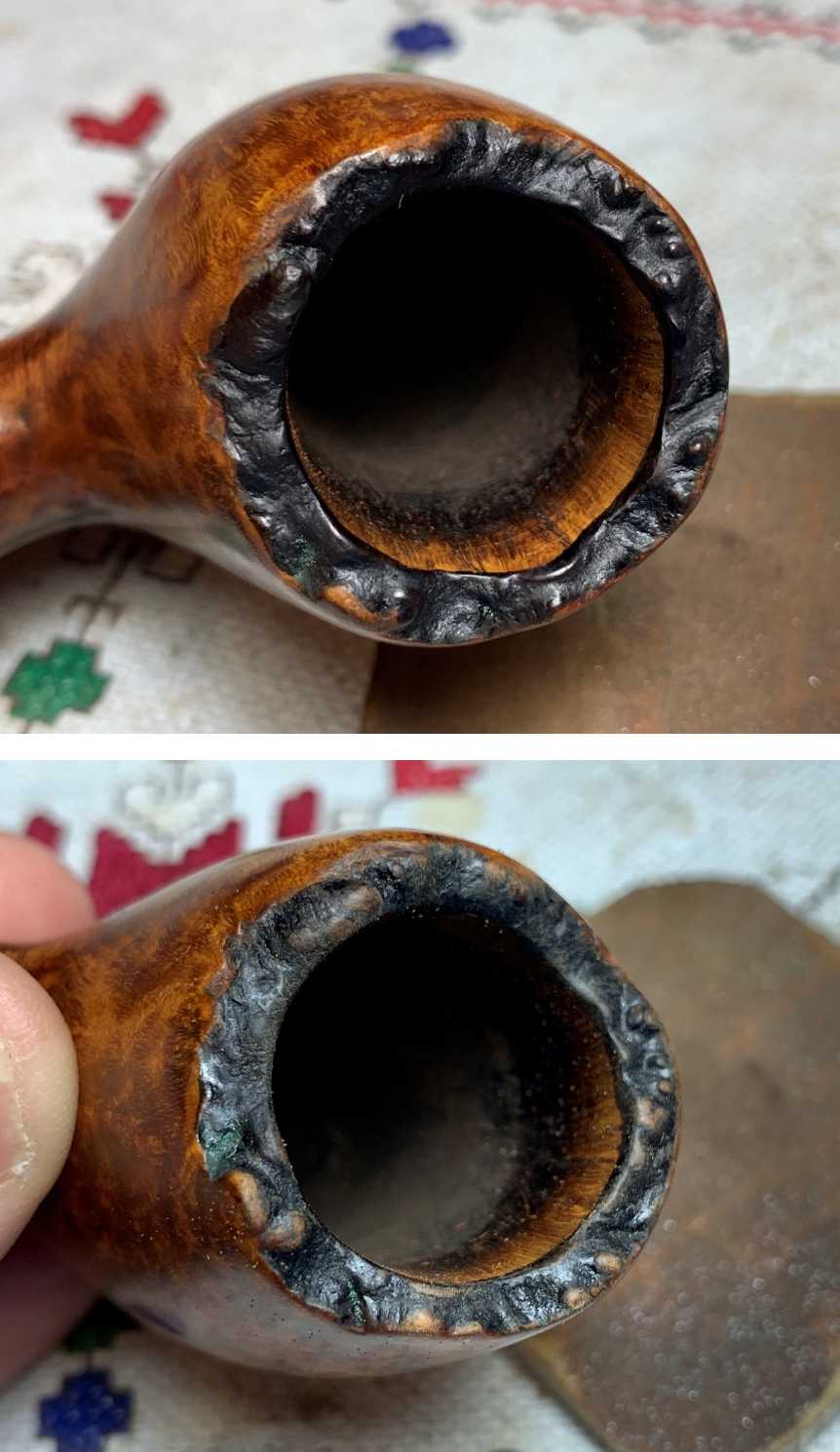 Next, the shank facing – before and after.
 Before, I noticed that the fancy stem was seating too close to the facing and butting against the briar. My concern is that this might not allow the stem to seat snug enough.
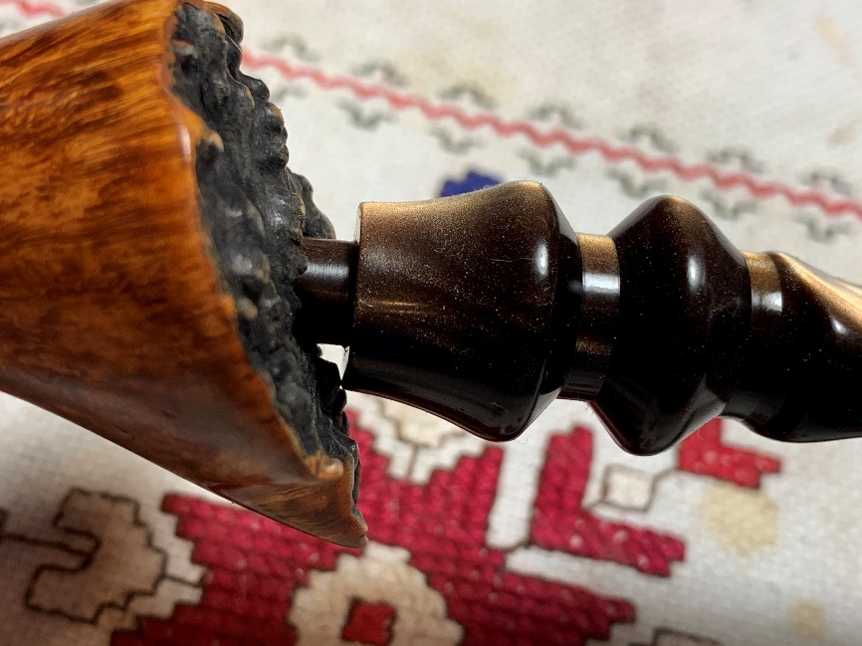 To remedy this, the tenon is painted with a clear nail hardener. As it dries, it becomes like a hard epoxy which will give the tenon more girth. A small brush that comes with the nail hardener is used to paint the hardener evenly on the tenon. The stem is then hung vertically allowing gravity to keep the liquid even.
 After the epoxy has dried, a few fits and mild sanding with 0000 steel wool does the trick. There is now more clearance with the shank facing and the stem is snug.
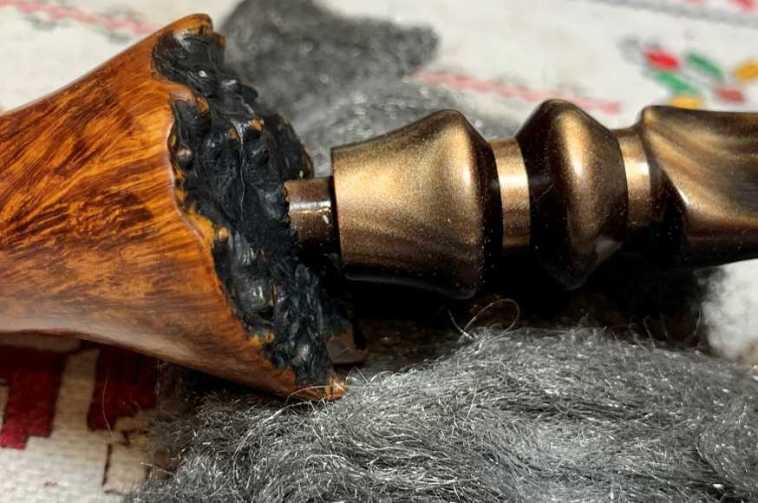 Next, Blue Diamond compound is applied to stem and stummel. With a cotton cloth buffing wheel mounted dedicated to applying the compound, the rotary tool is set at about 40% full power and the compound is applied. Not shown because I forgot to take the picture – after the application of the compound, the stem and stummel were wiped/buffed with a felt cloth to remove compound dust in preparation for wax.
 Another cotton cloth wheel is mounted dedicated to applying wax. With the speed the same, wax is applied to the acrylic stem and Freehand stummel. After application of the wax, the pipe is given a rigorous hand buffing with a microfiber cloth to raise the shine and to remove excess wax.
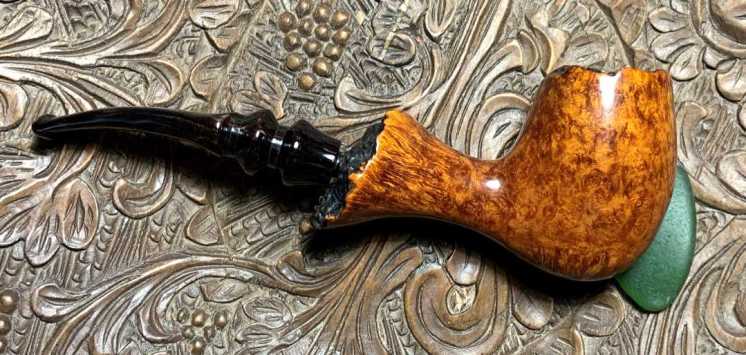
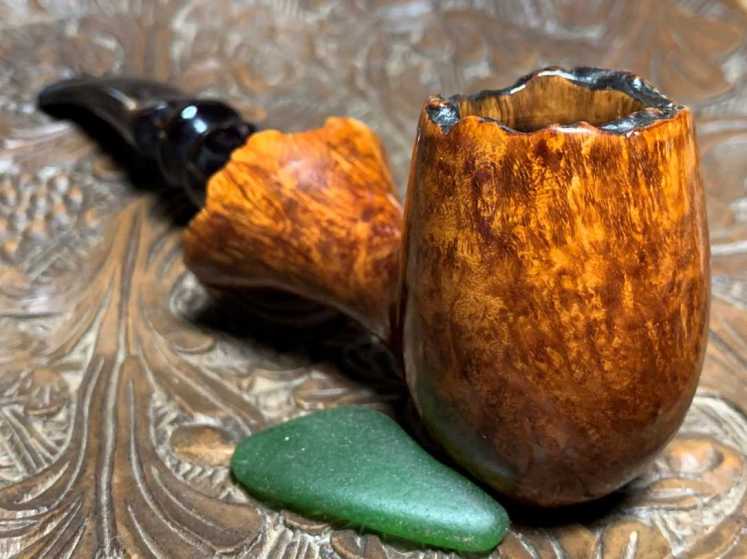
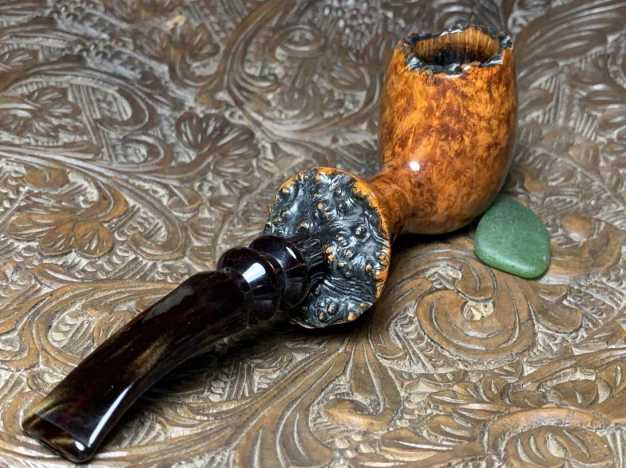
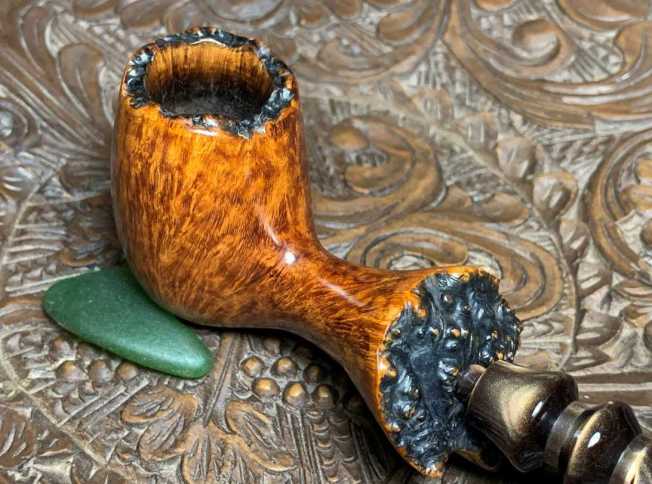
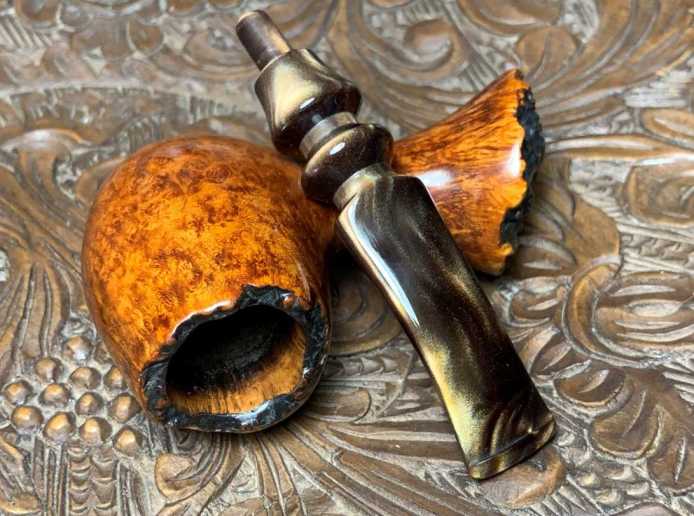
 Even though this Freehand is unbranded, it is a beautiful example of this unique style – ‘Follow the grain!’ The decision to apply dye to bring out the grain was a good one. The grain reaches vertically to the plateau and the bowl has a lot of bird’s eye grain which provides a nice display for the eyes. The acrylic stem is subtle and is marbled with browns and golds and compliments well the Freehand stummel. There is little doubt that a goodly portion can be packed into the bowl which has a solid feel in the hand. John commissioned this Freehand and has the first opportunity to claim him in the Pipe Steward Store benefitting the Daughters of Bulgaria – helping women and girls who have been trafficked and sexually exploited. We start with a ‘before’ picture to remember how far we’ve come. Thanks for joining me!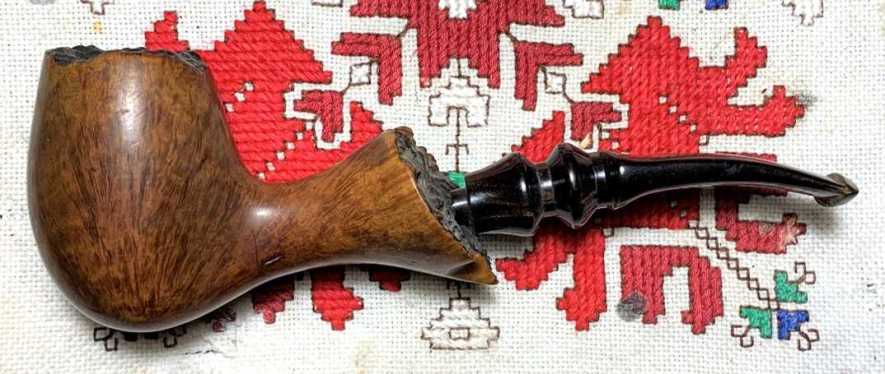





 The Pipe Steward