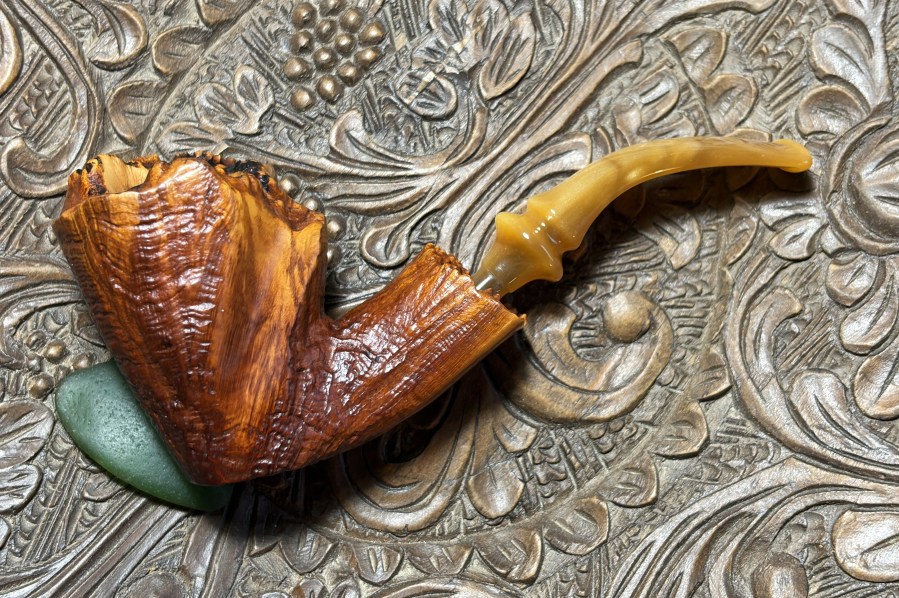
The next pipe on the worktable is a beauty. It is perhaps one of the most striking Freehands that I have had in my inventory. It came to me from a pipeman in August 2021 who I met in neighboring Lakewood, Colorado. One never knows when he’ll happen upon a trove of pipes!
I was responding to a post in FB Marketplace for a zero gravity recliner that I desperately sought to take on our camping trips. I finally found one for sale nearby and went to inspect the recliner. When I pulled up to the house, at the top of the driveway, sat Ron, smoking a pipe. I told him I was there inquiring about the recliner (and ended up purchasing it!), but as you might expect, conversation was guided to his pipe, the baccy he was using and that I was a pipeman, collector and restorer. Well, I discovered that he was giving up a lot of his pipes for health reasons and yes, he was selling them. He said that the boxes were ‘somewhere’ and we arranged for me to return to take a look. When I returned a few days later to see the pipes, my wife was with me, and we had a great visit with Ron.
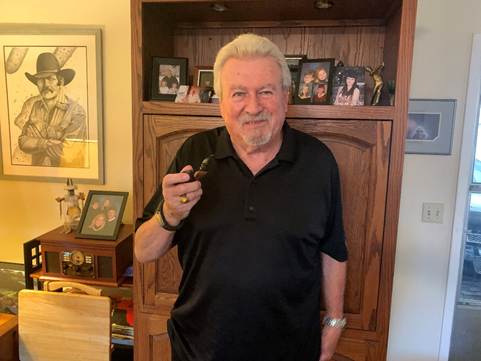
We discovered that Ron was a family man with a slew of grandkids. He also was a career Air Force man but then switched to other ‘government’ employments which he could not elaborate on. We noticed his well-worn bible and devotionals on the side table next to his chair and asked about them. He was a man of faith in Jesus, but to my delight, he also shared something that a Presbyterian could appreciate – his affection for Glenmorangie Scotch…. And to complete the profile – a slew of Tom Clancy books adorned bookshelves along with other pictures and memorabilia. When we got down to business, Ron opened the shoebox of pipes and put them on the table. I saw very quickly that Ron had a penchant for Freehands.
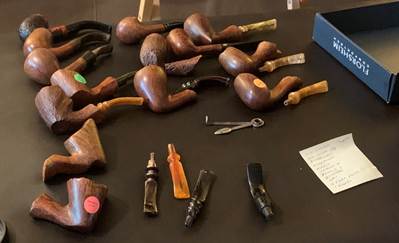
Well, I was really liking what I was seeing! I discovered also while I was inspecting each pipe that Ron was not particular about which acrylic stem was wedded to which Freehand stummel. I also found a few cracks in a few shanks – Ron wasn’t always careful with his pipes. In the end, the deal was sealed, friends were made and the pipes joined others in the For “Pipe Dreamers” ONLY! online collection where pipemen and women can commission pipes that not only speak to them but help to support the Daughters of Bulgaria, now called Spring of Hope.
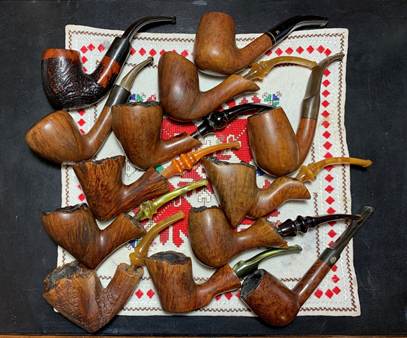
My wife and I co-founded the Daughters of Bulgaria a number of years ago when we still lived in Bulgaria to help women and girls who had been trafficked and sexually exploited. Today, the work in Bulgaria continues for which we are thankful. When I got Ron’s pipes home, I took this picture as a capstone to the adventure. The Freehand now on the worktable is located on the bottom left in the picture below.
I met Joshua in Krakow, Poland in 2022. It was a difficult but fulfilling time as my wife and I had responded to the need to help our Ukraine missionary team that had evacuated to Krakow after Russia’s full scale assault of Ukraine began. We served in Krakow for several months helping Ukrainian refugees find homes in Europe and helping to send aid to our churches in Ukraine. It was during these days that Joshua also came to Krakow to help mentor and tutor the son of a fellow Ukraine missionary who had special needs. What Joshua soon learned was what everyone on our team there learned, that when supplies arrived in vans coming from Western Europe, all hands were on deck to help unload the boxes to bring them into the storage rooms. The supplies would be sorted and soon to be loaded into other vans heading to L’viv – to our church there for distribution to churches on the front lines. Or, if there was a need to go here or there to do whatever… one went toward the need whatever shape it took.
This was the never stopping, volatile environment that our relationship with Josh was forged. We found him to be a committed young man who was there to serve, as so many others did and continue to do to help our brothers and sisters in Ukraine as they serve in war. As Joshua’s time in Krakow was ending, we heard about the big decisions before him as he continued to discover his calling from the Lord – should he go directly to seminary after Poland OR serve with Reformed University Fellowship (RUF), our denominational agency committed to reaching university students for Christ and equipping students to serve Christ and His Church. Josh’s decision to serve brought him to the Druid Hills area of Atlanta, Georgia to serve with RUF on the campus of Emory University.

After 3 years, Josh completed his service at Emory and is now in St. Louis at Covenant Seminary preparing to serve in the next chapter of his life. He mentioned that he had an interest in returning to Krakow to serve. I was pleased and not surprising for a young man like Josh. Very characteristically of Josh, he appreciated the time at Emory as a building block to prepare him for the next chapter of ministry. It does not escape Josh that he owed much to his mentor, George, for his beneficial time at Emory. Josh wrote the following:
Hello Dal!… After having finished three years with RUF at Emory as an intern, I want to send my old boss, Campus Minister George @@@, a thank you gift. I’m so grateful for his mentorship and discipleship these past three years, and I feel like a very special gift is in order. If B#5597 Danish Pride from Basket Five is unclaimed, could I have that commissioned? I would like to send him a particularly unique looking pipe that would be a conversation starter the next time he’s out smoking with the other RUF ministers at the next training conference….
I did a little Facebook snooping and found this great picture of George and Josh which looks like it would be a good picture to capture and commemorate Josh’s time with George.
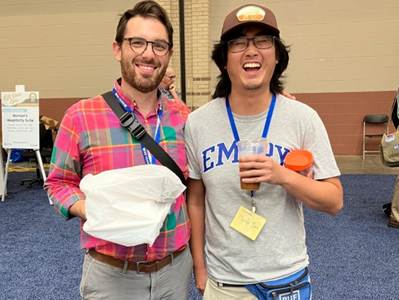
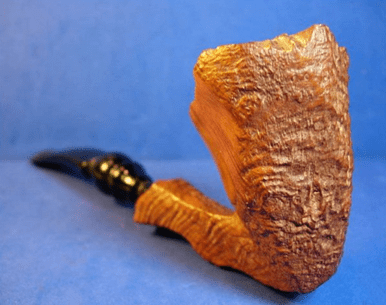
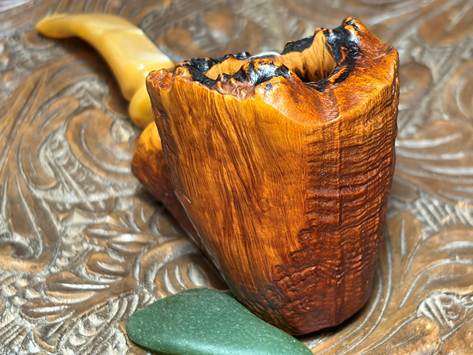
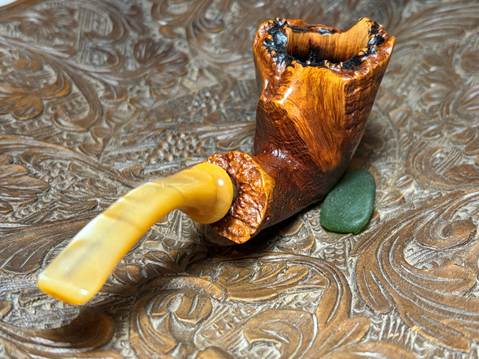
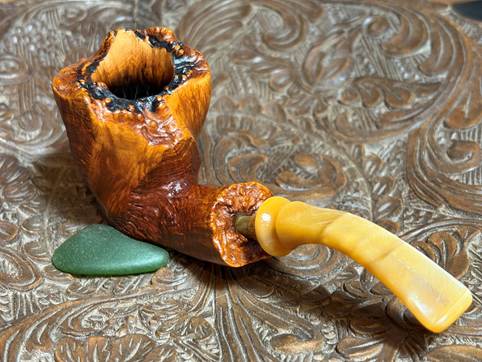
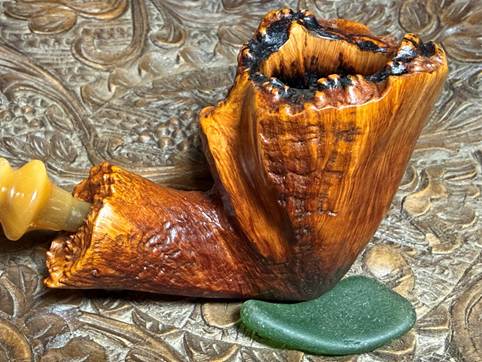
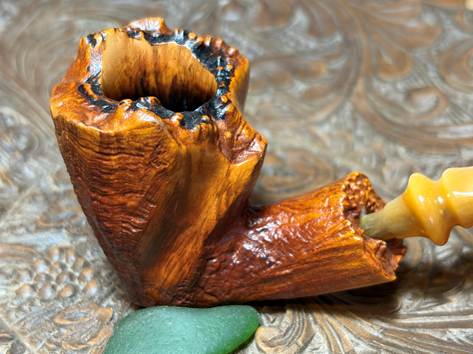
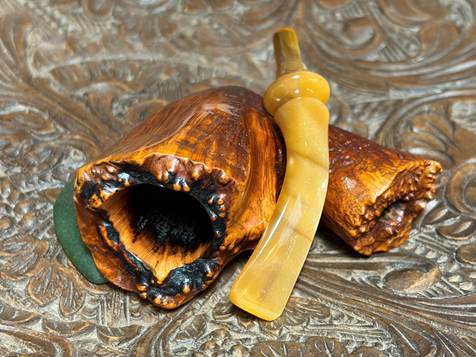
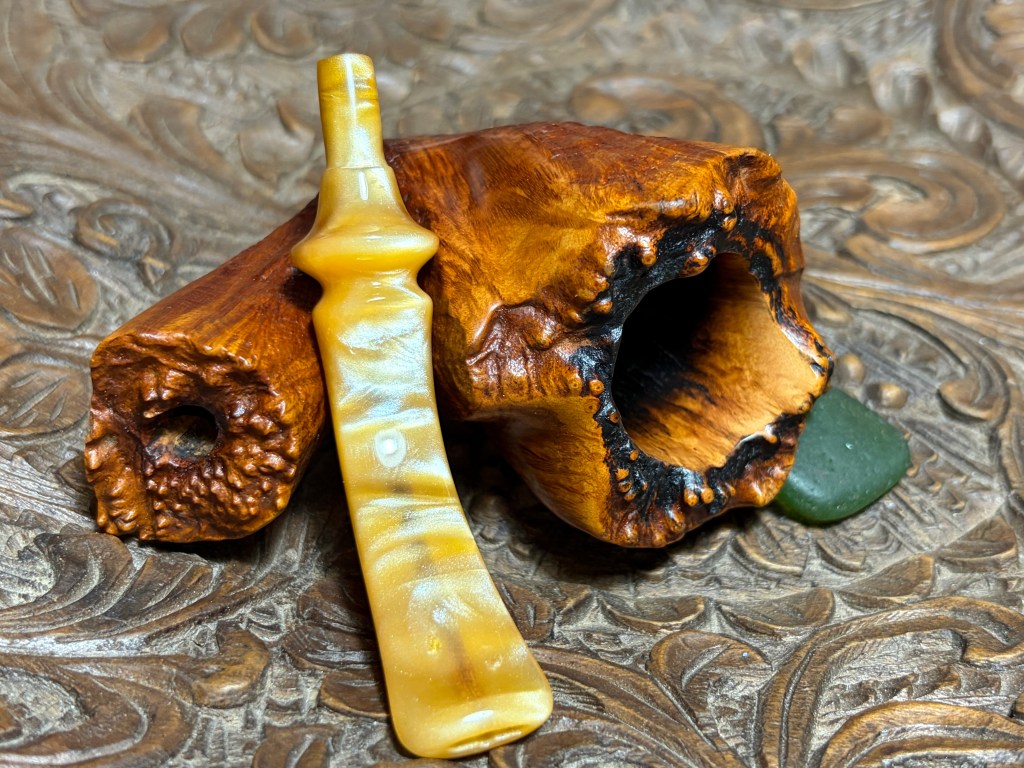
There is no doubt in my mind that the Freehand Josh chose for George not only will get the attention of others when he lights it up but will be a special keepsake of his role in Josh’s life and the lives of countless others over the years. Here are pictures of the Preben Holm Ben Wade heading for George. The combination of rough bark and smooth grain-filled briar is in keeping with Preben Holm’s ‘DANISH PRIDE’ line of Freehands.
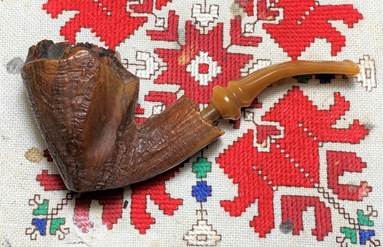
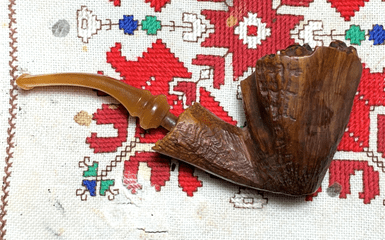
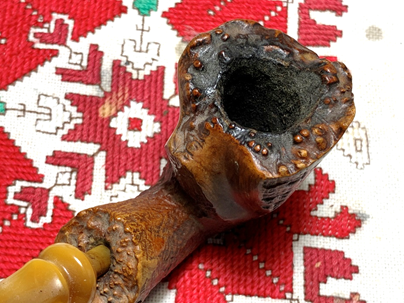
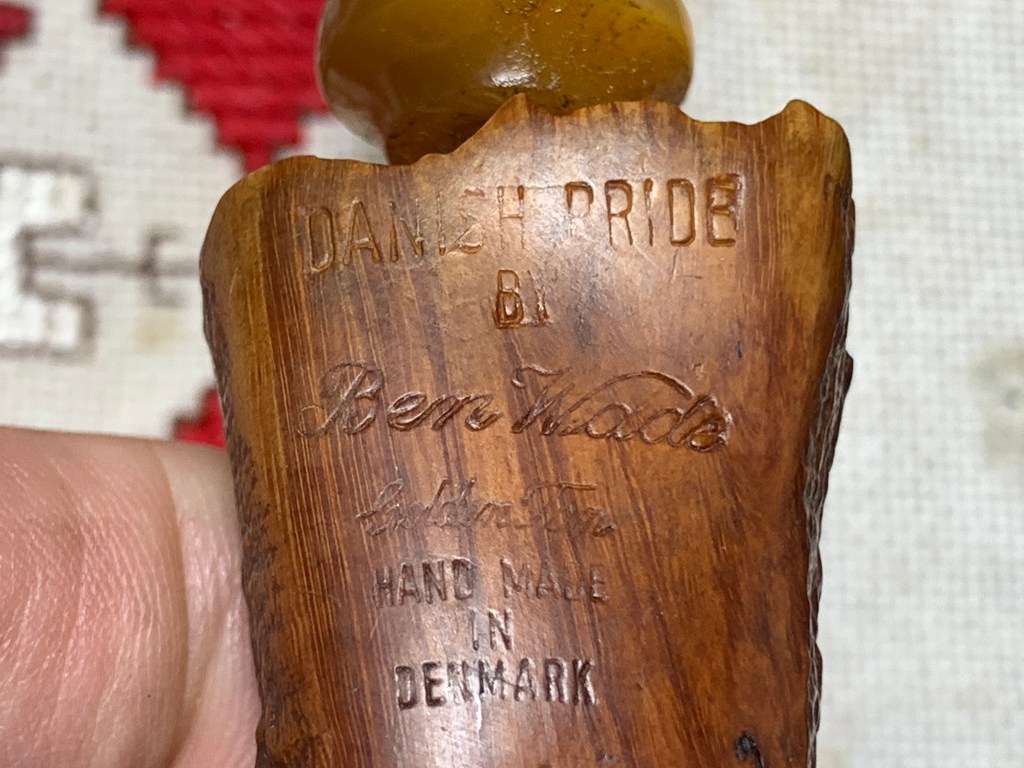
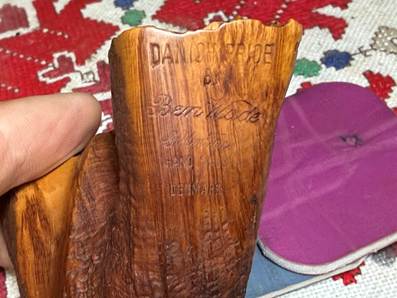
The nomenclature is in good shape stamped on the lower side of the shank: DANISH PRIDE [over] BY [over in fancy cursive] BEN WADE [over in cursive] Golden Tan [over] HAND MADE [over] IN [over] DENMARK.
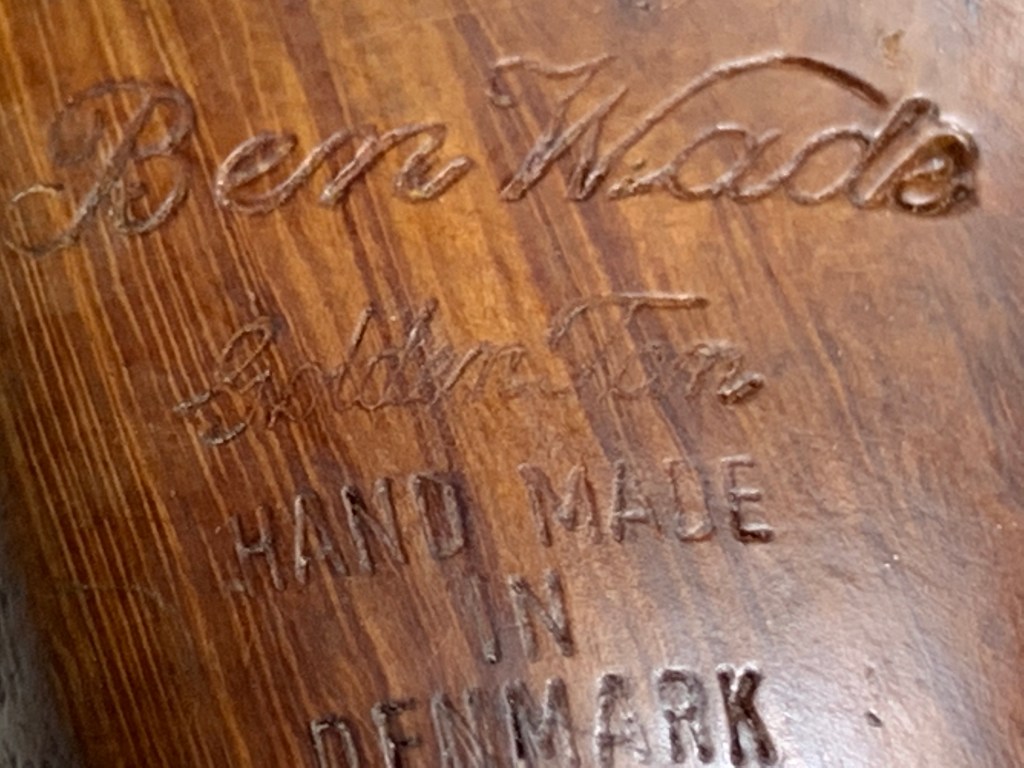
Another closer picture of the nomenclature gives a better view of the finer ‘Golden Tan’. Golden Tan was given to highlight the beautiful natural hues of this piece of briar.
I have worked on other Danish made Ben Wade Freehands and am familiar with the Freehands that Preben Holm produced during the Ben Wade Danish period. From earlier research I wrote about another Preben Holm Ben Wade that I acquired from pipeman Ron (New Beginnings for a Preben Holm Ben Wade Deluxe Hand Made Denmark Freehand) recounted here:
The name always associated with the Ben Wade Danish production era is the renowned carver and pioneer of the Freehand movement, Preben Holm. I’ve enjoyed restoring Preben Holms previously and that research helps to set the stage for the Freehand now on the worktable. Pipedia describes the genesis of the Ben Wade name (Ben Wade – Pipedia):
The company was founded by Benjamin Wade in 1860 in Leeds, Yorkshire, where it was located for over a century. Ben Wade started as a pipe trader, but yet in the 1860’s he established a workshop to produce briar pipes. The pipes were made in very many standard shapes – always extensively classic and “very British”. Many models tended to be of smaller dimensions. Ben Wade offered a very high standard of craftsmanship and quality without any fills. Thus, the pipes were considered to be high grade and a major competitor to other famous English brands. The often-heard comparison to Charatan seems to be a little bit inadequate because those days’ Charatans were entirely handmade.
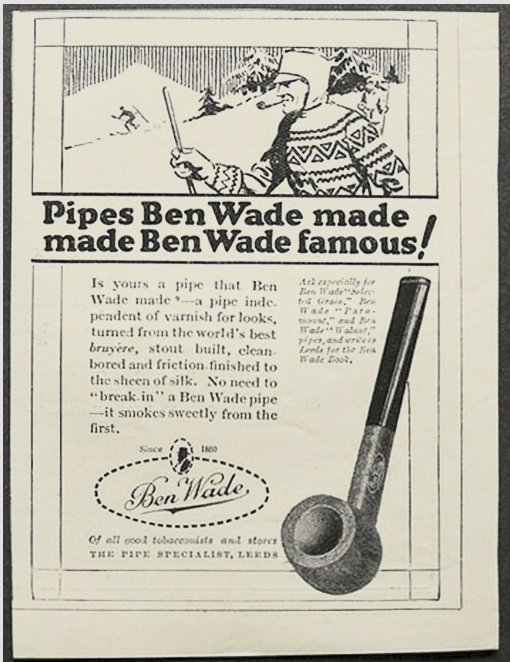
The Pipedia article goes on to describe how the Leeds factory was destroyed during WWII and production slimmed down through the years. In 1962, Ben Wade was purchased by Lane Ltd. but when production decreased at the factory in Leeds, it was closed in 1965. Lane also owned Charatan and assimilated the Ben Wade production with the Charatan which marked a period when Ben Wade stamped pipes were of a much lower quality. The last chapter of the London-based Ben Wade is the Dunhill acquisition:
Herman G. Lane’s heirs had no special interest in either Charatan or in Ben Wade and sold it to Dunhill Pipes Limited in 1978. Now, Dunhill had no need of machine-made series pipes like the Ben Wade as performed by Charatan / Lane since their own Parker–Hardcastle factory in Walthamstow had abounding capacities to turn out secondary pipes. Thus, this was Ben Wade’s second end. Charatan’s Prescott Street factory was closed by no later than March of 1982 and Charatan was allowed to languish and discontinued in 1988.
It’s helpful to recount the UK history of Ben Wade to better appreciate and understand the Danish transition and how the business needs of Preben Holm joined with his artistic prowess was the context in which he entered the story of Ben Wade. The Pipedia article continues with the ‘Ben Wade turns Danish’ chapter and I include this section in its entirety because it focuses on our pipe’s origins:
Young Copenhagen master pipe maker Preben Holm had made a meteoric career heading a pipe manufacture employing 45 people at the age of 22! But around the turn of 1970/71 he was in major financial difficulties. His US distributor, Snug Harbour Ltd. in New York City, left him in the lurch. Holm had three unpaid invoices on his desk, and another large shipment was ready for the USA, when Snug Harbour’s manager told him on the phone that there was no money at all on the account to pay him.
So, the Dane went to New York for an almost desperate search for a new distribution partner. He made contacts with Lane Ltd. and met Herman G. Lane in February 1971. Lane Ltd. had no interest in Holm’s serial pipes produced at that time but so much the more in the hand-carved Freehands because the hype for Danish Freehands and fancies in the States was still on its way to the climax then. The meeting resulted in an agreement to start a cooperation. Lane insisted on improving the quality considerably and in return he assured to be able to sell essentially larger quantities.
Holm went back home to work on new samples with all-new designs and altered finishes for Lane. Both Lane and Holm agreed that it would be unwise to sell the pipes under Preben Holm’s name as long as Snug Harbour had a considerable stock of Preben Holm pipes and might sell them pipes at very low prices just to bring in some money.
So, on Mr. Lane’s proposal it was determined to use the name Ben Wade belonging to Lane Ltd. Lane spent considerable amounts of money for advertising the new brand in the big magazines– the centerpiece being whole-page ads showing a very exclusive Seven Day’s Set.
The cooperation with Lane Ltd. proved to be an eminent business success for both partners. Within a very short time Ben Wade Handmade Denmark sold in much larger quantities and at higher prices than they had ever dreamed of. And the hype these Freehands and fancy pipes caused went on unbroken long after Herman G. Lane deceased. Preben Holm – obviously much more brilliant in pipe making than in pipe business – was in major troubles again in 1986 and had to sack most of his staff. The Ben Wade production was significantly lowered but continued until his untimely death in June of 1989.
Up to now Preben Holm made Ben Wade pipes are a cult and highly sought for on the estate markets.
To have a Preben Holm pipe in one’s collection is for some like adding your Dunhill birthday year pipe. The number of Preben Holm creations out there is finite, they are no longer being produced since his passing in 1989.
Pipedia’s article about Preben Holm adds to our appreciation for his pipe on the table (Holm, Preben – Pipedia):
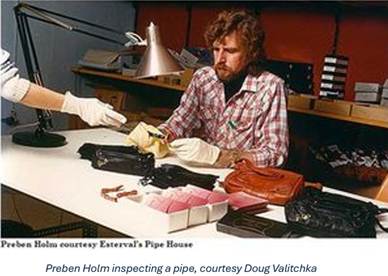
Preben Holm (1947 – 1989) has set some marks in pipe history. Just before his 16th birthday in 1963 he sold pipes to the legendary Pipe-Dan shop and at the age of only 22 he headed 45 employees. He was among the first Danish artisans who made “Danish pipe design” famous in the USA in the 1960’s. More than that he was one of the very first carvers who exceeded this moderate Danish Design which based on the classical shapes. “Chasing the grain” they turned out wild and dramatic fancy pipes. Combining smooth with blasted surfaces, showing big areas of the original bark at the top of the bowl and at the end of the stem, these pipes were quite shocking to many elder and more conservative pipe smokers.
When he started to sell his pipes to Lane Ltd. under the Ben Wade label, he caused a hype fairly beyond comparison. Especially in the U.S., as most of his pipes were sold there.
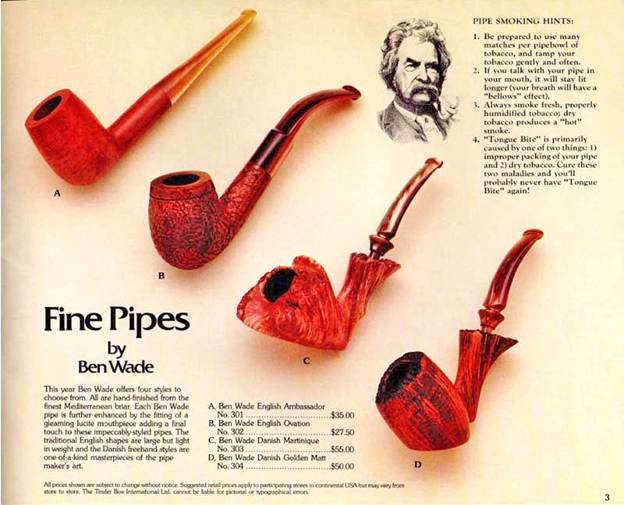
The key phrase that Preben Holm coined, “Chasing the grain”, gave birth to the Freehand pipe movement. The Pipedia Ben Wade ad from a Tender Box catalog (courtesy of Doug Valitchka) shows some of the Preben Holm offerings in the US market.
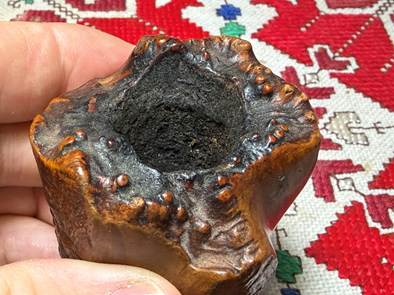
The Ben Wade Danish Pride was produced from the 1970s possibly up to the mid-80s. With a greater appreciation of the Preben Holm Freehand on the worktable, we take a closer look at the pipe itself. The dimensions of this Ben Wade Freehand are Length: 5 7/8 inches, Height: 2 3/8 inches, Plateau width: 1 13/16 inches, Chamber width: 3/4 inches, Chamber depth: 2 inches. The chamber has a good bit of carbon cake build up that needs to be remove to check the briar health.
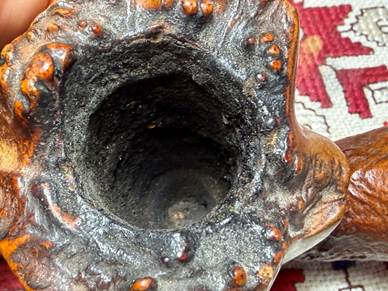
There’s a good bit of grime over the plateau. After the cleaning, we’ll see if the plateau needs refreshing with black dye.
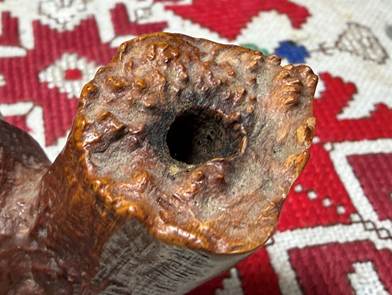
The shank plateau also needs cleaning.
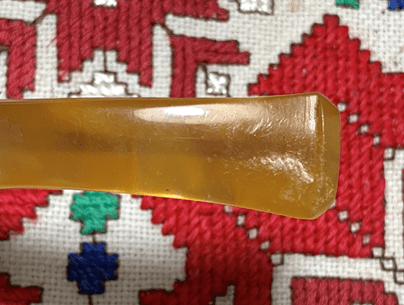
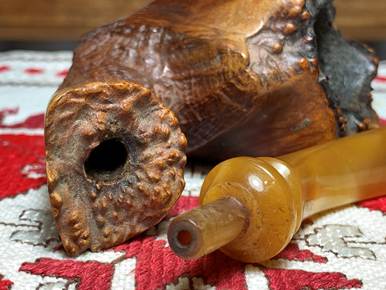
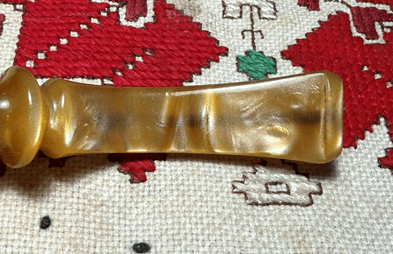
Acrylic stems are always a bear to clean the staining in the airway. We’ll see what we can do. The acrylic is a marbled honey color which really pops.
Pipeman Ron did his share of clenching as both the upper and lower bit shows compressions and tooth chatter.
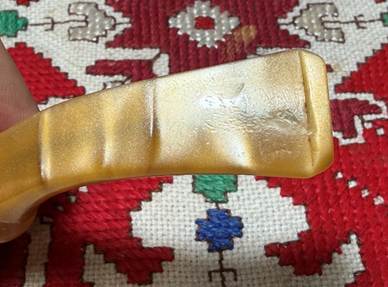
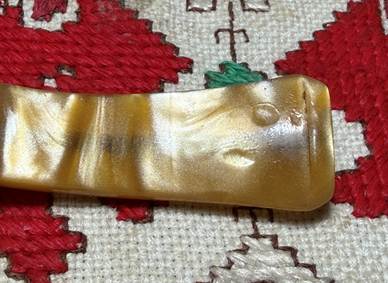
Starting with my least favorite is cleaning the stem. Using pipe cleaners moistened with isopropyl 99% alcohol, we go to work on the stain in the airway. I use bristled cleaners to do the initial scrubbing. I have found if I clamp one end of the pipe cleaners in a small table vise and hold the other end, I can move the stem back and forth over the cleaner at a more rapid pace – hopefully helping the cleaning.
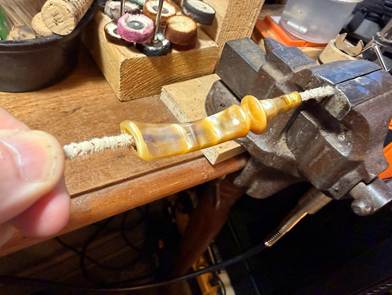
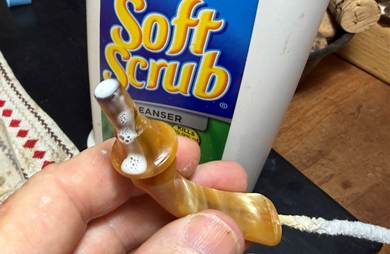
As suspected, it didn’t take long for the pipe cleaners to come out clean using isopropyl 99% alcohol. This means the airway is clean of grime, but the stain remains in the acrylic. When working on stains, I use the bleach based Soft Scrub product to try to make headway. It’s much thicker than alcohol so it is more difficult to pass the pipe cleaners through the airway.
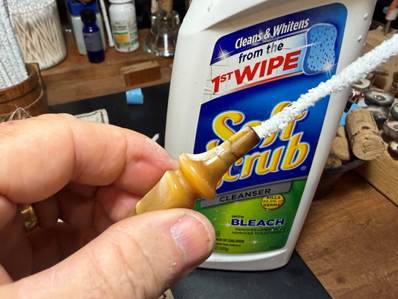
After a while, I decided to fill the airway with the Soft Scrub solution and let it soak. We’ll see what it does.
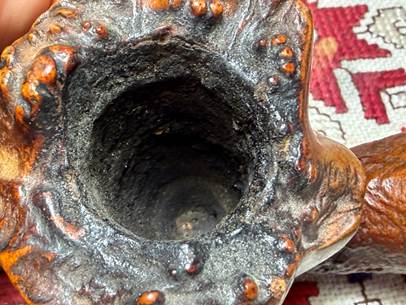
While the stem is soaking, the focus switches to the Freehand stummel. The chamber has thick cake which needs to be cleared away to allow fresh briar to emerge and to allow the new steward to develop a fresh protective cake. Cake is a good thing to help preserve the briar in the chamber. A dime’s width is all that is needed.
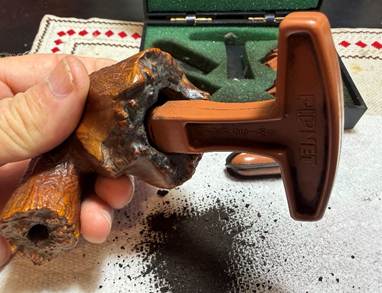
The reaming begins using the first two of four blades from the Pipnet Reaming Kit. I use these two smaller blades gingerly because they don’t fit this 2 inches deep cylindrical chamber. With most Freehand pipes, the chambers are tapered and are narrower at the floor. The Pipnet blades like straight sides much better and will dig into the briar in this chamber if one is not mindful.
When the Pipnet Kit is not sufficient, the Kleen Reem Pipe Tool usually is able to do the job. I found this old boy a number of years ago at a Flea Market somewhere in Kentucky on one of our road trips east.
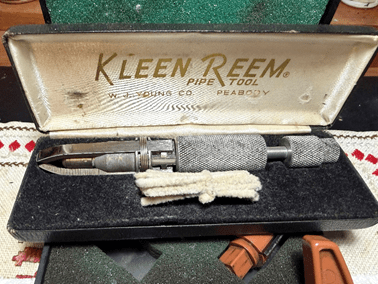
The Kleen Reem Tool has 3 metal arms which expand as the knob on the end is turned. This works great with a canted chamber. The tool starts at the floor of the chamber and as it is rotated, the arms are expanded incrementally as the blades creep up the chamber.
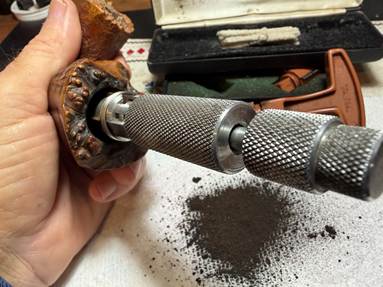
I love talking about this minutia😊! You can see the shaft at the center of the tool with the cap on its end. When the knob turns the shaft moves out pushing the 3 arms outwardly.
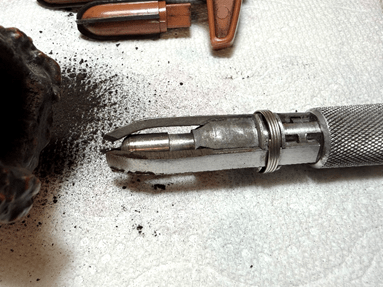
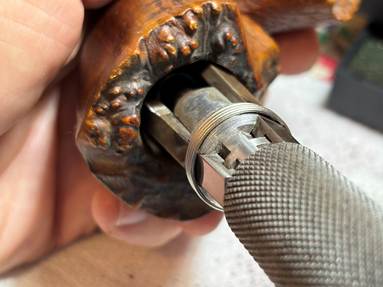
Following the Kleen Reem Tool, the Savinelli Fitsall Tool goes to work scraping the chamber wall further getting at the sharper angles at the floor of the chamber.
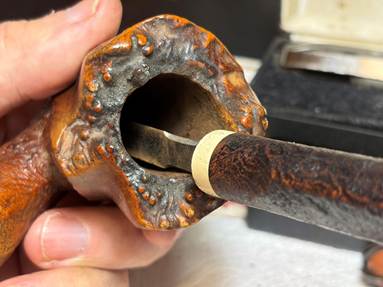
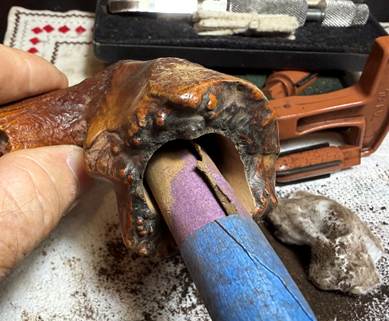
Following this, the chamber is sanded with 220 sanding paper wrapped around a dowel rod. The sanding removes the last vestiges of carbon cake from the chamber.
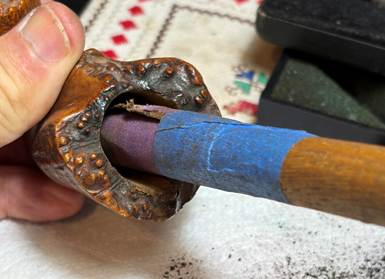
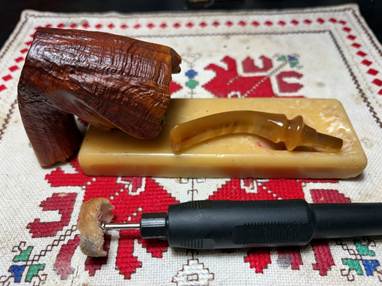
One of the things that I like to do with Freehands is to sand the inner chamber briar that forms the cathedral jutting up. I like to sand and bring out the briar to provide what I call the ‘Steward’s Peek’ – enjoyment of briar that is usually obscured and darkened from the burning. A sanding drum on the rotary tool is used (VERY CAREFULLY) to break up the charred darkened briar.
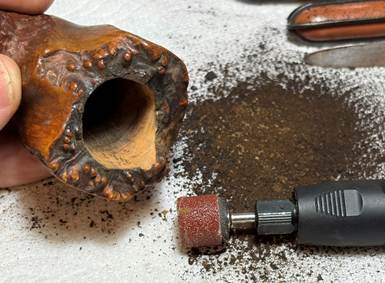
Next, the 220 paper is used again to sand the Steward’s Peek after the coarser sanding drum.
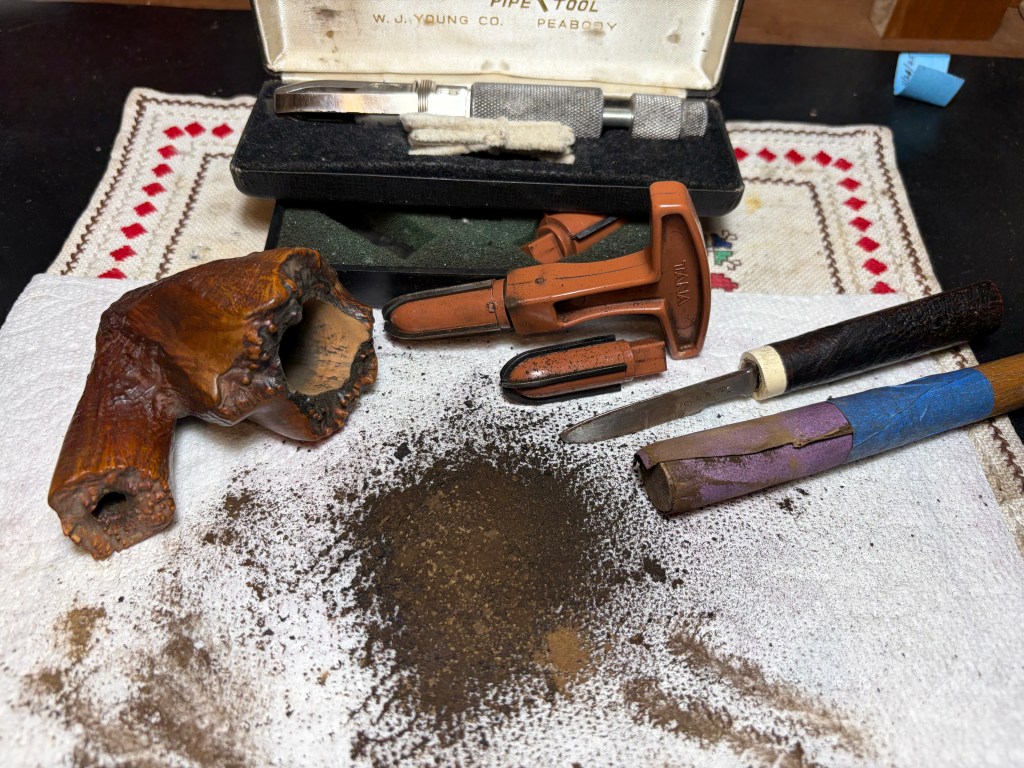
All the tools used to clear the chamber are shown.
A quick inspection of the chamber reveals healthy briar – no heating or burning issues.
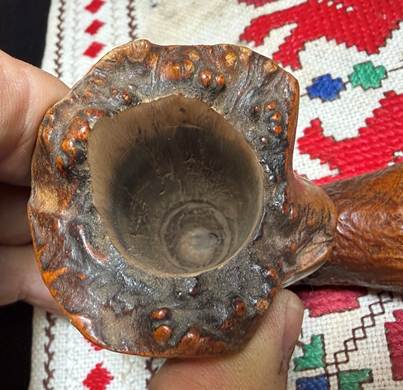
Moving next to cleaning the external briar, undiluted Murphy Oil Soap is used with a cotton pad to scrub.
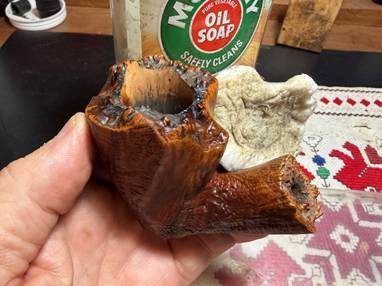
Getting the nooks and crannies of the plateaus clean is done with the bristled brush.
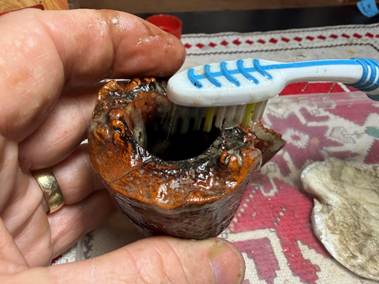
After the scrubbing the stummel is taken to the utility sink where the internal briar is scrubbed. Shank brushes are used with hottish water and anti-oil liquid dishwashing soap to scrub the mortise and airway. Dawn is the soap I use. After the scrubbing is finished, the pipe returns to the worktable.
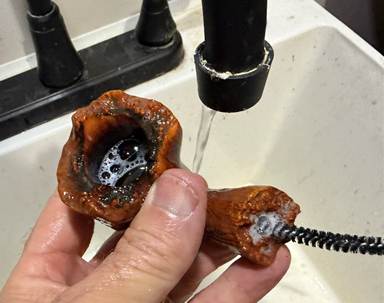
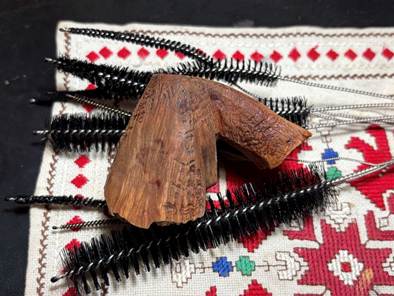
The cleaning of the internals continues with pipe cleaners and cotton buds moistened with isopropyl 99% alcohol. The mortise is excavated using a small dental spoon to scrap the mortise wall. The more that is excavated like this the fewer cotton buds needed.
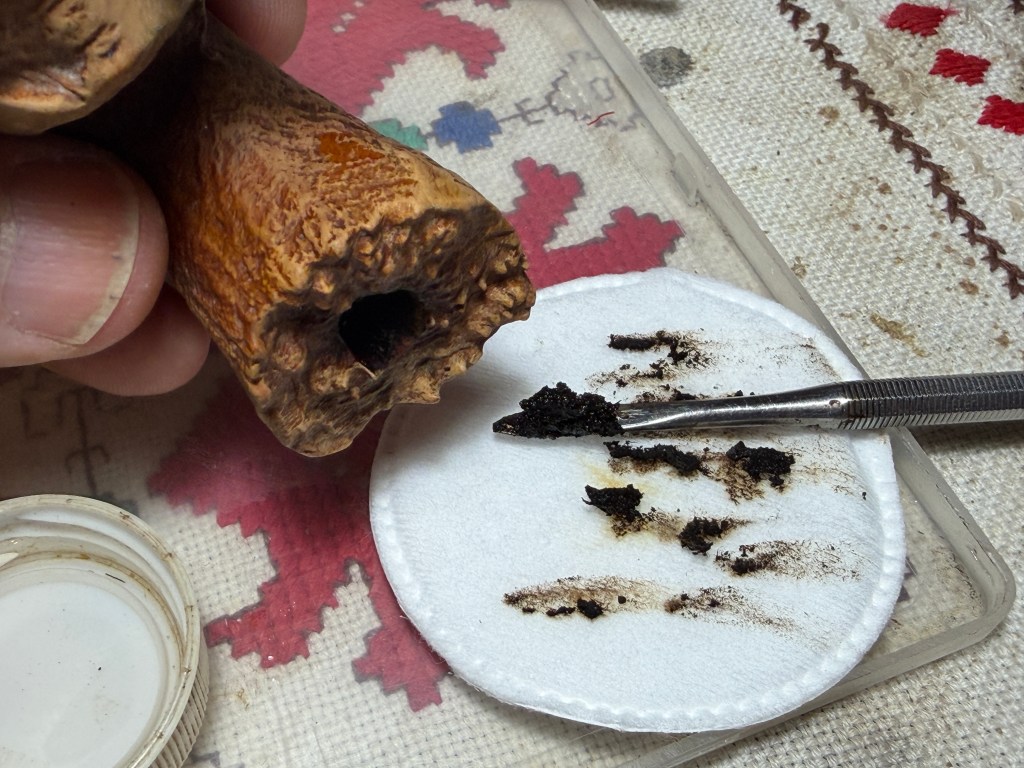
Ron also did not clean his pipe too often. The job turned out to be a bit of a challenge, but the buds and cleaners start to emerge lighter which signals progress.
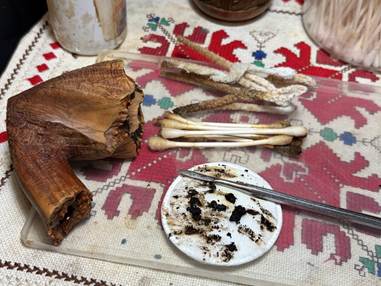
I decide to go the extra mile since the internals were pretty grimy. The stummel will be given a salt and alcohol soak to help further clean the internals. The first step is to form a wick by pulling and twisting a cotton ball. The wick helps to draw tars and oils out of the internal briar.
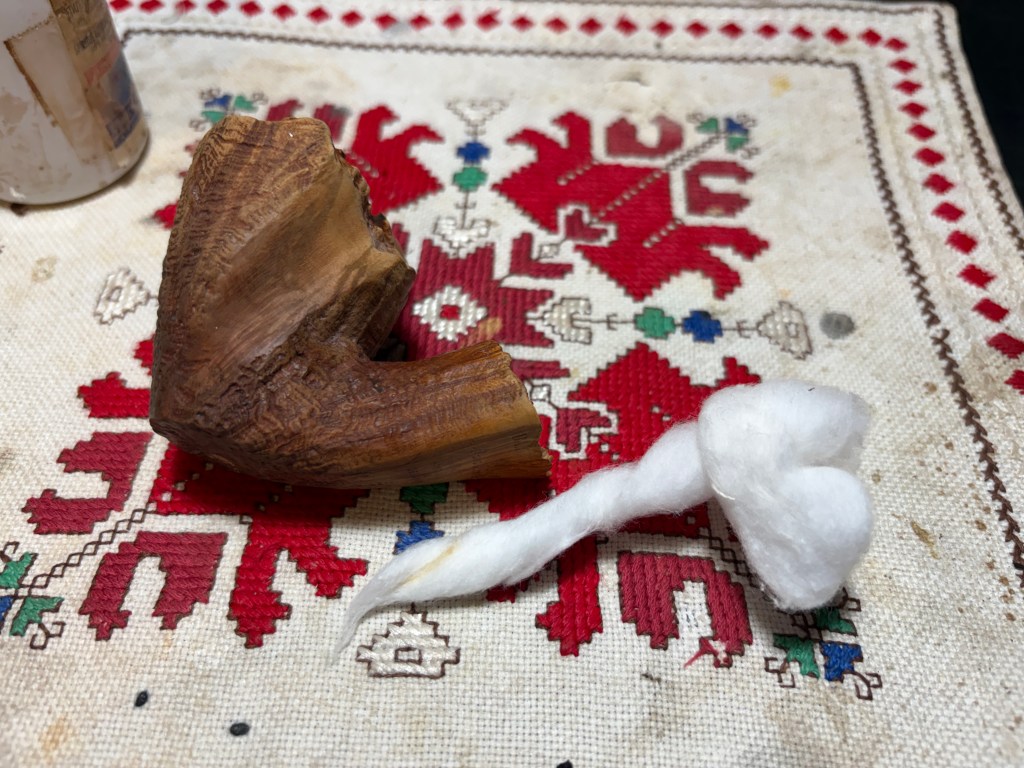
With the help of a stiff wire that was cannibalized from an old clothes hanger, the wick is guided down the mortise to the draft hole at the floor of the chamber.
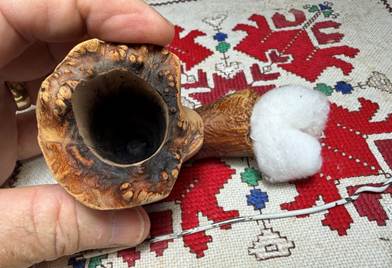
The chamber is then filled with kosher salt. Kosher salt is used because it doesn’t leave an aftertaste like regular table salt – iodized salt. The salt also helps to freshen the bowl and remove the ghost tastes and aromas of tobaccos past. After the salt is placed in the chamber, the stummel is situated in an egg carton so that it has stability and the plateau and shank plateau are roughly equal. This helps with the physics of the liquid flow. Then isopropyl 99% alcohol is used to fill the bowl until the liquid surfaces over the salt.
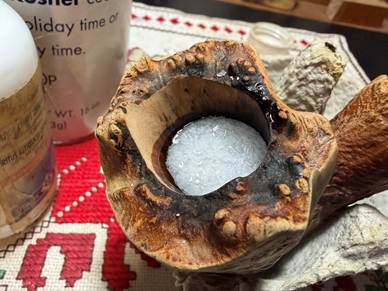
After a few minutes the alcohol is absorbed into the salt and cotton wick, and it is again topped off. The stummel is put to the side allowing it to soak through the night.
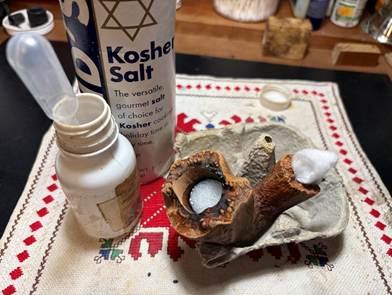
The next morning the soak has done its work through the night, and the salt and wick show the soiling that signals progress.
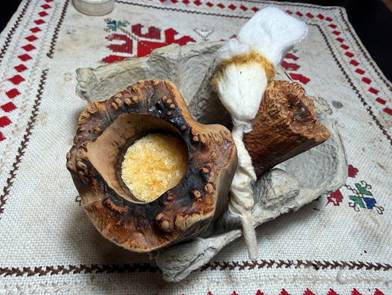
After the salt is cleared and cleaned out of the chamber, a cotton bud and a single pipe cleaner confirm that the pipe is clean and ready to go. A whiff test also confirms that the stummel is fresh.
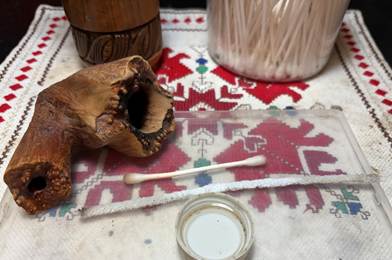
After the cleaning, taking a look at the stummel, it seems like the briar is very dry and in need of hydration.
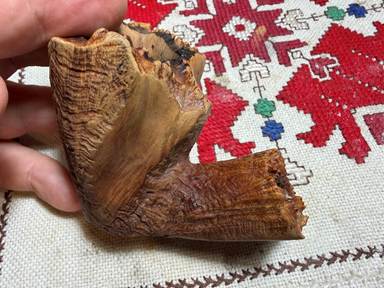
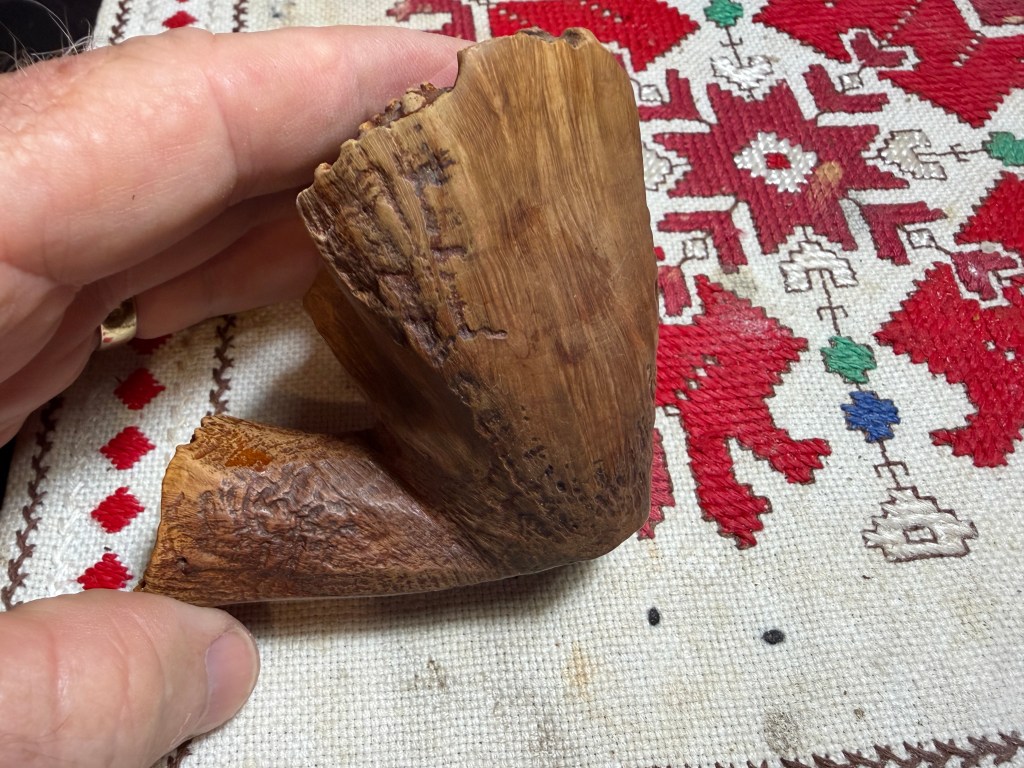
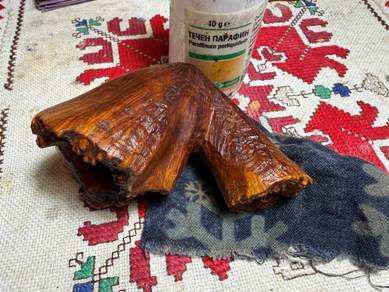
To rehydrate and condition the briar, Paraffin oil is applied lightly to the briar surface. Paraffin oil is a mineral oil which the dry briar practically drank up. I use mineral oil and not oils from plants or animals because a master woodworker I met in Greece said that he would not use ‘living’ oils because they can become rancid. I have used mineral oil on wood ever since.
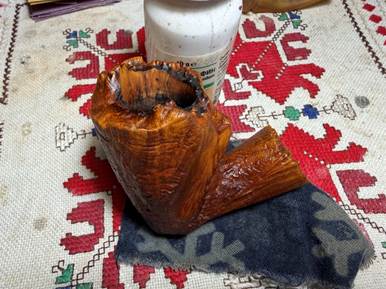
The stem airway has been soaking in Soft Scrub to try to remove the stain or lessen it. Well, with before (on top) and after pictures to compare, the airway stain does seem to be a bit lighter. The airway is totally clean, yet the stain remains. Time to move on.
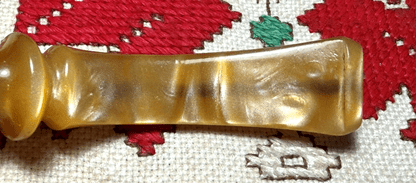
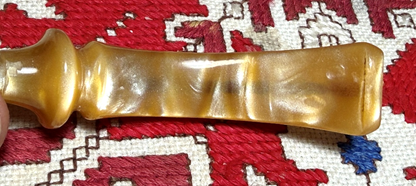
With the cleaning completed, a closer look at the bit shows the bite compressions on the upper and lower bit.
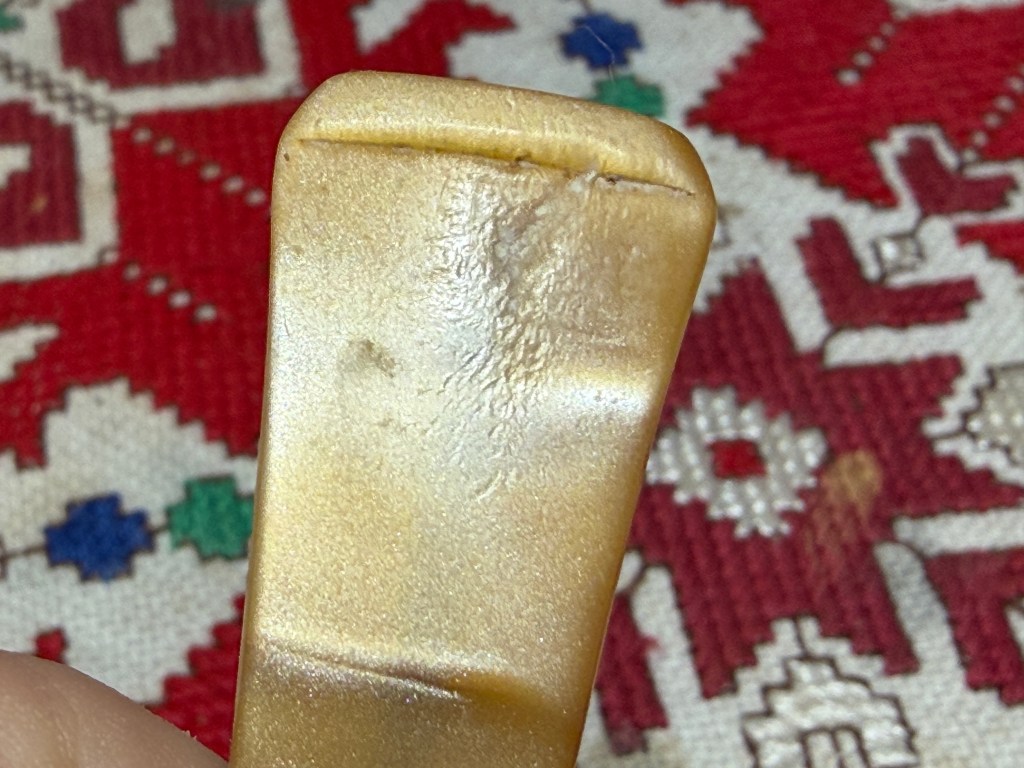
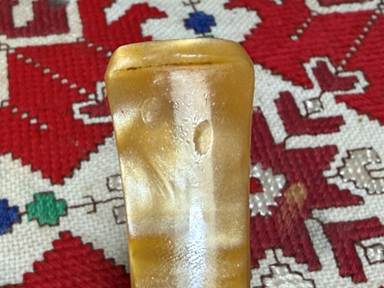
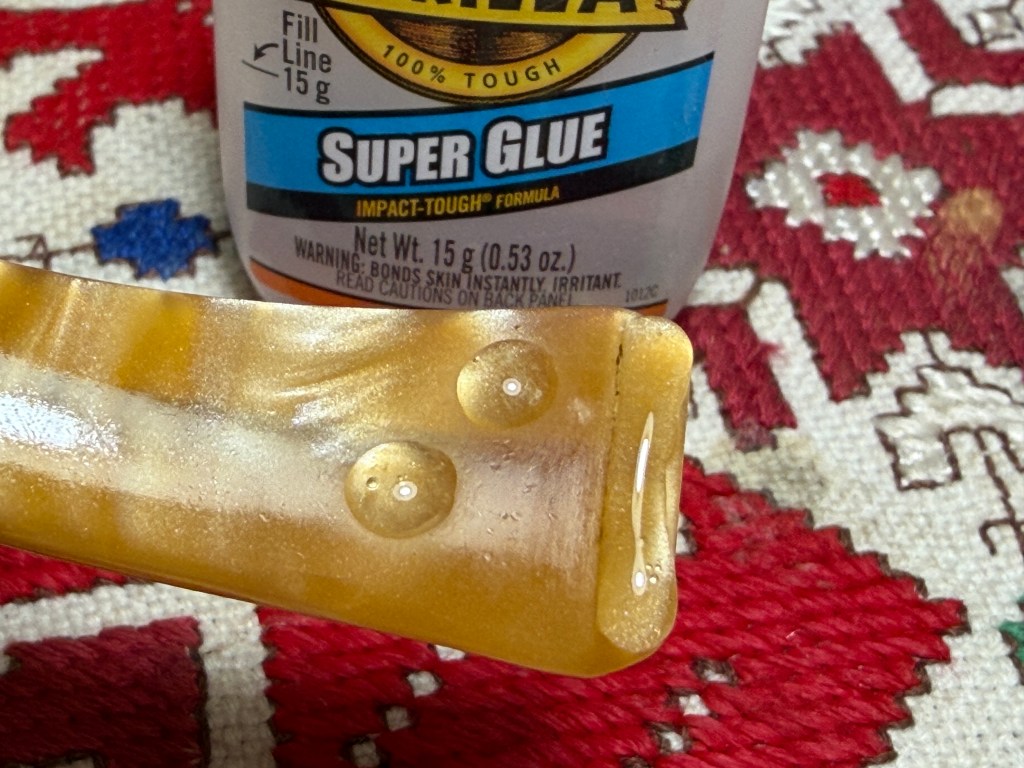
To fill the compressions, after the bit was cleaned with alcohol, regular clear CA glue is spot dropped in each compression. The wet glue is then sprayed with an accelerator to quicken the curing process and to keep the patches in place.
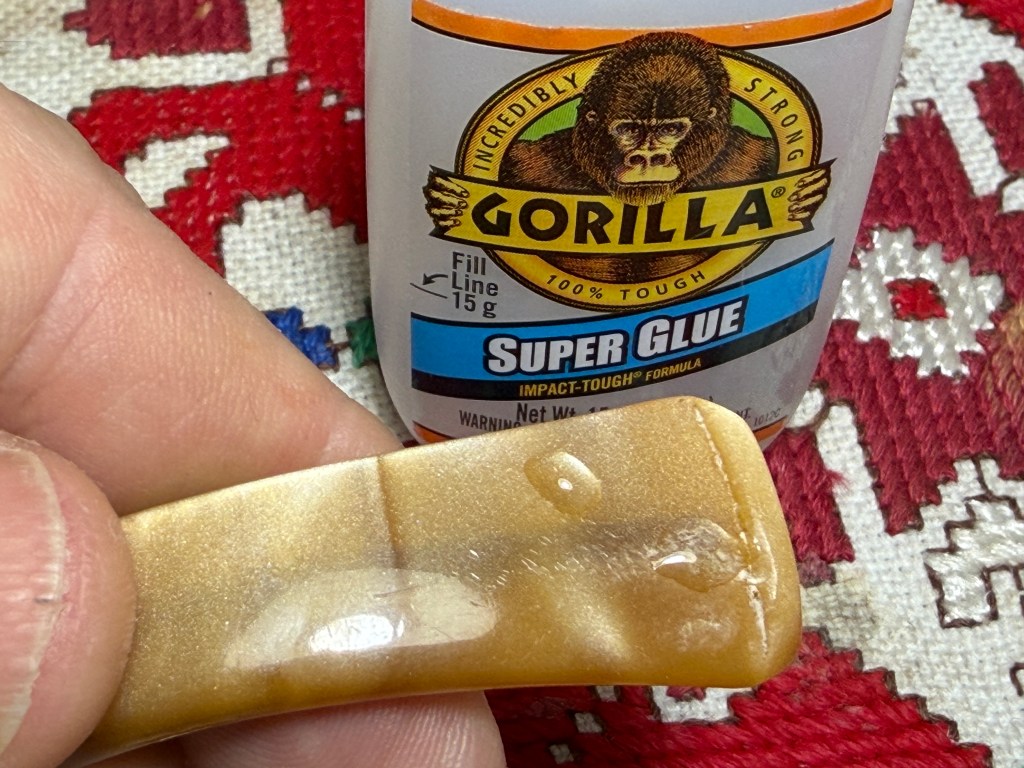
On the lower bit below you can also see that I’ve applied a layer of CA over the button lip. I had noticed that it had also been compressed.
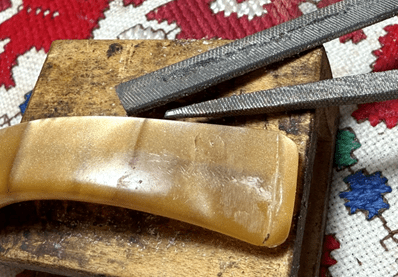
After the patches are cured, a flat and squared needle file go to work filing the mounds down flush with the acrylic surface.
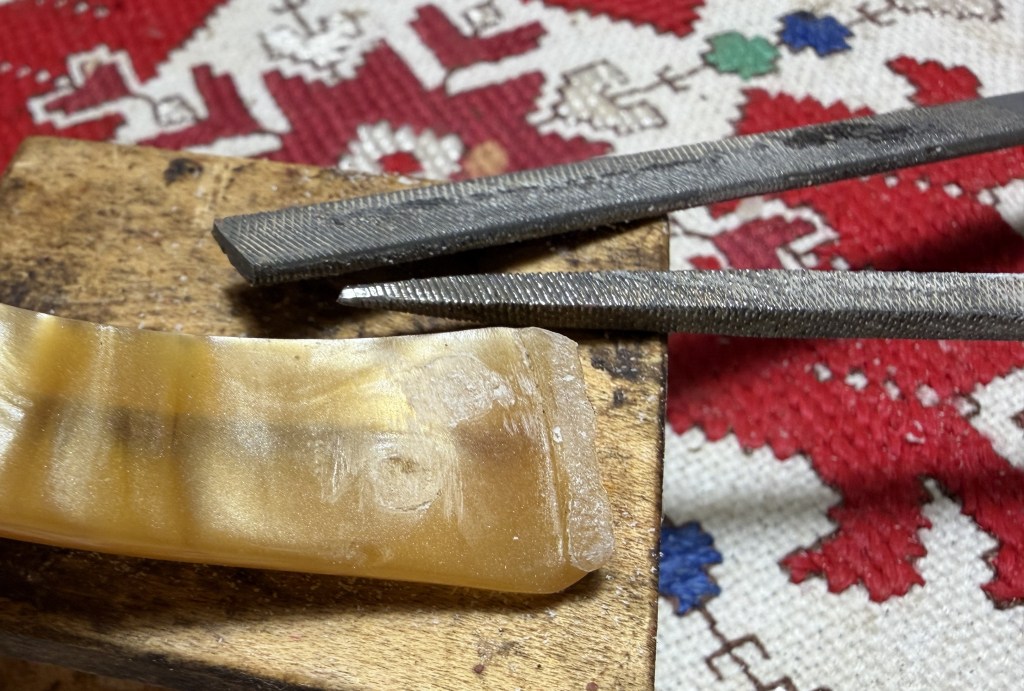
Filing is followed by sanding the upper and lower bit with 220 grit sanding paper. Ok, this has happened in previous projects, and it has happened here as well. After sanding, I could tell that one of the patches on each side of the bit were showing the injury through the CA patch. Looking at the first photo it is more easily seen. The injury to the acrylic is white, which is not on the surface but below the clear patch. It will not go away with more sanding…. The second photo has the same issue. What you’re looking at is flat and smooth acrylic and the injury below is showing through a more darkened hue.
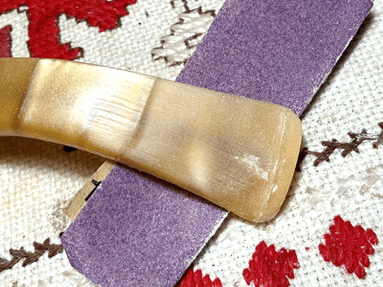
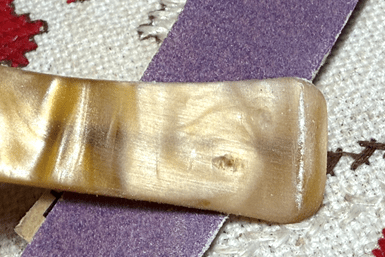
Detours happen. To remedy the situation these patches need to start again from the beginning. Using the rotary tool with a small round burr mounted, I carefully (did I say, “carefully?”) removed the injury discoloration in both of the upper and lower patches. Of course, I don’t want to dig too deeply and breakthrough to the airway!
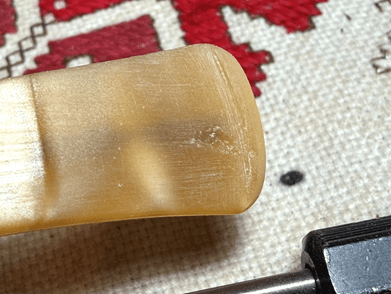
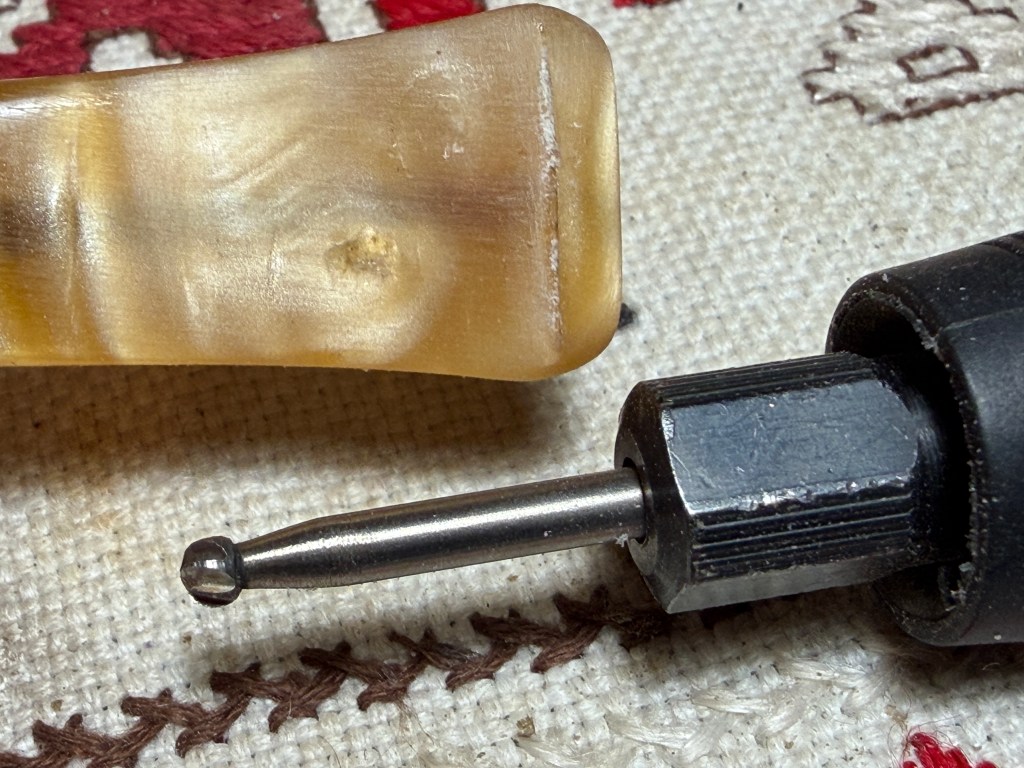
Since I cleaned all the injured acrylic out leaving clean divots, I probably could have again applied clear CA glue, and it would have been totally invisible this time. I decided to apply amber CA glue to blend with the acrylic hue.
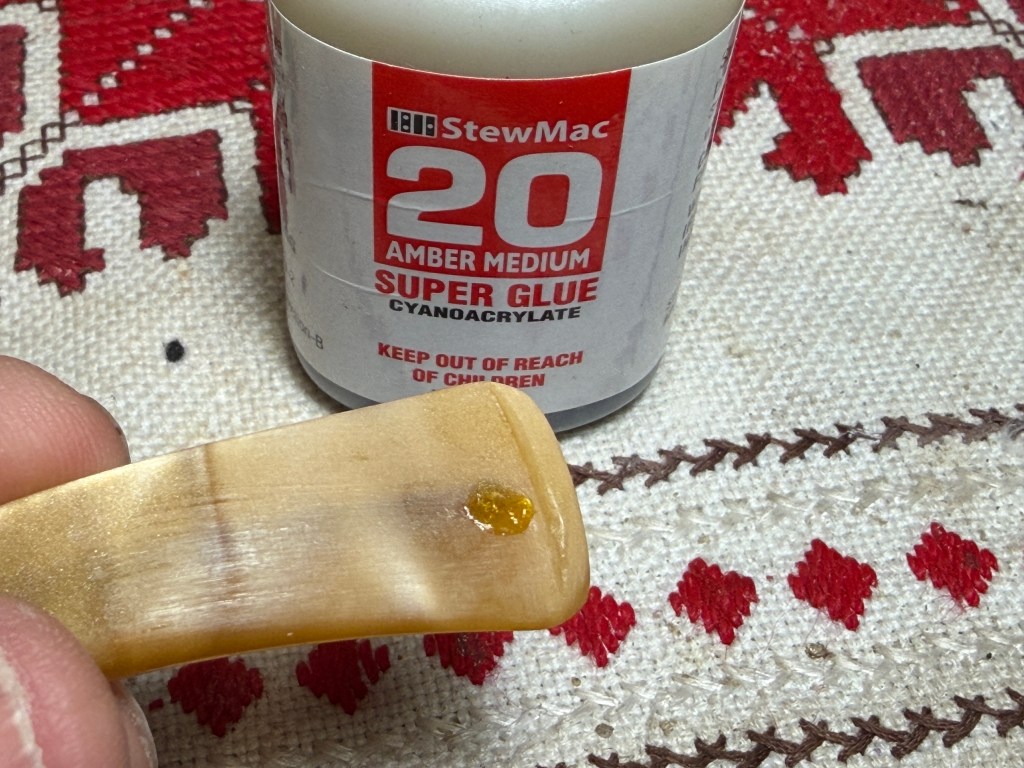
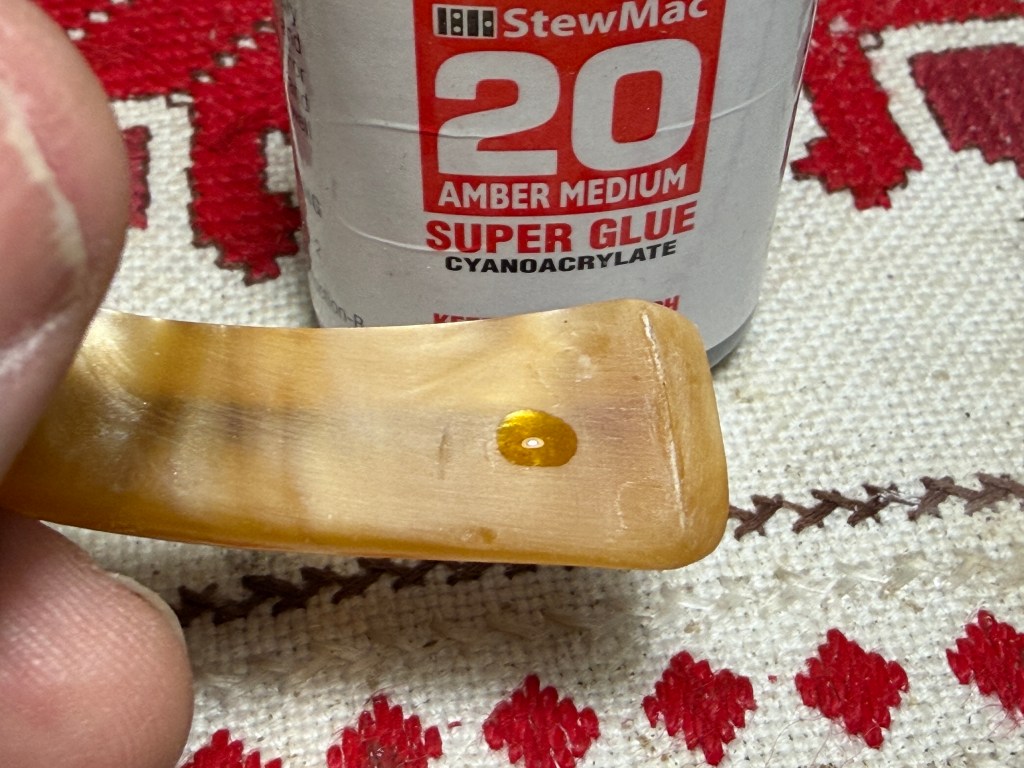
After fully cured, the patches were filed down with needle files and then sanded with 220 grit paper. This is much better than what we had before. HOWEVER, in the interest of full disclosure, I did not like the results after the acrylic was more finely sanded. The patch on the upper bit started to stand out instead of blending. So, the process of digging out the patch material with the rotary tool and burr was repeated and clear CA glue was used to fill the upper patch. Sanding followed and it turned out great – did not include pictures of this entire backtracking activity.
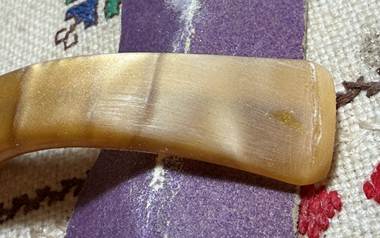
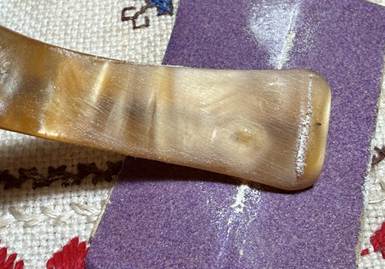
The sanding continues by expanding to the entire stem with 320 grit paper.
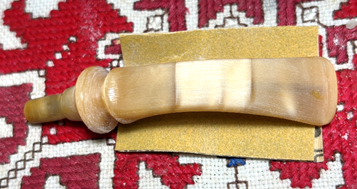
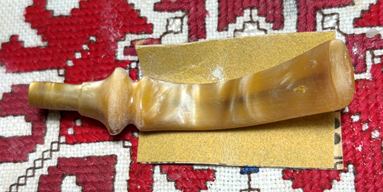
The 320 grit paper is followed by wet sanding with 600 grit paper and then 0000 grade steel wool is applied.
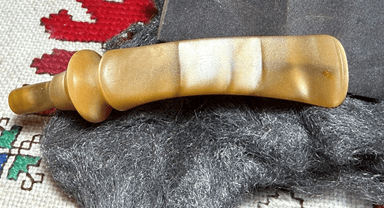
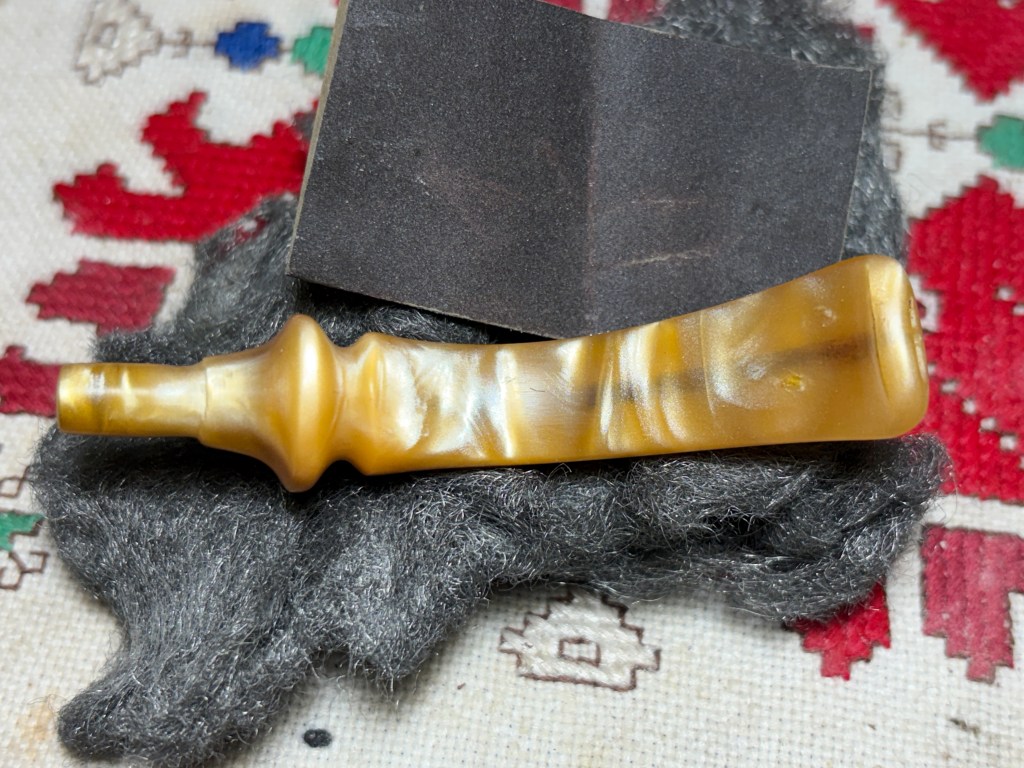
Moving next to the fine micromesh pads, the sanding transitions to polishing with the pads. Between each pad, Obsidian Oil is applied to condition the stem. The first set of 3 pads are grades 1500, 1800, and 2400. (Note: It was at this point that the amber patch was standing out more than I liked and redid the patch with the clear CA glue).
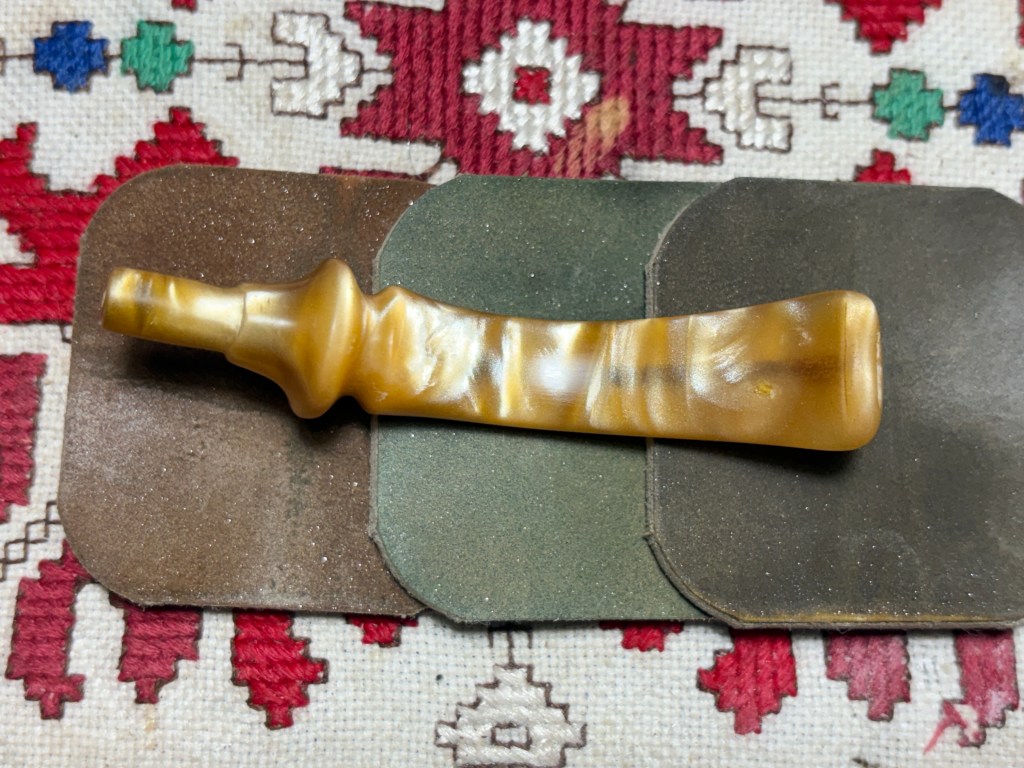
The second set of pads are grades 3200, 3600, and 4000.
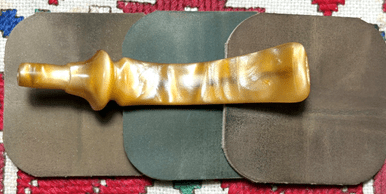
The final set of pads are grades 6000, 8000 and 12000.
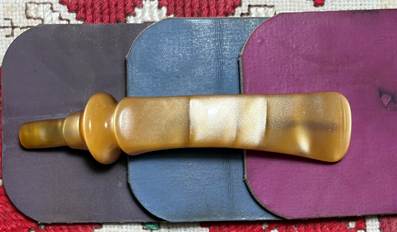
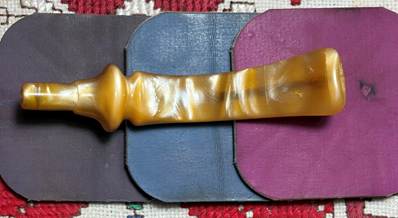
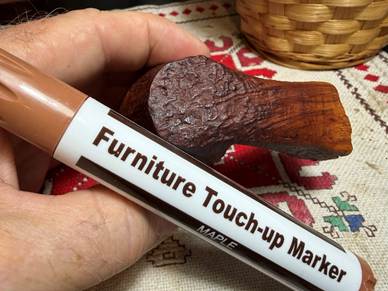
With the sanding completed for the stem, attention is now on the stummel. Taking a closer look, there is a small fill on the heel of the Freehand. The fill seems solid, but it needs to be colored a bit to help it blend.
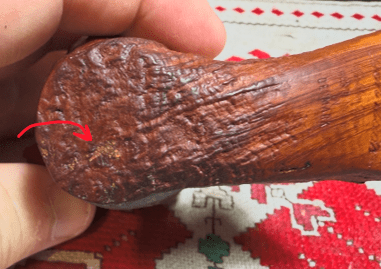
A maple colored dye stick does a good job blending the fill.
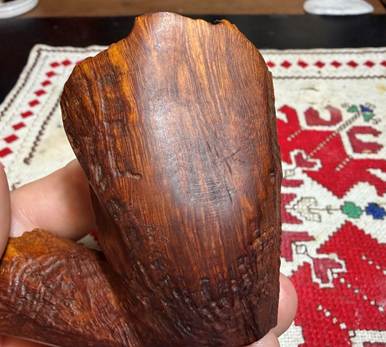
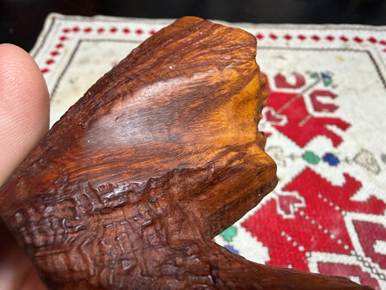
Looking at the briar surface, the rough bark areas of the stummel are what they are in their natural state – beautiful. Looking at the smooth briar slopes, they have normal scratches from use. These will be sanded to clean these up.
First, sanding is focused on the Steward’s Peek briar – then inside of the chamber where the wall juts up toward the peaks of the plateau.
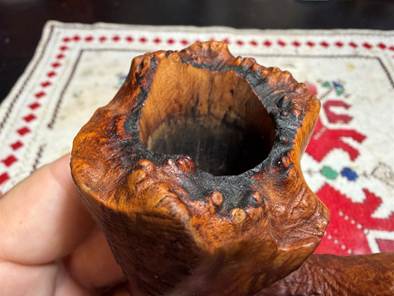
It has already been sanded with 220 grit paper. This is followed by 320 grit paper wrapped around a dowel rod to keep the sanding flat and even.
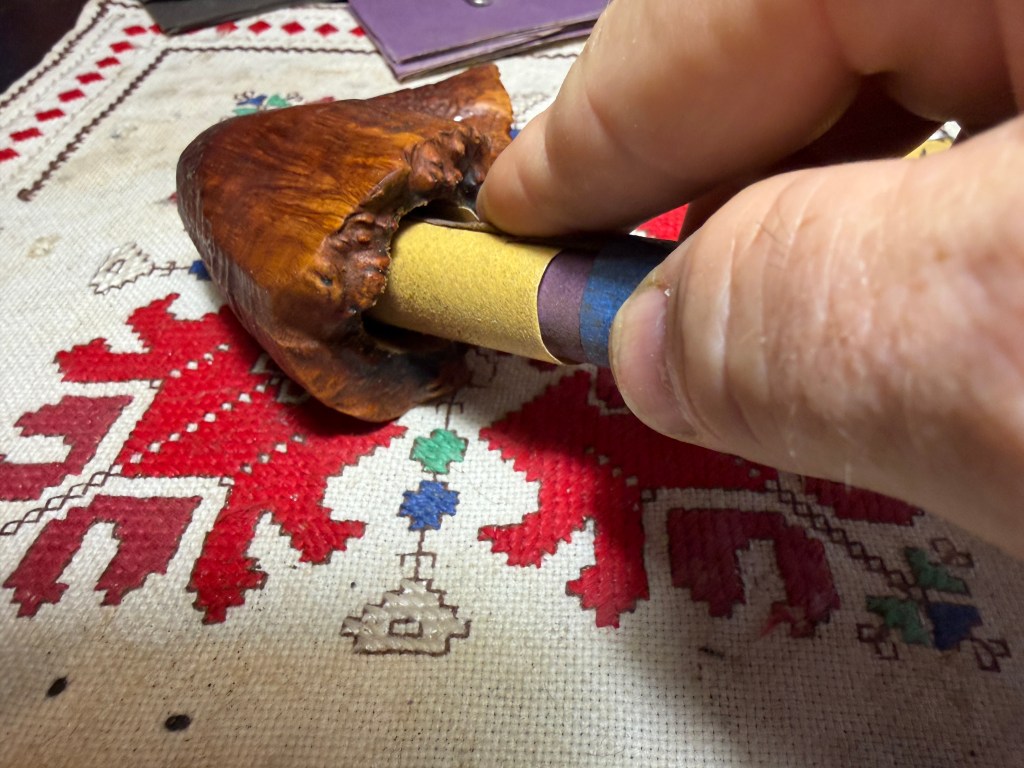
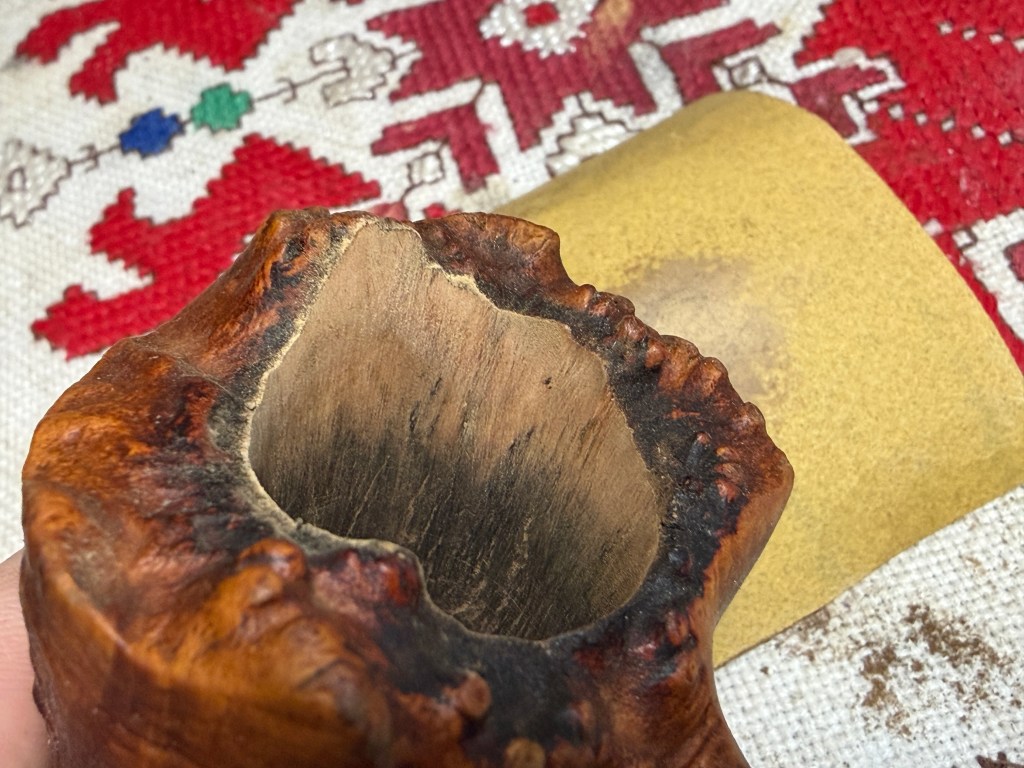
Next, 600 grit paper wrapped around the dowel rod sands the inner briar. The grain is beginning to show itself very nicely.
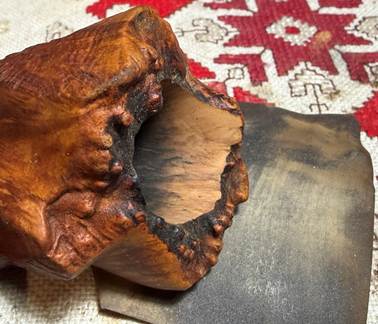
Next, micromesh pads are applied. Between each pad, the briar is wiped with a moist cloth to remove dust and to give the next pad more traction. The first set of 3 pads are grades 1500, 1800, and 2400.
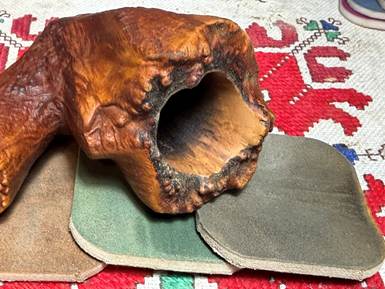
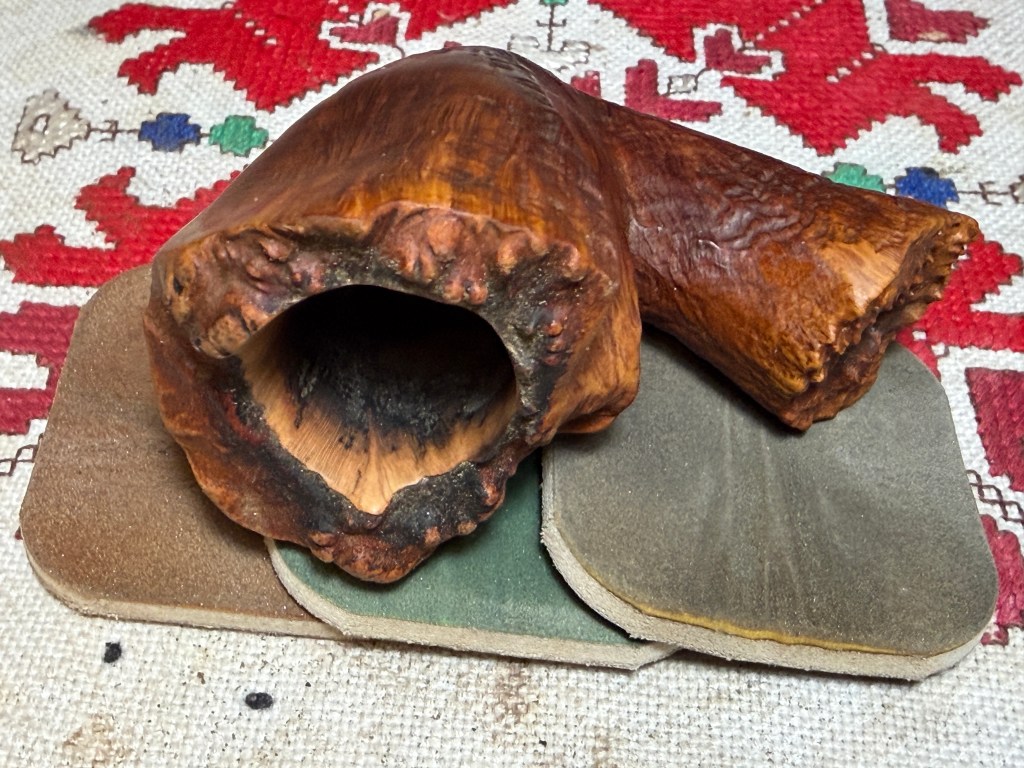
Next, pads 3200, 3600 and 4000 grades are used.
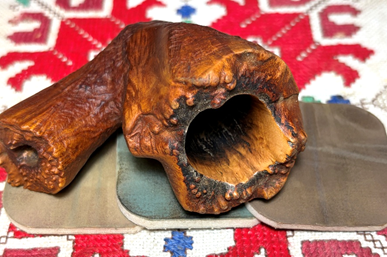
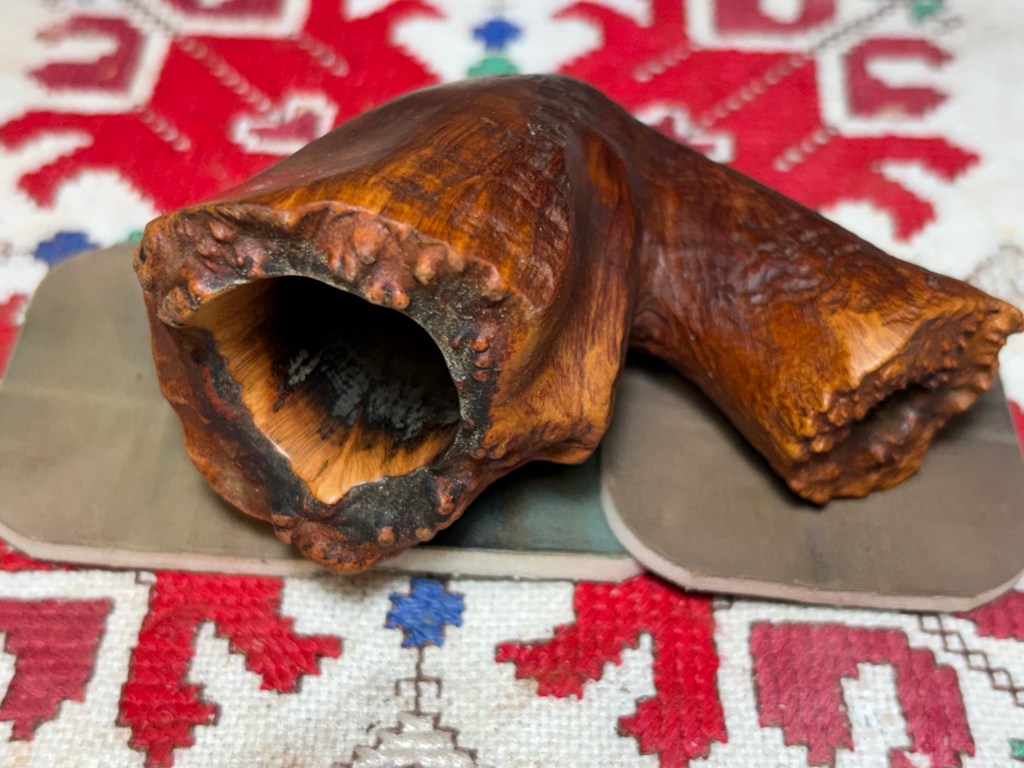
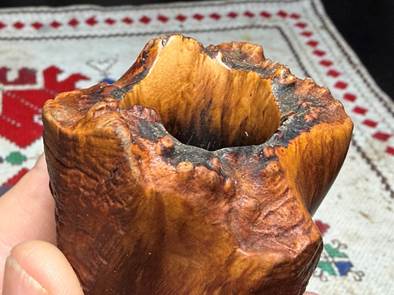
Finally, grades 6000, 8000 and 12000 are used. My, oh my. I love how the grain comes out with this extra piece of briar real estate.
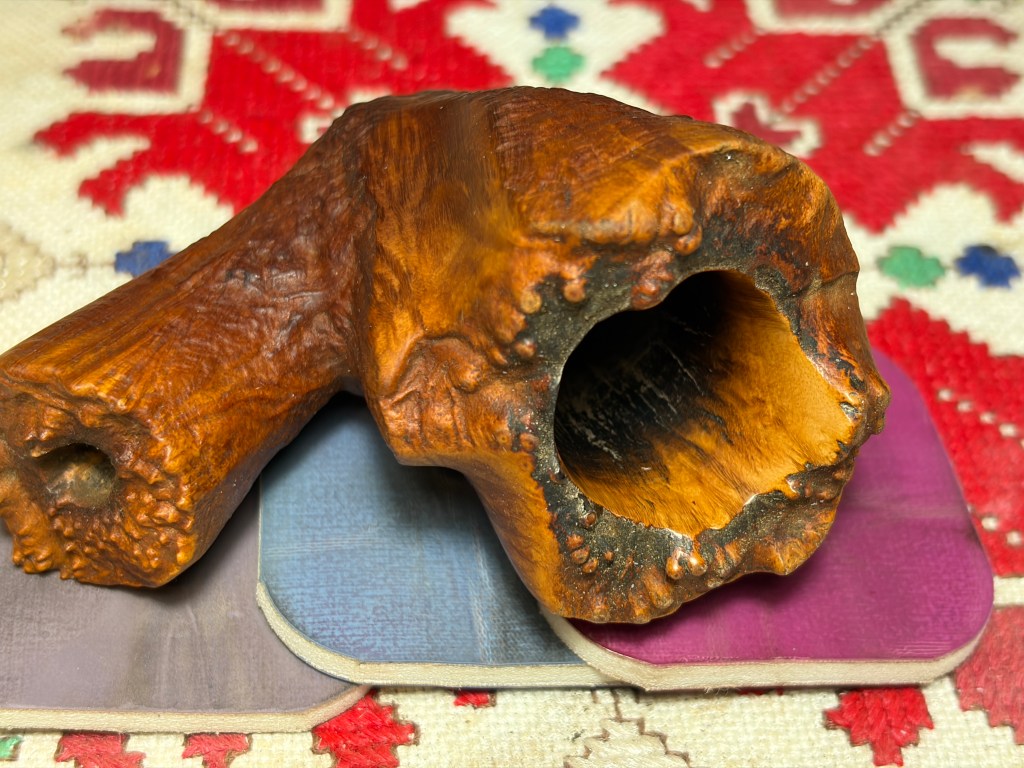
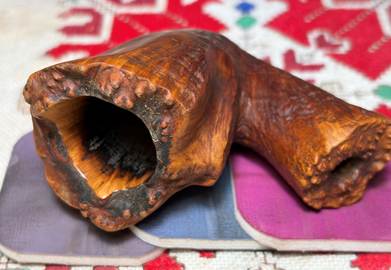
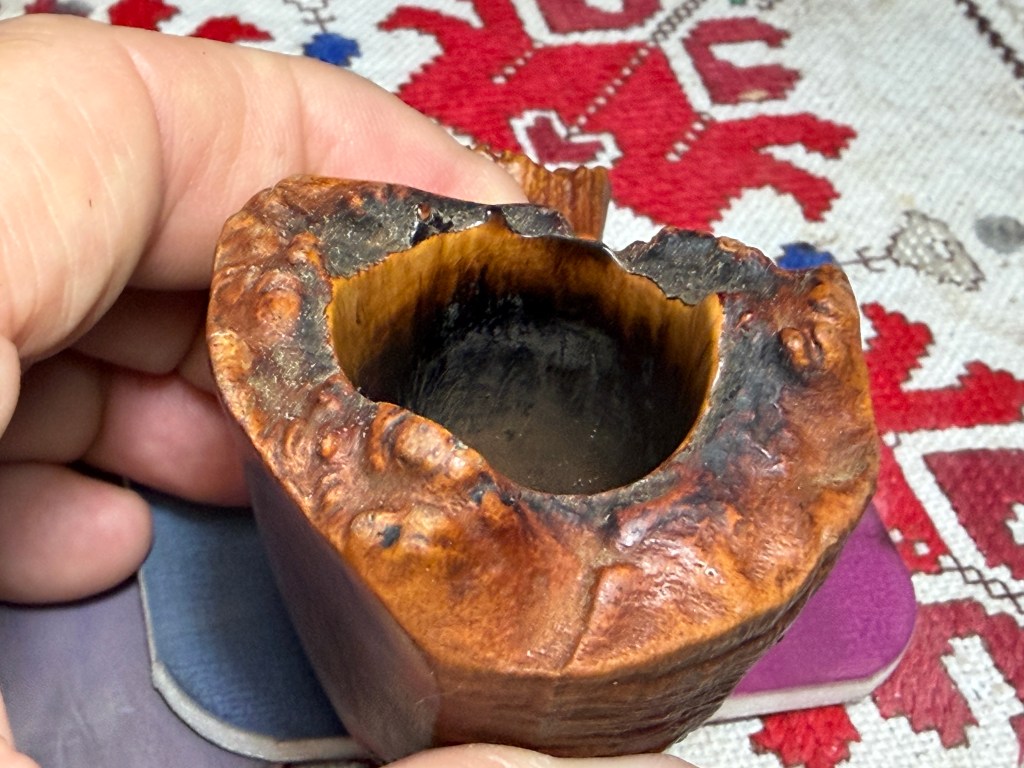
It reminds me of the Colorado Rockies – not bad.
It’s time to catch the external smooth briar up with the Steward’s Peek briar. The stummel has 3 smooth briar slopes which are sanded with sanding sponges. 4 sponges are used on each slope – coarse, medium, light and fine.
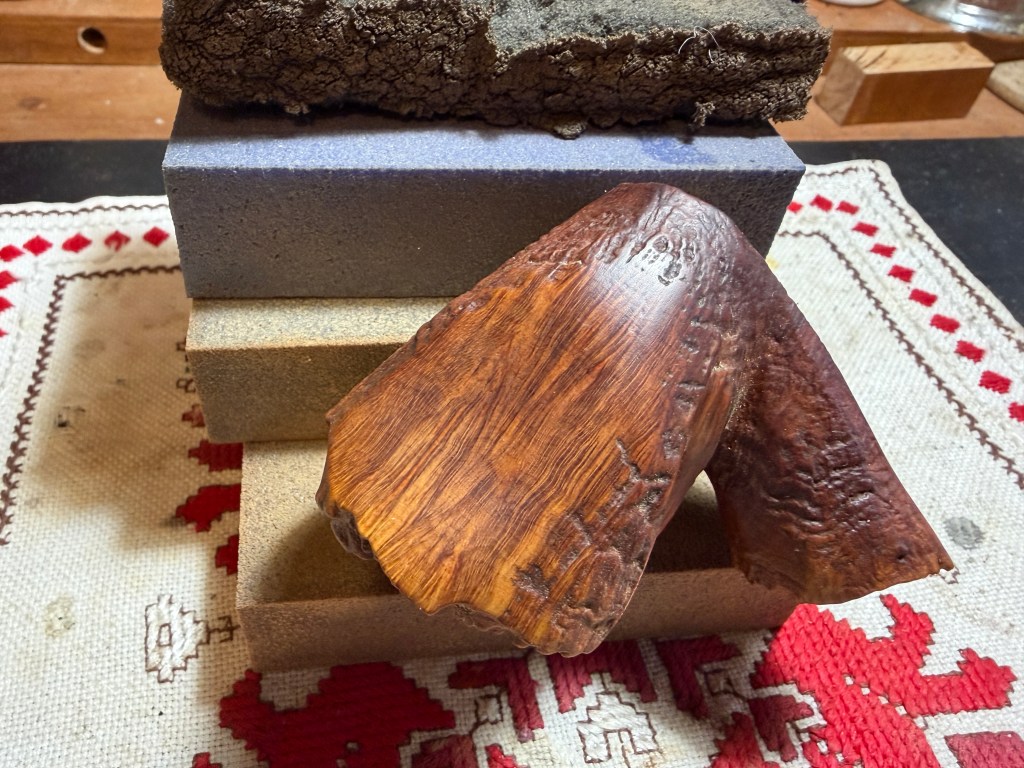
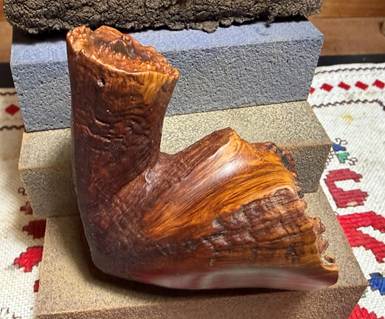
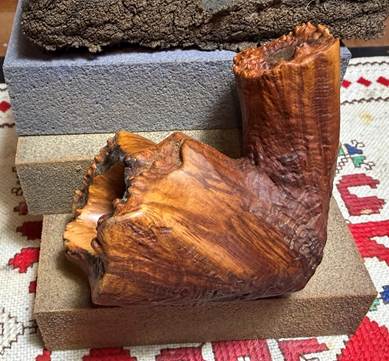
Micromesh pads follow the sponges. As before, between each pad the briar is wiped with a moistened cloth to remove dust and to give the next pad better traction. First, pads 1500, 1800 and 2400 are applied to each slope.
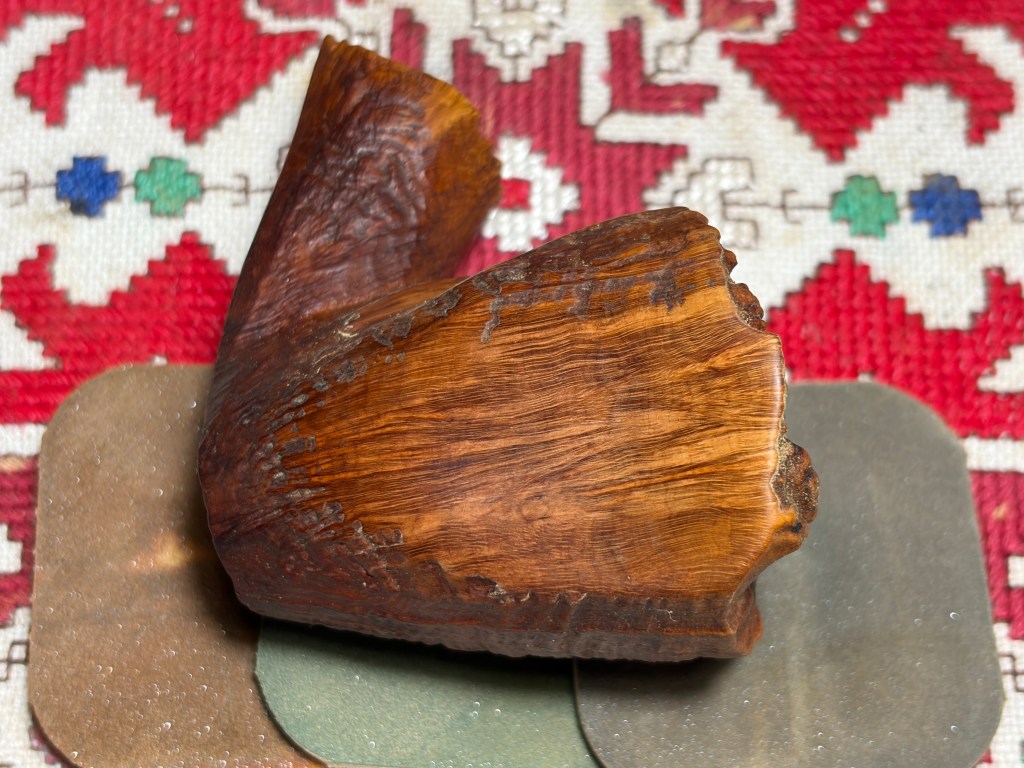
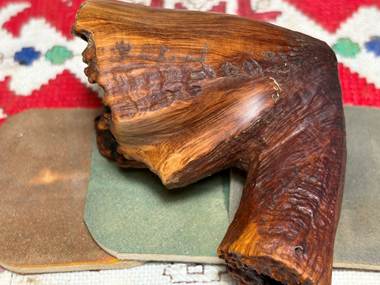
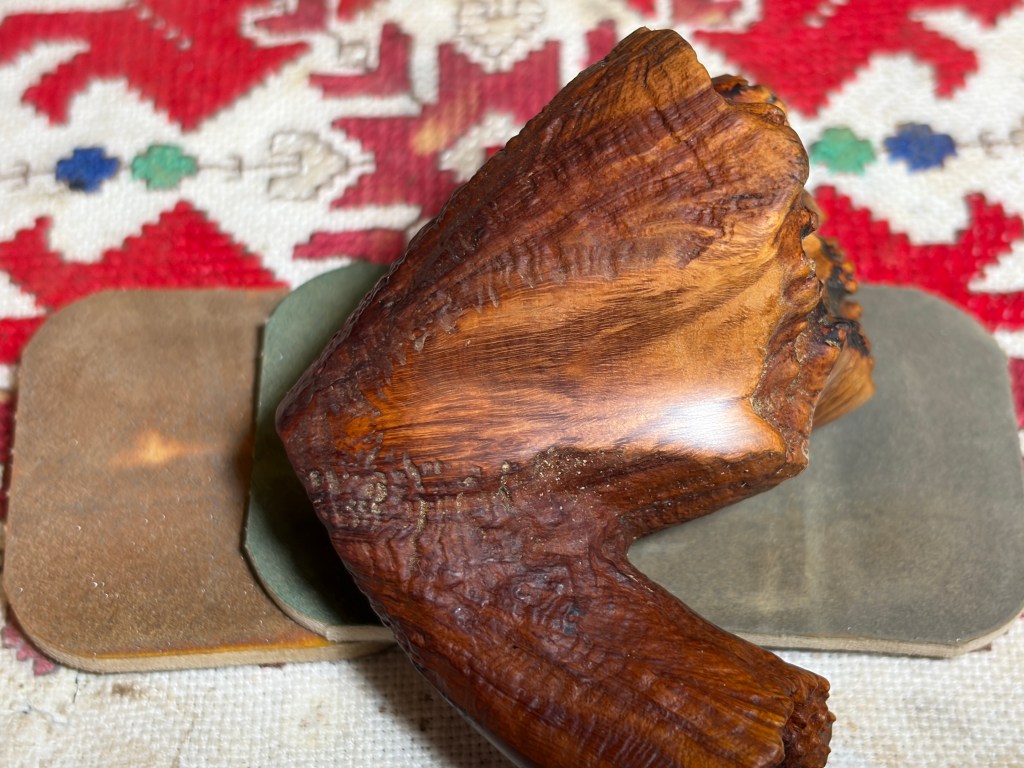
Next, grades 3200, 3600 and 4000 are applied to each slope.
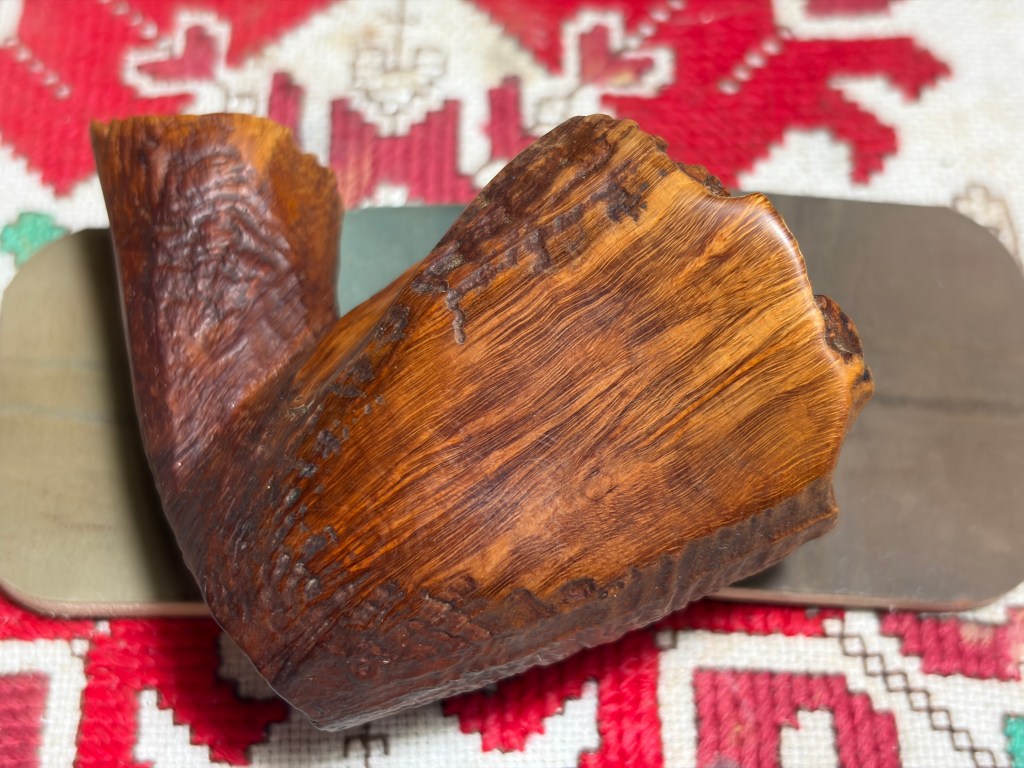
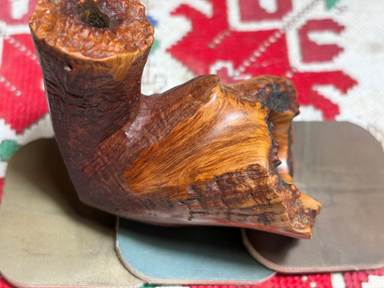
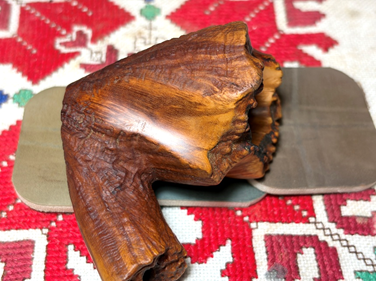
The final set of pads are grades 6000, 8000, and 12000. Each of the 3 slopes are sanded with these pads including the nomenclature smooth briar panel on the back of the shank. Up to this point the nomenclature has not received any sanding in order to protect the stampings. With the last 3 pads, they are not abrasive and are actually polishing the briar at this stage. The smooth briar looks great.
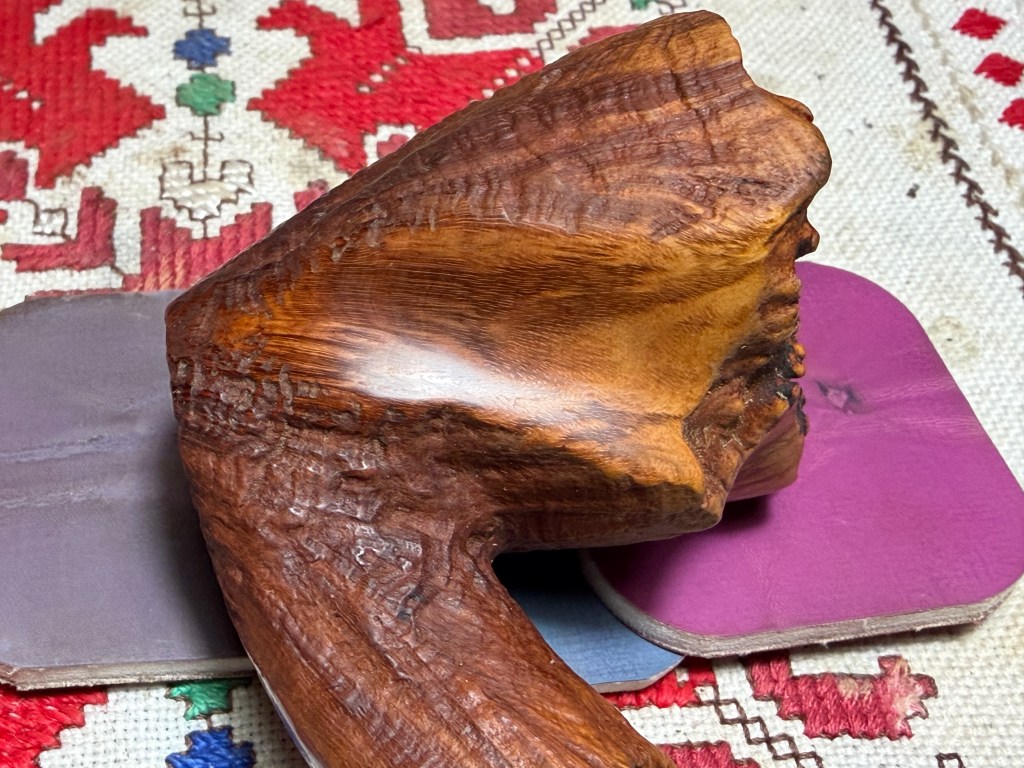
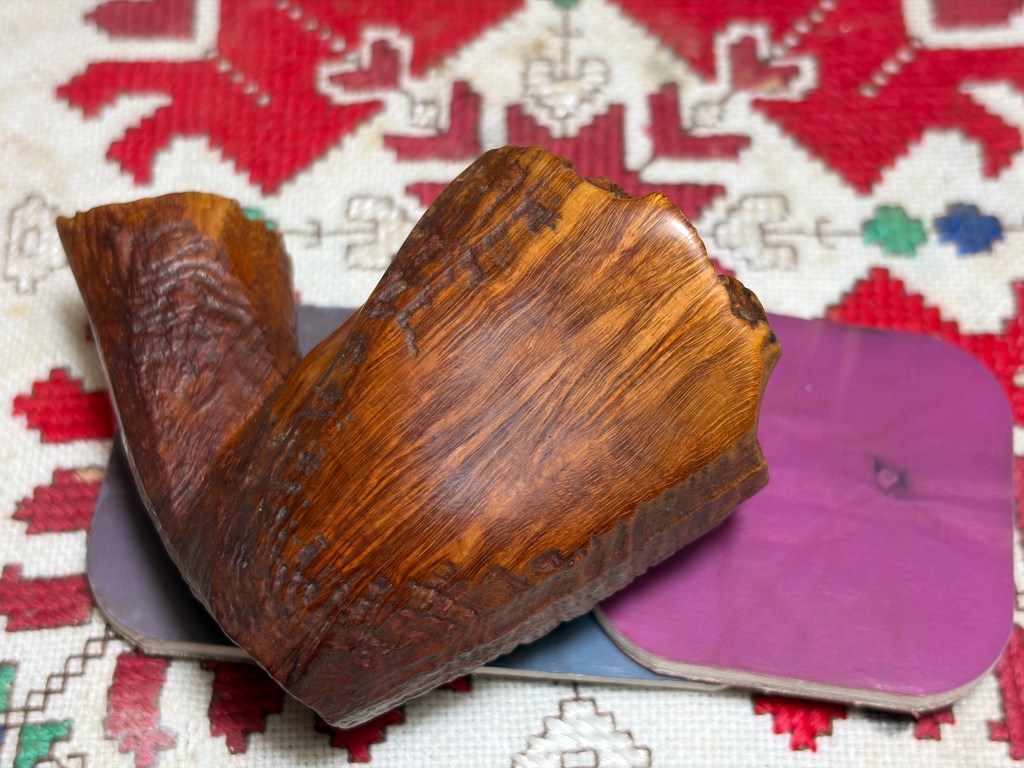
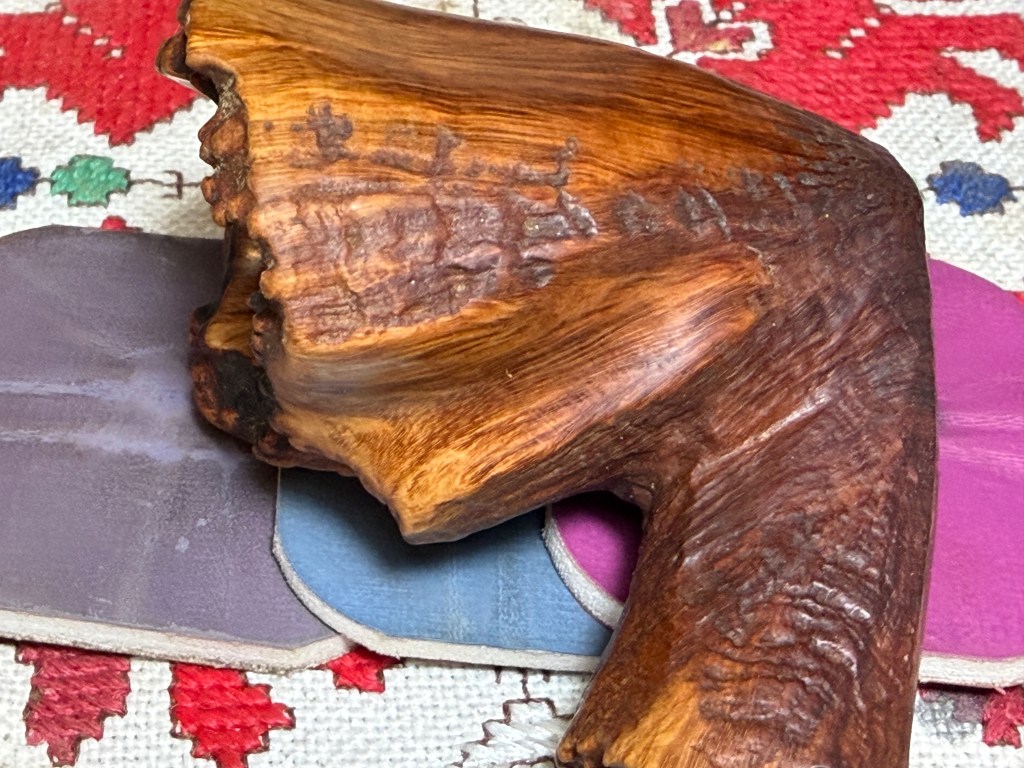
The next project is to refresh the dark charred look on the plateau that most Freehands have. It could be that they are trying to emulate the vestiges of bark… not sure about that. But the key is to refresh the darkened briar and keep is looking vintage or rustic – not new.
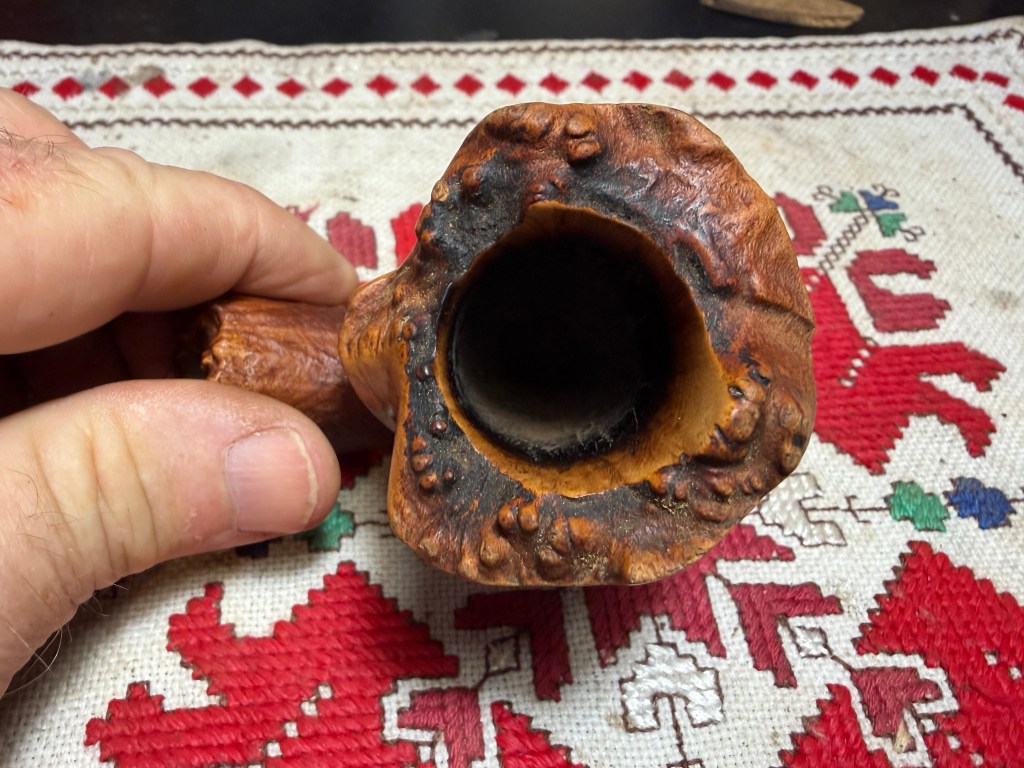
A black dye pen is used to apply fresh black to the plateau. It doesn’t appear that the original pattern covered the entire plateau but mainly highlighted the inner area near to the chamber. I tried to do the same with a new application of black dye.
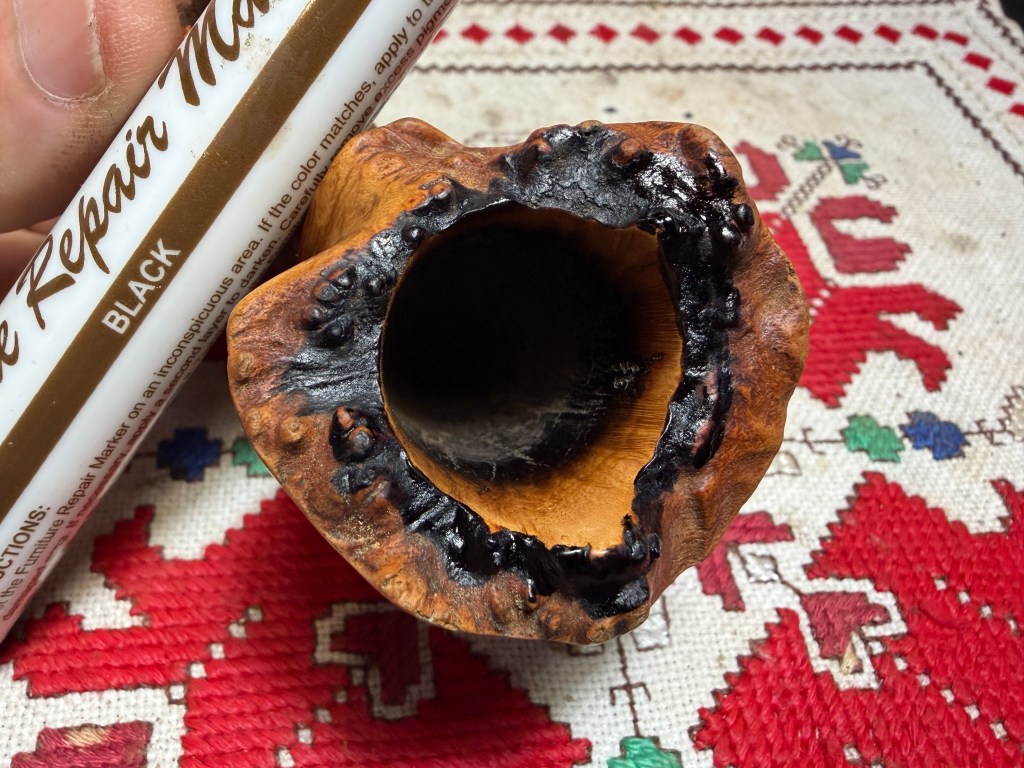
In the picture above, the black is stark and new looking – not blending with the plateau landscape. To blend the black and ‘antique’ it, a 2400 grade micromesh pad is used to rough up the blackened area. This sanding not only helps to blend the dye, but it also sands off the peaks to create more contrast. Refreshed, but not looking refreshed! I like it.
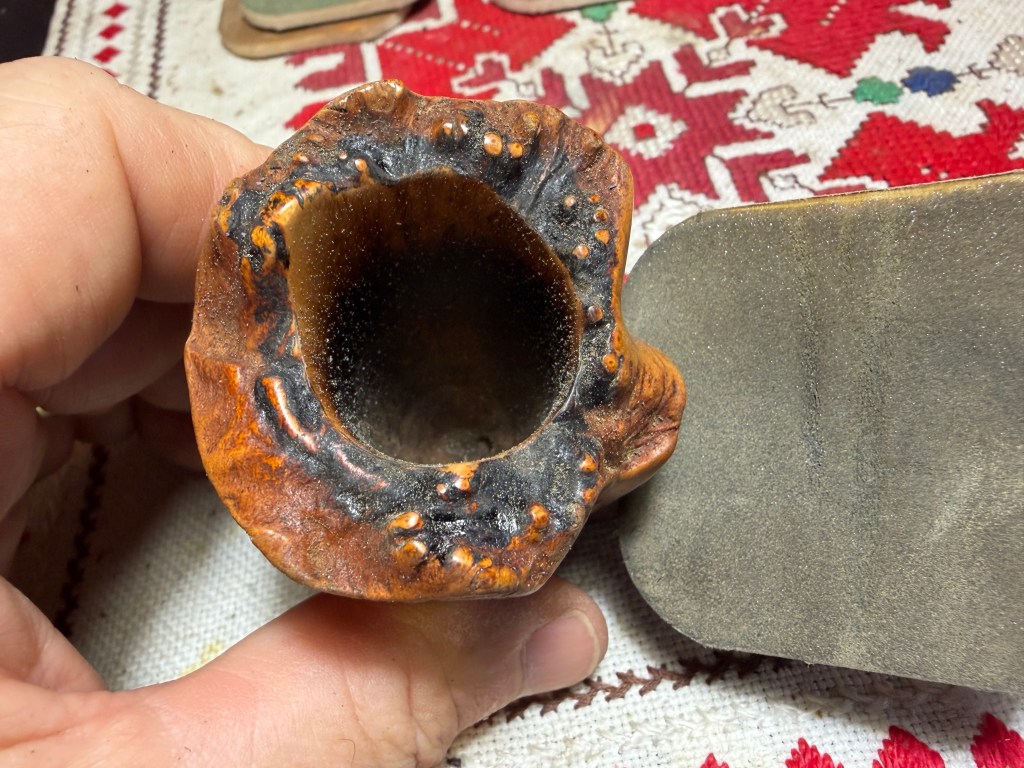
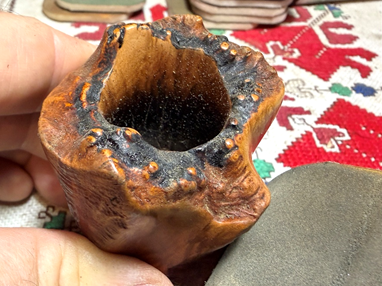
Next, to condition the stummel Mark Hoover’s ‘Before & After’ Restoration Balm is used (www.Lbepen.com). Mark’s product does a fantastic job conditioning the briar and bringing the natural hues of the briar out more distinctly. Some Balm is placed on the fingers and worked into the briar. The Balm is worked into the rough bark briar, plateaus as well as the Steward’s Peek briar. After thoroughly applied, the stummel is set aside for several minutes to allow the Balm to be absorbed and do its thing.
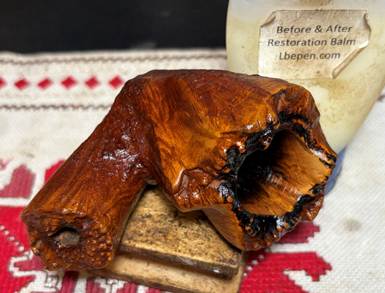
After about 15 minutes, the excess Balm is wiped off with a dedicated microfiber cloth. My, oh my. What a striking piece of briar that Preben Holm fashioned.
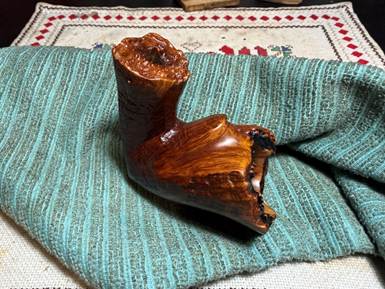
Next, Blue Diamond compound is applied lightly to the smooth briar and to the acrylic stem. I apply lightly on the stummel because I’m avoiding generating a lot of compound dust which I don’t want to get fouled in the rough briar. Blue Diamond compound is a very fine abrasive that polishes out very fine lines resulting in more natural shine. With a dedicated cotton cloth buffing wheel mounted in the rotary tool at about 40% full power, the compound is applied.
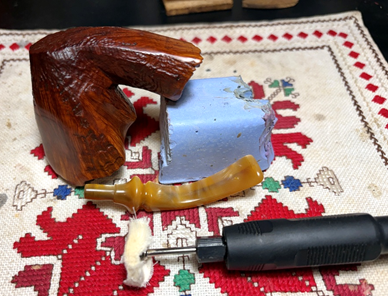
To make sure that no compound dust is left behind and to prepare the surface for the wax, I first wipe both the stem and stummel with a paper towel. Then the felt cloth is used.
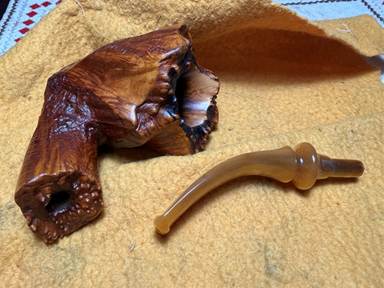
The home stretch. With another dedicated cotton cloth buffing wheel mounted at the same speed, carnauba wax is applied to the entire stummel and stem. With the rough briar, the coat of wax is very light so not to have wax get compacted in the nooks and crannies of the rough briar and plateaus. After application of the wax, the pipe is given a rigorous hand buffing with a microfiber cloth to remove excess wax and to raise the shine.
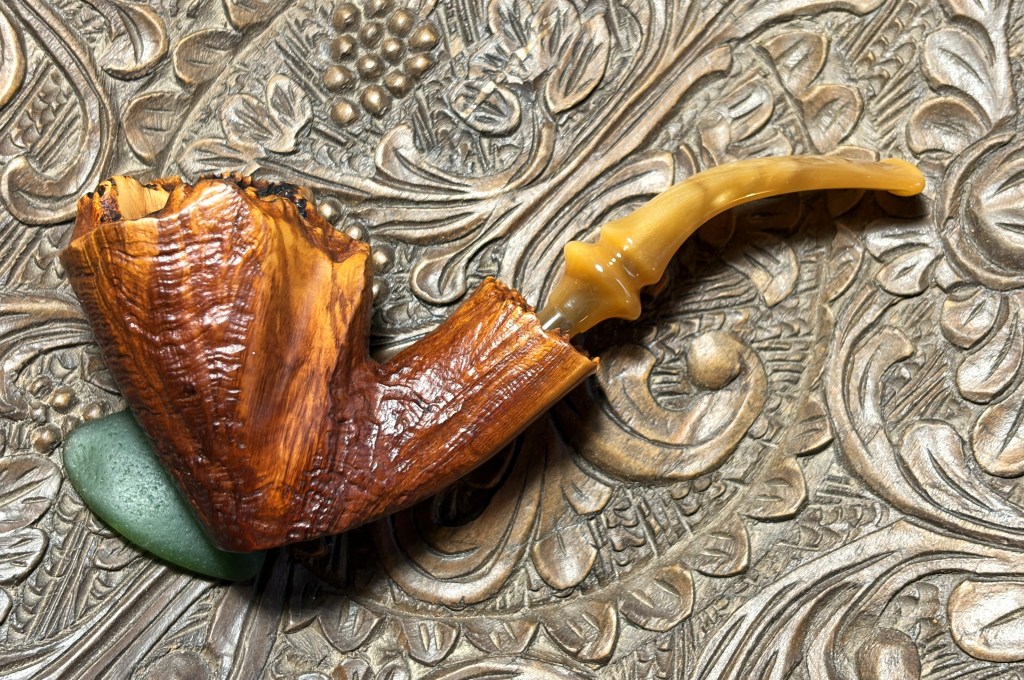
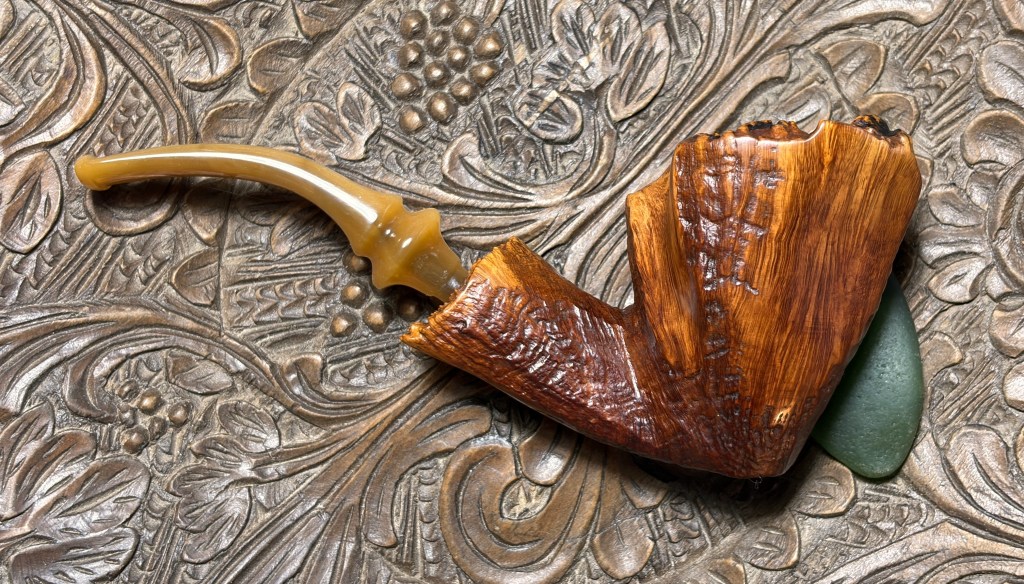
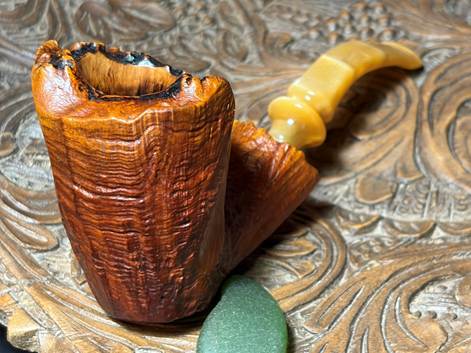
Preben Holm was a master at what he did and how he closely oversaw every pipe that was being crafted is well-documented – either by him or craftsman he trained. It is said that he did the finish work on every pipe that was commissioned from his shop in Denmark. The Ben Wade Danish Pride Golden Tan lives us to the reputation of a Preben Holm pipe. When Josh chose this pipe to express his thanks and appreciation for his mentor, he wanted a unique pipe that would get the attention of all those circled with bowls in hand and blends to enjoy. I think George will appreciate this pipe immensely – it’s one of a kind. Josh commissioned this pipe and a portion of the proceeds of all pipes restored help to support the work of the Daughters of Bulgaria, now called, Spring of Hope – helping women and girls who have been trafficked and sexually exploited and creating prevention programs for those most at risk. Thanks for joining me!
PS: When George goes to the training center to have bowls with other RUF leaders to show off his new Freehand as Josh wrote to me earlier, I hope George gives me a call – the training is in nearby Westminster, Colorado, my neighborhood!
 The Pipe Steward