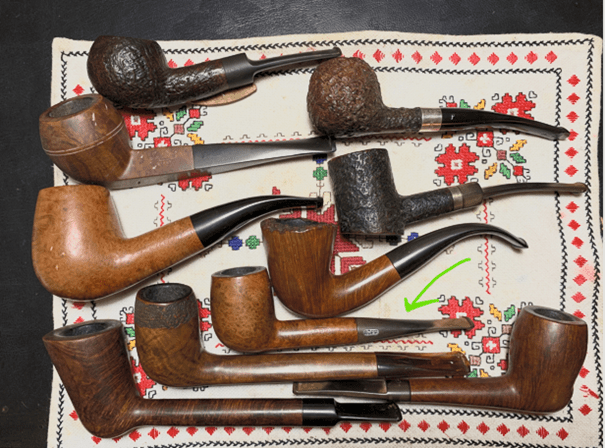
The next pipe on the worktable came to me in August 2024 from a generous pipeman who donated 10 very interesting pipes to benefit the Daughters of Bulgaria, now called Spring of Hope. My wife and I co-founded this effort to help trafficked and sexually exploited women and girls. We lived in Sofia, Bulgaria for many years and this effort that continues today is near and dear to our hearts. Interestingly, the Ropp Grand Duc now on the worktable is pipeman Steve’s next commissioned pipe. Steve is an attorney who works in NYC but is from the state of Texas. This pipe and the last pipe I just finished for Steve, (A Dunhill Second – New Life for a Parker Super Bruyere 189 Made in London England ④), were both donated by the same generous pipeman who is an attorney also, who used to reside in New York but now loves life in Georgia. I didn’t put this together last time!! Here is the generous pipeman’s gift of 10 pipes. The Ropp is marked with the arrow.
The Ropp that Steve chose next is a solid workhorse Billiard and has a slightly smaller French profile with a gentle tapered stem. Here are more pictures of the Grand Duc when it arrived from the generous pipeman.
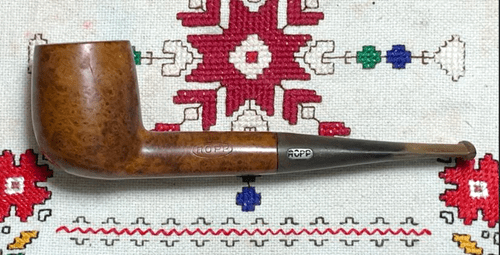
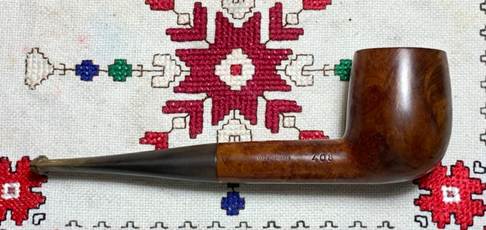
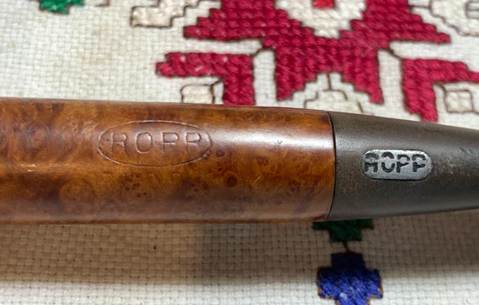
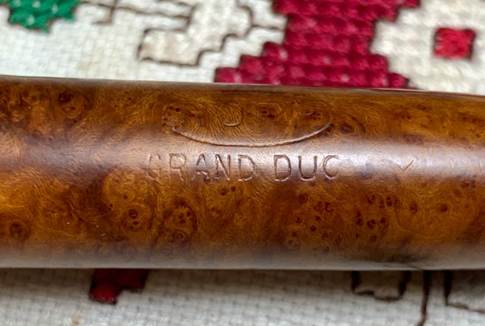
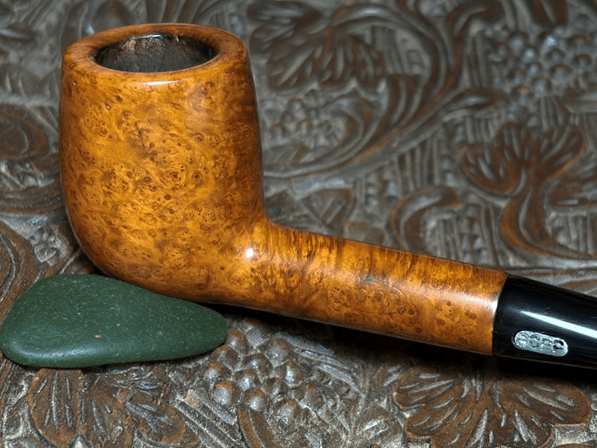
The left side of the shank is stamped ROPP encased in an ellipse or oval. Beneath the ellipse is stamped GRAND DUC (Duke – English). The aluminum inlaid rondel stem logo is visible – ROPP.
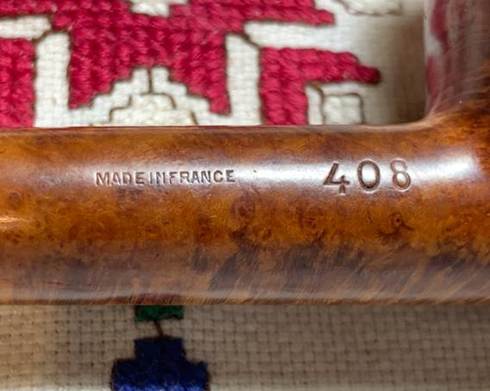
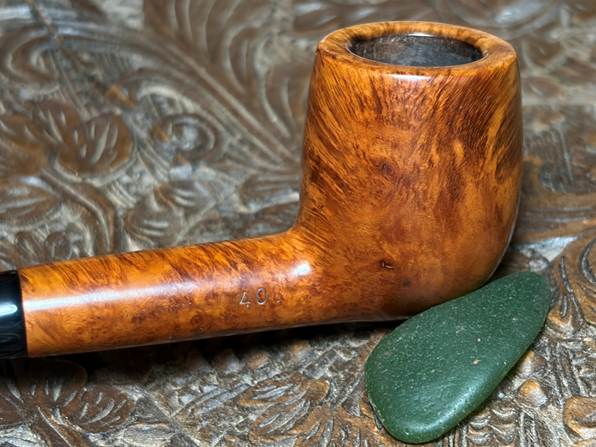
The COM is stamped on the right side of the shank: MADE IN FRANCE. To the right of this is the shape number: 408.
When one thinks of the name Ropp, 9 out of 10 times they will have a cherrywood pipe in mind. Ropp’s historical mainstay when it was in business and thriving was producing very unique shapes made of cherrywood. Pipedia’s Ropp article provides a good place to start to understand the heritage of the French Ropp (Ropp – Pipedia):
Eugène-Léon Ropp (1830 – 1907) had acquired a patent for a cherrywood pipe (wild cherry, lat.: Prunus avium) in 1869. In 1870 he established a workshop to manufacture such pipes in Büssingen (Bussang, Vosges mountains). Around 1893 the business moved into the former mill of Sicard (part of the community of Baume-les-Dames – Département Doubs, Upper Burgundy – from 1895 on).
The pipes were a big success in the export as well. Shortly before 1914 Ropp designated A. Frankau & Co. (BBB) to be the exclusive distributor in the UK and it’s colonies.
Probably in 1917 a workshop in Saint-Claude in the Rue du Plan du Moulin 8 was acquired to start the fabrication of briar pipes. In 1923 a small building in the environment of Saint-Claude, serving as a workshop for polishing, was added.
- Circa 1920’s 1930’s catalog in PDF, courtesy, Joseph Morris: Early Ropp Catalog
Even though cherrywood pipes were the mainstay of Ropp until the company finally closed down in September 1991. The company was taken over by Cuty-Fort Entreprises (Chacom, Jeantet, Vuillard, Jean Lacroix…) in 1994.
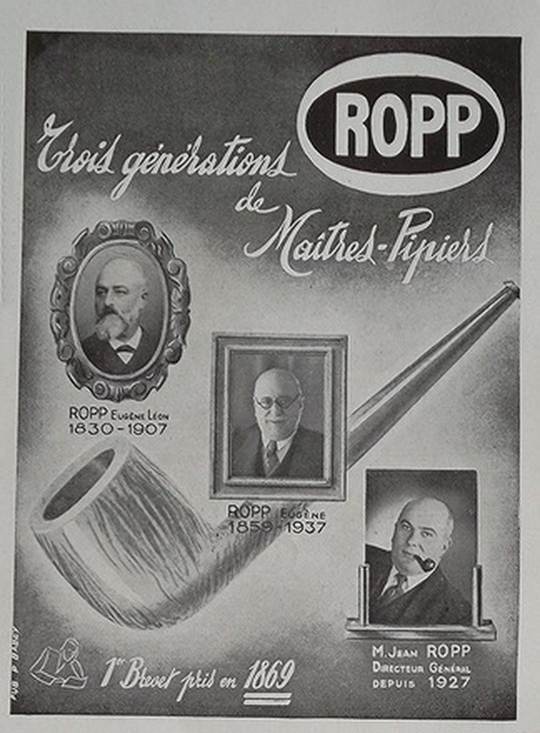
The information from Pipedia is pretty basic information, but the article does have is a great collection of period ads which tell more of the Ropp story. The Ropp story was rooted in 3 generations of Ropps that formed the backbone of the early history into the 1900s: Eugene-Leon Ropp (1830-1907), Eugene Ropp (1858-1937), and M. Jean Ropp (1927-1967) are described by this early ad: Three Generations of Master Pipe Makers. Note: From later research I determined the end date of M. Jean Ropp’s tenure as 1967 which is not in the ad – he was still at the helm when the ad was published.
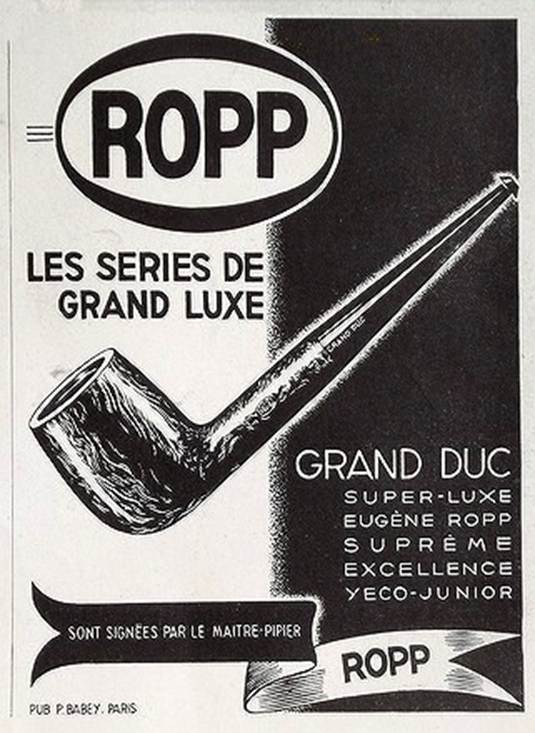
With a little help from Google Translate I’m able to make sense of the French! Another period ad highlights the line on the worktable, the Grand Duc, and we learn some helpful information about the Grand Duc line. It is described as ‘The Luxury Series’ and then, ‘Grand Duke Super Luxury’. From this ad we can deduce that the Gran Duc is not an entry level pipe but probably a mid-level offering.
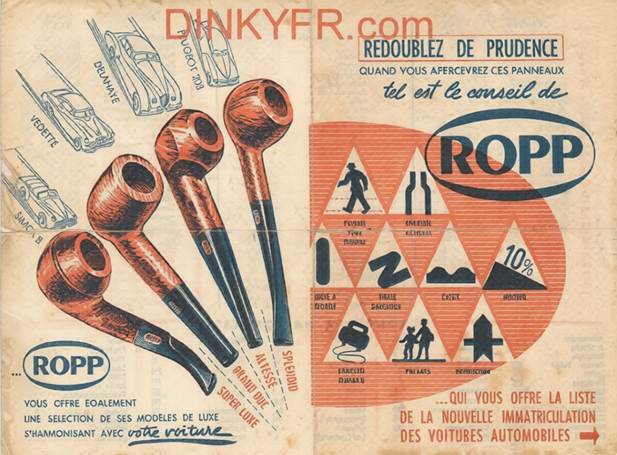
Another period ad caught my attention that mentions the Grand Duc line along with other Ropp lines being paired with classic cars. I like this ingenuity in trying to build up the business. This is cool!
The model associated with our Grand Duc is the French Vedette made by Simca AND Ford. I’m sure most pipemen know what a Vedette is, but I don’t. From Wikipedia (Simca Vedette – Wikipedia):
The Simca Vedette is an executive car, manufactured from 1954 to 1961 by French automakerSimca, at their factory in Poissy, France. The Vedette competed in France’s large car market at a time when the economy was finally returning to growth and enjoyed moderate success with its American style finished off by the Italian designer Rapi. It was marketed with different model names according to trim and equipment levels. The Vedette was Simca’s largest model at that time, and it went on to spawn a more economical version, the Simca Ariane.
Simca acquired the Poissy factory from Ford France (Ford Société Anonyme Française, the French subsidiary of the Ford Motor Company), along with the model line, in 1954. The Vedette was therefore initially still marketed as the Ford Vedette. The Vedette was manufactured in Poissy until 1961 and the Ariane until 1963. After that, production continued in Brazil until 1966, when the Vedette finally evolved into the Simca Esplanada[4] following Simca’s takeover by Chrysler.
The text on the lower left side of the ad explains the correlation between car and pipes: Ropp also offers you a selection of its luxury models matching your car.
Apparently, the text on the opposite side woos folks to look at the new selection of cars available to choose from and pipes from Ropp paired with the different models! Here is one of Vedette shown from the Wiki page. There’s only one conclusion to come to – the new steward of this Ropp Grand Duc owes it to himself to go out and find a car like this… 😊! One piece of information we can take from this ad is the dating of our pipe. This car was produced predominantly in the 1950s and 60s, which places our Grand Duc in this time frame. From the Wiki information above, the success of the Vedette is described as an industry climbing out of the difficulties of the War. The pipe industry had the same challenge and pairing the two – new cars and new pipes, was a great sales strategy in my book!

From Pipedia I did some additional searching and came up with a great article called, Ropp – A Pipe Mark with An Unexpected Life Course (Pipe Portal – Article Ropp, een pijpenmerk met een onverwachte levensloop). Again, I relied on Google Translate to make sense of the article written in the Dutch language by Don Duco in 2014 and was published by the Amsterdam Pipe Museum. The article begins with the expected hook and teaser to keep you reading:
Nowadays, the pipe brand Ropp has faded into the background, but there were years when every pipe smoker had a Ropp hanging in their rack. The popularity of this brand was tied to the twentieth century, but even in the time before that, Ropp was a respected brand. Started as a maker of cherrywood pipes, a specific type of cherry wood with the English designation cherrywood, the company very successfully transformed into a full-fledged factory of briar pipes, while alternative types of wood continued to be produced.
This article outlines the history of the famous pipe factory Ropp, which was successively active in three locations. Founded in Bussang, the factory later moved to Baume-les-Dames, both in the Vosges. Production was then taken up in Saint-Claude in the Jura. The factory has always remained loyal to the Ropp brand, making the brand representative of the rise, flourishing, and decline of the cherrywood tobacco pipe. In addition, the brand also wrote a century of briar history. In light of the factory’s history, some pipes made by Ropp are discussed and their fashion characteristics are explained. The story is illustrative of the cherrywood pipe but also shows that production can gradually shift to become a mature briar factory. In its final period, Ropp is merely a brand name until it eventually, inevitably, dies out.
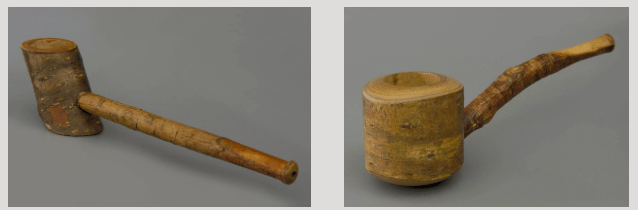
I bolded the sentence above to mark the foreshadow of what was to come. While our focus is not on the production of the classic Cherrywood pipes that Ropp is most known for, I found these early examples of the Cherrywood pipes fun to include. They have a roughness and shaping which might certainly be seen in Middle Earth!
Ropp has a full history leading up to WW II, but it’s really the post-war era that is our focus in discovering more about the Grand Duc briar on the worktable. The article continues looking at the post-war years:
After the peace of 1945, a new board is appointed to make a fresh start. Louis and Charles Chapuis are then appointed, together with Adrien Comoy and Arthur Swift. Jean Ropp initially withdraws but later rejoins together with André Mermet from Saint-Claude. Veteran Jean Ropp finally retires in 1967 after nearly fifty years of leadership. Gradually, the malaise of the war is overcome thanks to a restart in both types of wood. Nevertheless, much has changed in the pipe industry, especially because, due to the decreasing number of pipe smokers, there is widespread overproduction. The American cigarette has taken over a large part of the market.
In the 1950s, fifty to sixty workers are employed in Baume-les-Dames. Compared to the crisis and the war situation, the company has therefore recovered considerably. The major customers, by the way, have hardly changed. They are England, the United States, Australia, and New Zealand, not surprisingly the countries where Chapuis and Comoy had significant sales and for which Adolf Frankau also actively supplied. In the English-speaking areas, the bruyère line benefits from the good reputation of the cherrywood product, but as before the war, its sales in England remain underwhelming.
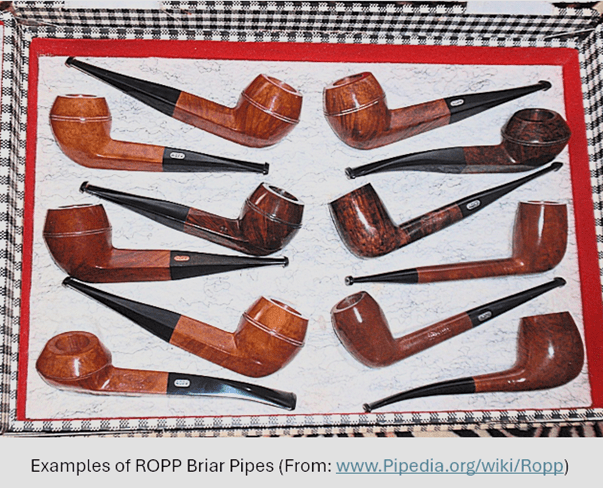
This excerpt gives somewhat of a foreshadow of the decline of Ropp pipes generally which was true universally for the pipe industry after the war. The interesting fact that I picked up from the article was that the decline in the interest in Cherrywood pipes created the need for leveraging more Ropp briar pipe production. The article goes on to unpack this movement:
Advertisements in trade magazines for the tobacco retail trade from the 1950s somewhat misleadingly portray the innovation of the product. In 1953, for example, the Ropp supreme is promoted with vulcanite screw, but it is actually the successor of the horn examples that had already been in production before 1900. Nothing new under the sun, then. From 1961, an interesting advertisement is known for the air-o-dry. In this pipe, the so-called Steel patent consisting of an aluminum tube in the bowl base is applied. The accompanying slogan proclaims It’s new .. it’s dry … it’s cool. Here too, it is not a recent invention but the incorporation of an existing system into a standard tobacco pipe that had been supplied as long ago as the 1930s. So again, there is nothing new under the sun, but this phenomenon is equally seen in the other pipe factories. The advertisements give the impression that the old production line from Baume-les-Dames still enjoyed popularity. Of course, it was complicated to continue stimulating the already conservative customer. It was precisely in the post-war period that those incidental sales impulses provided the factory with a sense of security.
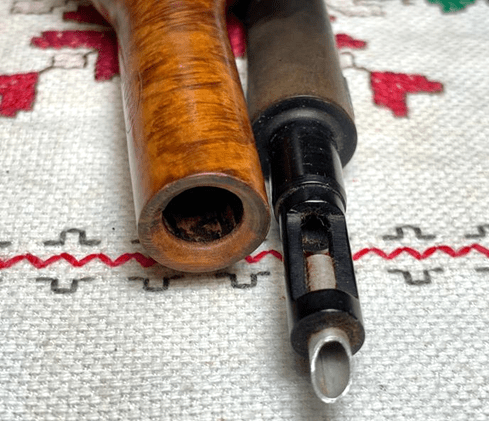
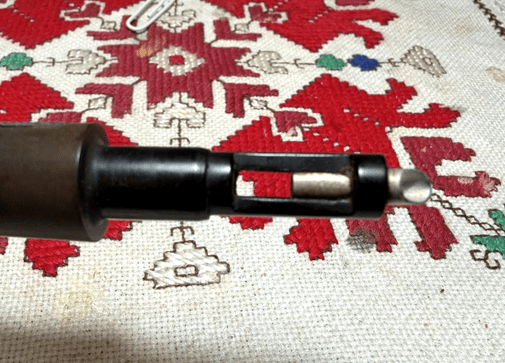
We learn perhaps another bit of information about our pipe marked by the bold print above. The fitment or tenon is an interesting configuration that extends an aluminum tube to the base of the bowl. This design was called the ‘air-o-dry’ which is described as being from a 1961 advertisement. If our Grand Duc’s tenon system is this ‘air-o-dry’, it adds to the probability that our pipe is from the 1950s and 1960s. The use of aluminum existed before the war, but its use grew after WW2 as well.
Another bit of information from the article has to do with the rondel, or ‘insert’ as mentioned next:
After the war, for the better qualities, the oval-shaped aluminum insert became fashionable, on which the factory name “ROPP” can still be read. For the most expensive pipe, gold-colored brass rather than bare metal is used. Very subtly, the design shows a blank stripe through the letters at one-third of the height of the text (fig. 14, 18, 23). The cheaper pipes carry a simple intaglio stamp, and sometimes the letters are filled with gold foil or white for clarity (fig. 22). This method of marking was introduced from Saint-Claude, where a hierarchy of marks was also used according to the quality of the pipe. This created a recognizable ranking for the consumer in the different price categories.
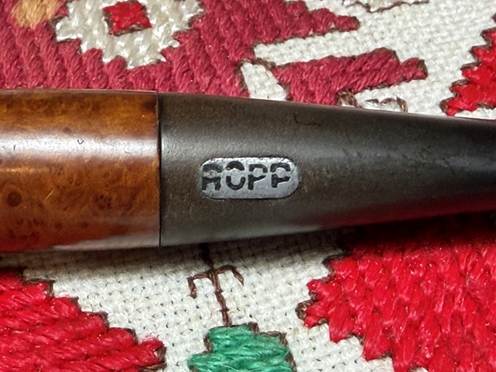
Looking at our Rondel, the Ropp lettering has an ‘intaglio’ stamp which simply means that they are engraved into the material – yes, I had to look the word up. Note: The text described the intaglio stamp as being on the cheaper pipes – I would interpret this as not ‘cheap’ but not the upper shelf pipes that had gold colored brass and such. What’s also interesting, and something I’ve not noticed before, the invisible line running through the letters.
The 2014 Amsterdam Pipe Museum article by Don Duco ends by tying up the history of the Ropp name to its end – somewhat of a sad conclusion to a productive history. I include these closing paragraphs because there is more information included here than in the cursory Pipedia rendition. The article concludes with:
Also in the 1980s, the cherrywood pipe remains in production, but the briar pipe increasingly becomes the float on which the factory relies. After a gradual decline, the factory is eventually put up for sale. Bernard Amiel of Société Amiel Diffusion is in 1989 the first interested party, but a formal takeover does not occur. Ultimately, the company is sold in 1990 to Cutty Ford Entreprises, not surprisingly given the years of involvement from Messrs. Chapuis and Comoy, the owners of the large Cutty Ford group. A year later, the factory closes its doors. Only two workers move to the Chacom factory in Saint-Claude to continue the old production line there. The buildings are sold to the municipality of Baume-les-Dames, with some outbuildings being taken over by private individuals. In fact, little remains except for the brand name for a particular segment of briar pipes.
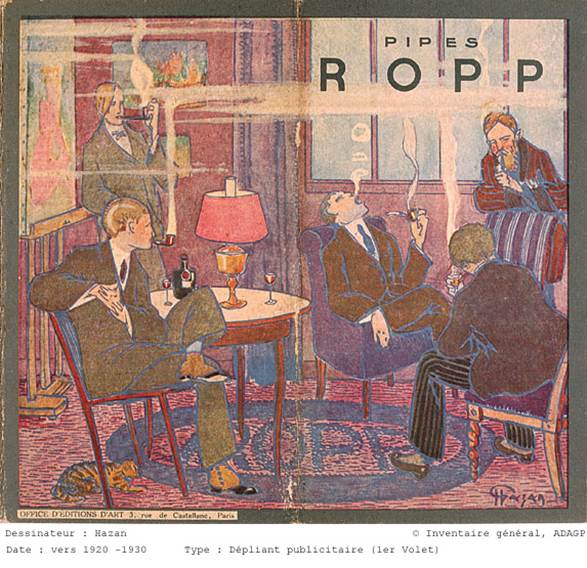
If we look at collections of smokers’ pipes from the 1960s and 1970s, we see that every self-respecting smoker owned a Ropp cherrywood, but to what extent this pipe was preferred over the briar counterparts is not known. It therefore remains difficult to estimate what smokers thought of the product. Additionally, the Ropp briar pipe sold well and could also be found in many pipe racks. The fact that on the European mainland the Ropp pipe is very different from that in England and its colonies has already been mentioned. That distinction has always remained.
The cherrywood pipe eventually disappears completely into the background. Marketing is also adjusted to the new situation. The designation Ropp, Pipes de Saint-Claude becomes standard, and the two earlier production sites are definitively forgotten. In the 1990s, Ropp remains on the market as a Chacom brand name. In line with the marking of Cutty Ford Enterprises, new initiatives are launched. For example, starting in 1992, an annual pipe is introduced. In the 1990s, five people still produce about 42,000 Ropp pipes per year.
In the twenty-first century, we no longer hear anything about the brand. The ongoing downsizing of the pipe industry, especially in the Jura region of France, is the reason the importance of the Ropp brand name is disappearing. Of the cherrywood pipe, only the souvenir version remains, which barely has any serious appeal. This pipe has long been manufactured elsewhere. A brand no longer appears on these products, and that is not surprising. A pipe manufacturer knows that the smoker no longer takes that pipe seriously, and a self-respecting pipe smoker hopes never to receive such a product as a gift. Thus, the name Ropp disappeared from the pipe scene, although it is quite possible that it will return one day when a suitable brand name is needed for a specific product.
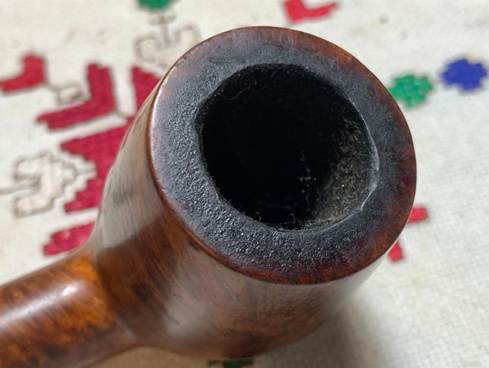
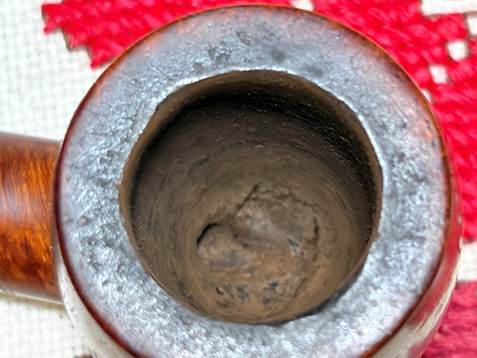
And so the sun sets…. I’m thankful I have a few Ropp Cherrywoods in my collection. The Grand Duc, probably produced in the late 1950s up through the 1960s, is a great collector piece to have of a pipe name that no longer is. With a better understanding of the Ropp name and history, it’s time to look at the Grand Duc itself. The chamber has a light carbon cake which will be removed to check out the health of the briar and to allow the new steward to form a new cake.
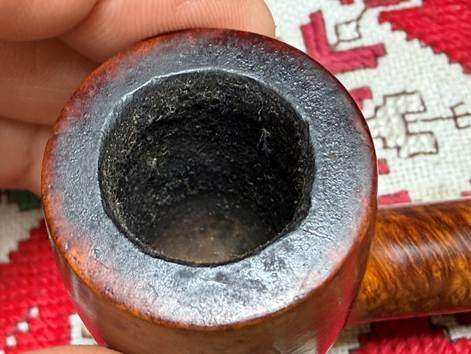
The rim has lava flow over it and possibly darkened briar beneath. This will be scrubbed.
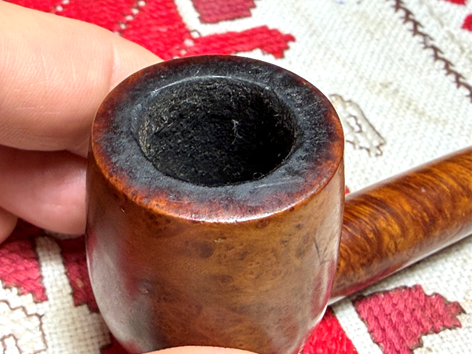
There are some scratches over the stummel, and a small fill shown in the second picture. I’ll take a look at the integrity of the fill after the cleaning.
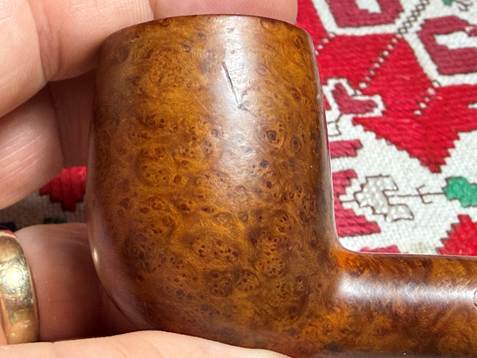
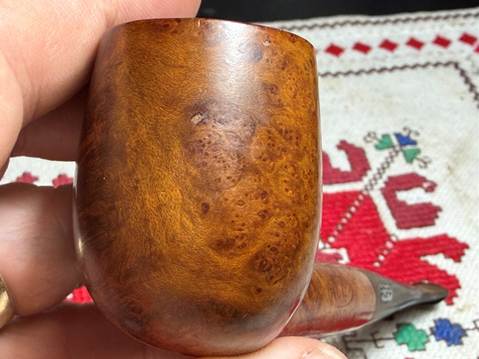
There is some pitting on the lower right side of the bowl which I’ll keep my eye on.
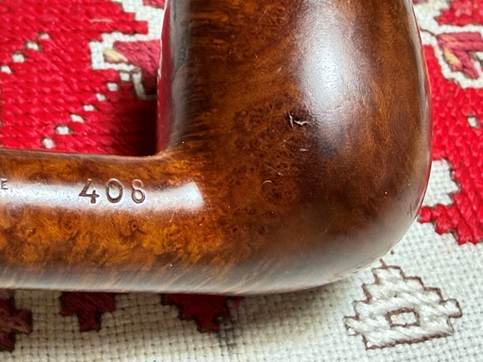
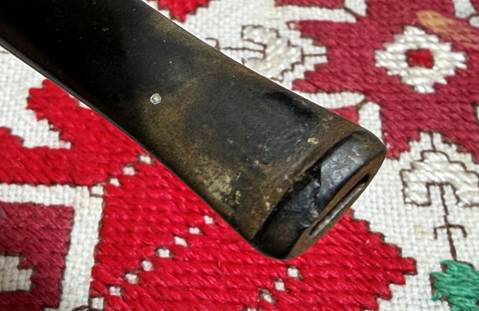
The stem has oxidation and significant calcification on the bit.
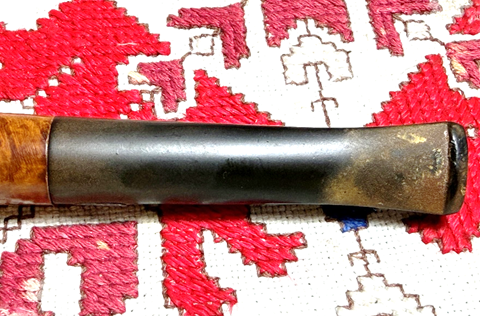
The upper bit has some clench compressions, and the lip also was clenched.
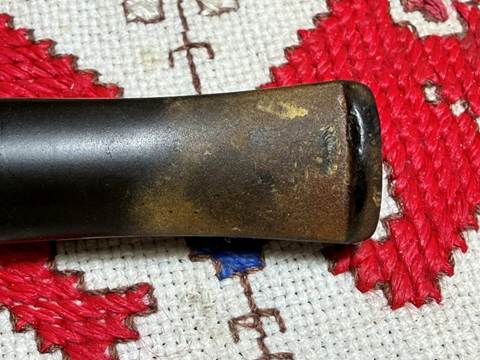
The lower bit has tooth chatter, and the button has seen better days.
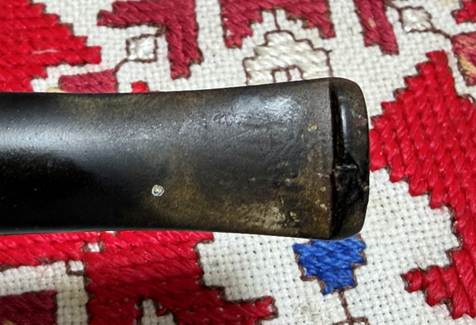
The lower button lip appears to have a crack through it. The button issues will be addressed later.
To begin, the aluminum tube is firmly in place, so the cleaning continues without removing it. Only two pipe cleaners moistened with isopropyl 99% were needed.
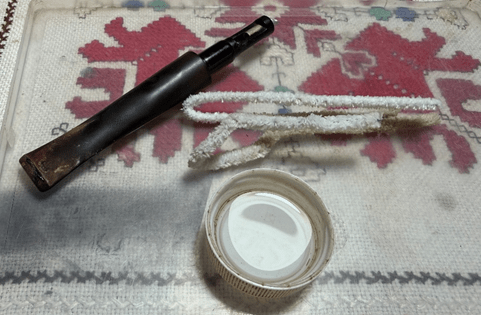
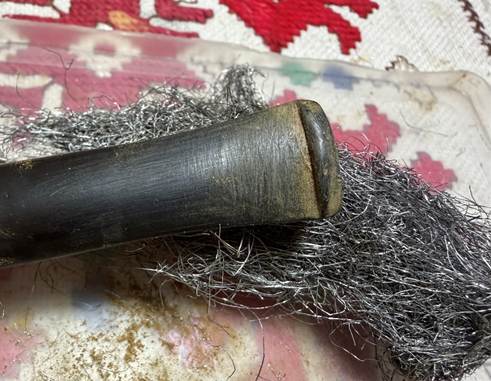
Before addressing the oxidation, the calcification is broken up a bit with 000 grade steel wool.
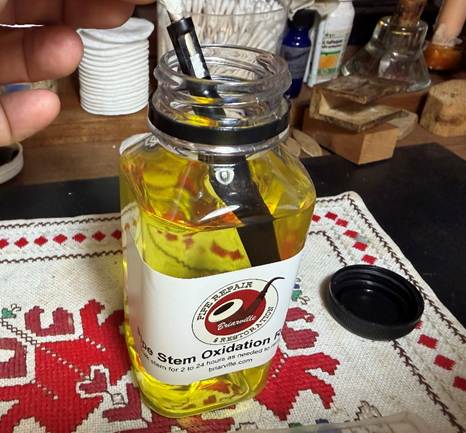
To address the oxidation, the stem is placed in a soak of Briarville’s Pipe Stem Oxidation Remover (www.Briarville.com). It will soak for several hours. A brand new bottle of the Remover is put into service.
With the stem soaking, attention is turned to the stummel. A fresh picture of the chamber shows some cake build up which needs to be cleared.
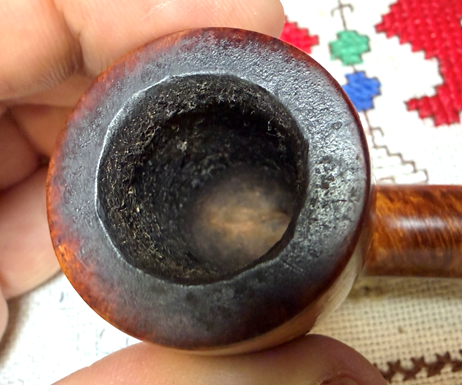
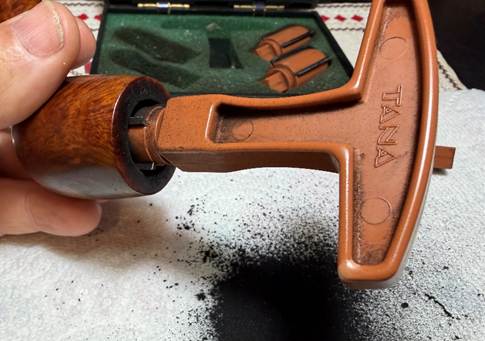
The chamber is reamed with the Pipnet Reaming Kit using 2 of the 4 available blades.
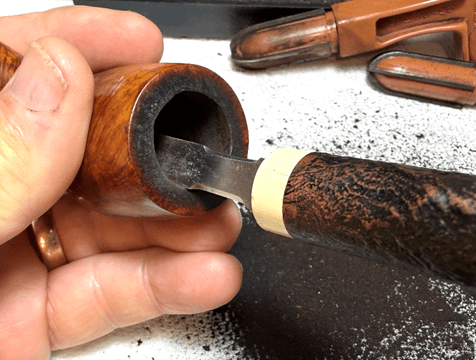
The chamber is then scraped with the Savinelli Fitsall Tool. The Tool does a good job getting down into the floor of the chamber with the sharper angles.
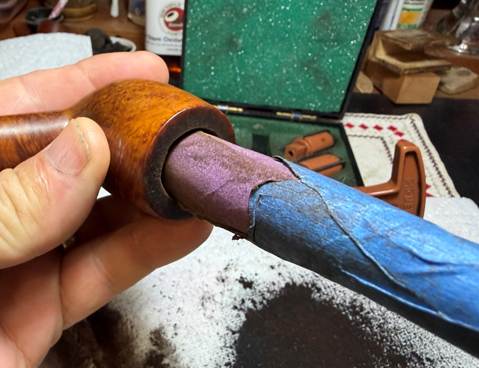
Finally, the chamber is sanded with 220 grit sanding paper to clear away the last vestiges of carbon.
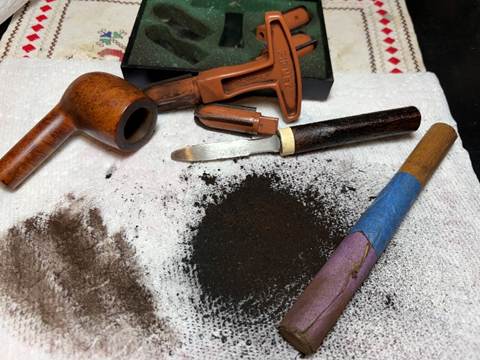
The following picture shows the tools used and the carbon removed from the chamber. The chamber is then inspected to make sure there are no heating issues. The briar looks good.
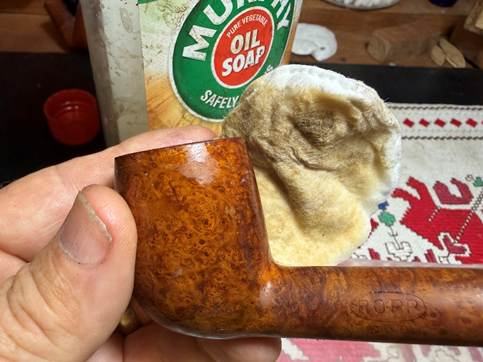
Next, the external briar is cleaned using undiluted Murphy Oil Soap and a cotton pad. The pad shows the grime that was on the stummel.
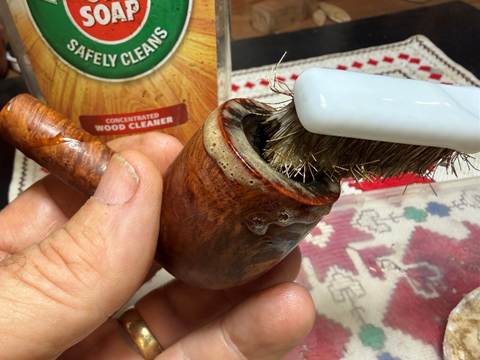
The crusted lava flow on the rim is scrubbed with a soft brass brush to lend some leverage to the cleaning.
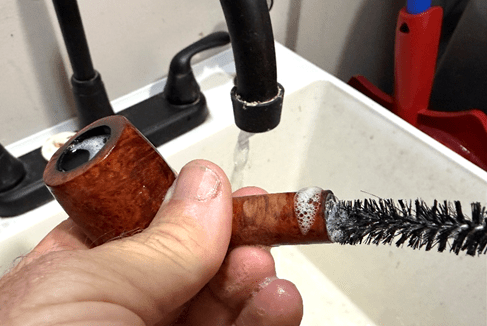
The stummel is then taken to the utility sink to scrub the internals using hottish water, shank brushes and liquid anti-oil dishwashing soap. After the stummel is thoroughly rinsed it is returned to the worktable.
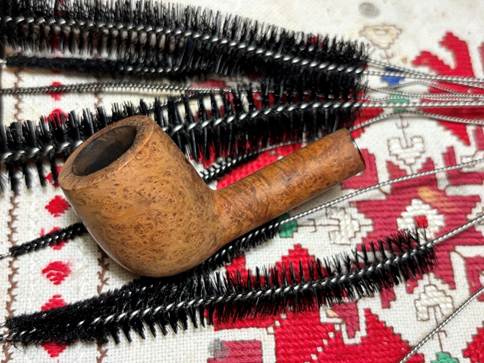
The internal cleaning continues with cotton buds and pipe cleaners moistened with isopropyl 99%. A small dental spoon also helps to scrape the mortise wall removing the gunk from within.
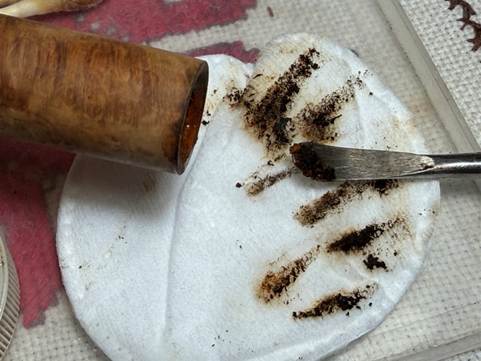
The mortise is very deep to accommodate the long ‘air-o-dry’ system fitment. After the buds started lightening, I move on.
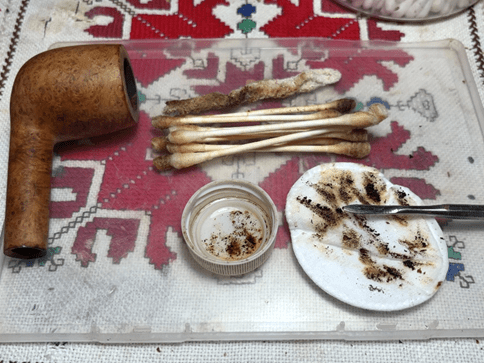
Since the hour is late, to continue the internal cleaning through the night, I decide to give the stummel a kosher salt and alcohol soak. This passive form of cleaning helps to draw out the tars and oils from the internal briar and refreshes it. A cotton ball is pulled and twisted to serve as a ‘wick’ to help draw out the tars and oils.
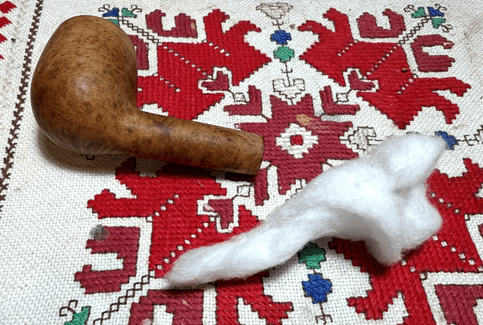
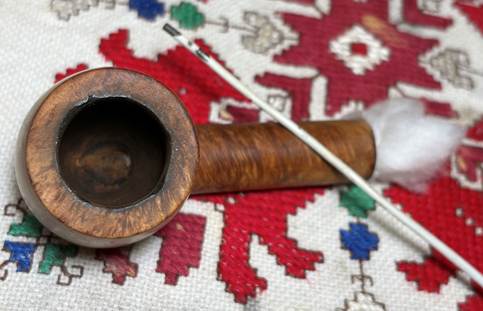
Using the stiff wire, the wick is guided through the mortise up to the draft hole where it can barely be seen in the picture below.
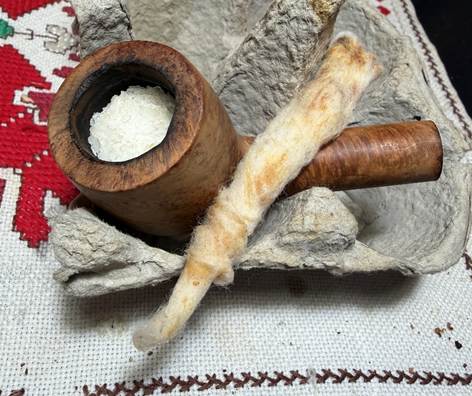
Next, kosher salt fills the bowl and then is placed in an egg carton for stability. Kosher salt is used because it does not leave an aftertaste like regular iodized table salt. Isopropyl 99% alcohol then fills the chamber with a large eye dropper until is surfaces over the salt.
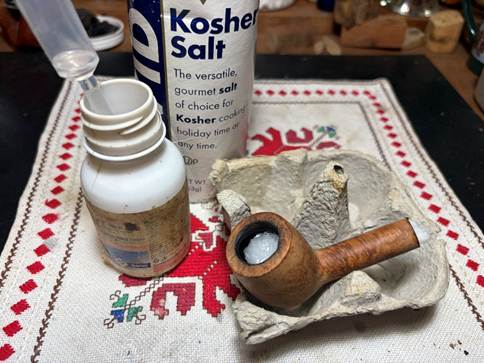
After a few minutes the alcohol is absorbed into the salt, and the alcohol is topped off once more. The stummel is then set aside to soak through the night.
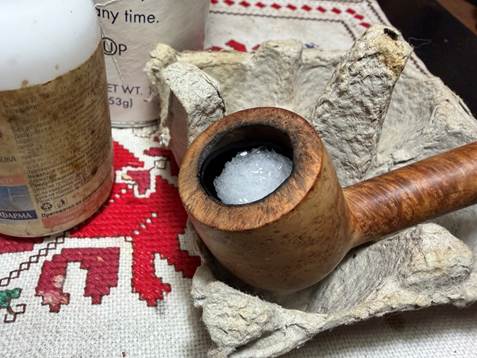
The next day, the soiled cotton wick and salt show the results of the night’s soak.
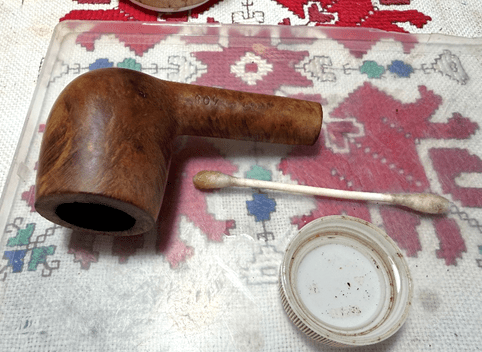
After the salt was cleared, a single cotton bud moistened with isopropyl 99% confirms that the stummel internal briar is clean and refreshed. A whiff test also confirms this.
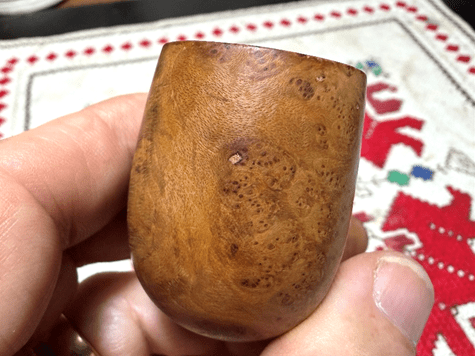
With the general cleaning finished, a closer look at the stummel is next. The small fill that I saw earlier is visible but seems to be in good condition. I’ll look at it again after sanding.
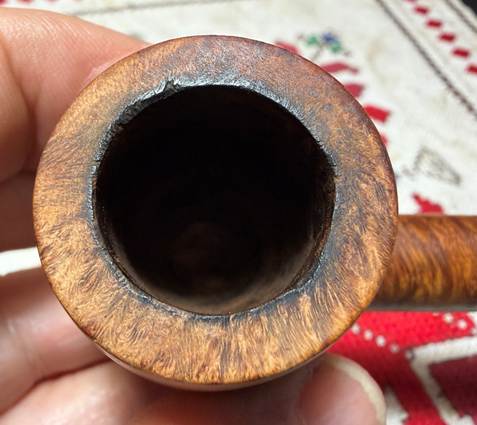
The rim inner edge is in bad shape. A dark charr ring circles the inner edge and the edge is out of round. There are dings and dents here and there.
To address this, the stummel is topped first with 220 grit paper. With the stummel inverted, the stummel is rotated several times.
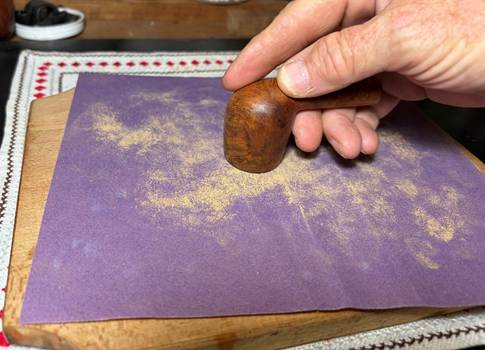
It didn’t take a lot of rotations to clean the rim proper and to define the edges – both inner and outer.
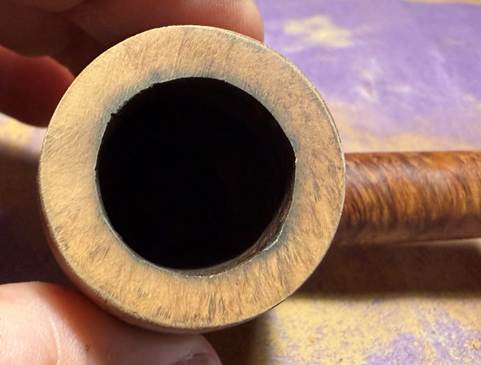
The 220 paper is followed by 320 grit paper and several more rotations.
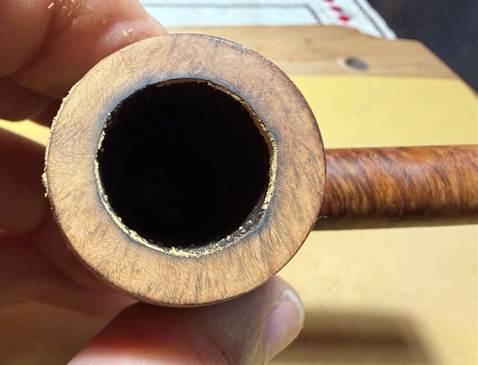
At this point the topping transitions to dealing with the charr ring. To address this a smart bevel will be created.
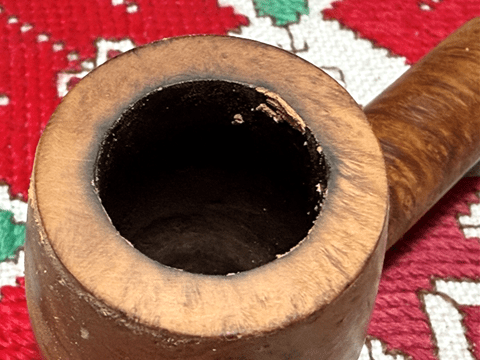
Using a strip of 220 grit paper pressed between a wooden orb and the rim, the orb is rotated.
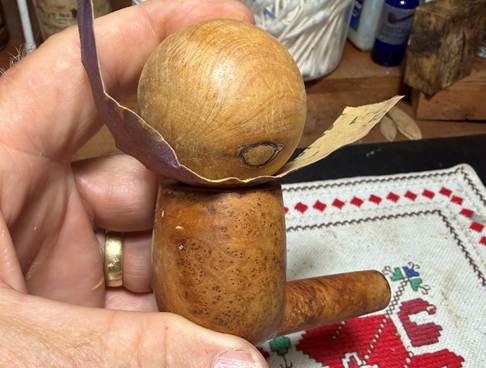
The 220 grit paper erased the ring, and it looks much better.
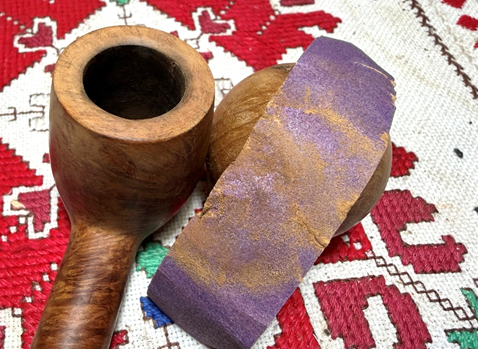
The same is repeated with the orb with 320 and 600 grit papers.
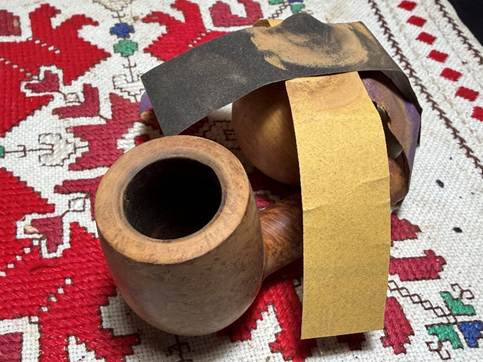
I love adding smart bevels which to me are attractive and classy.
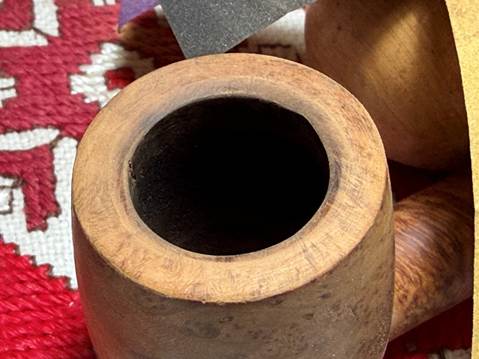
The topping is finished with 600 grit paper on the topping board. The grain on the rim has emerged very nicely during the topping process.
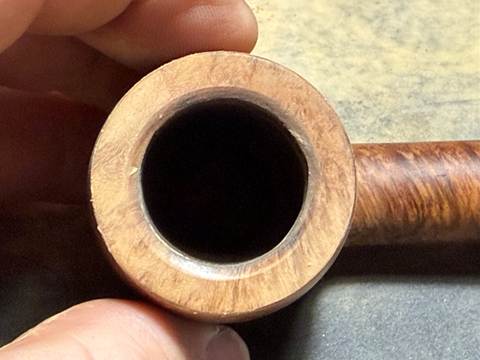
To clean the briar surface and to address some of the blemishes, sanding sponges are used starting with rough, medium, light and fine.
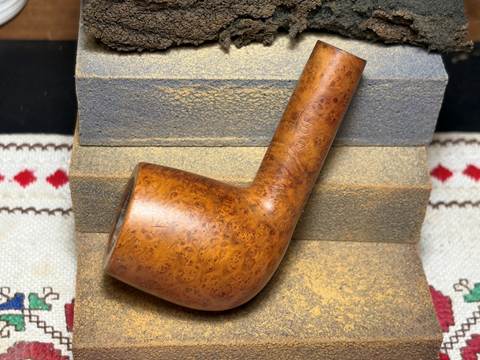
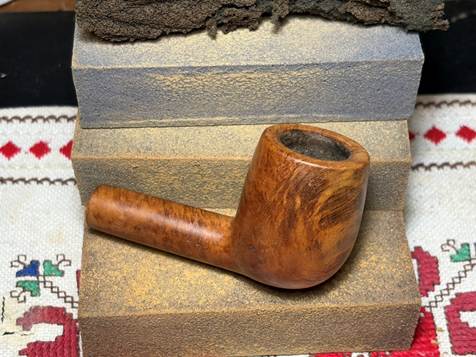
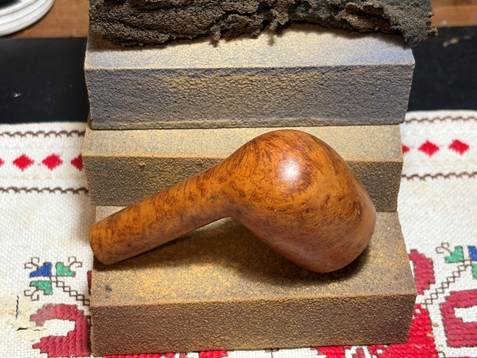
Following the sponges, the stummel is sanded with micromesh pads. After each pad, the stummel is wiped with a moist cloth to remove briar dust and to give the following pad better traction. The first set of 3 pads are grades 1500, 1800 and 2400.
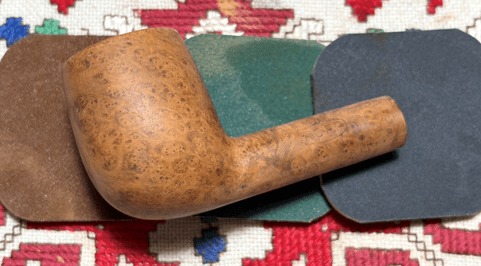
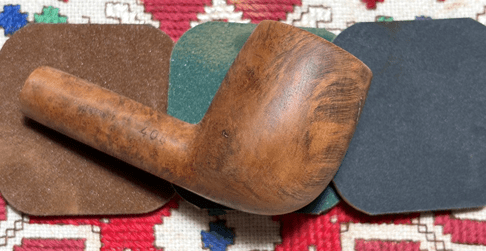
The next set of pads are grades 3200, 3600, and 4000.
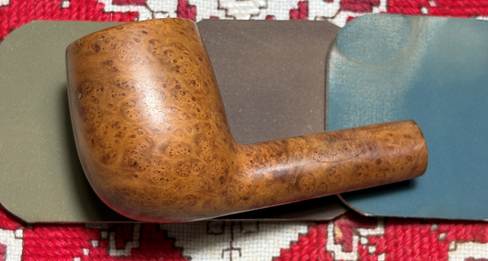
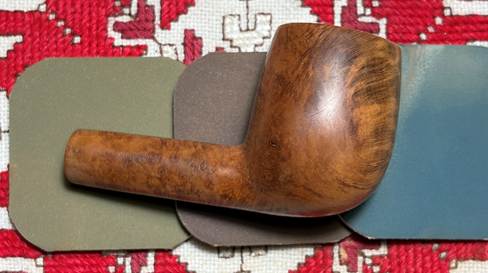
The final set of pads are 6000, 8000, and 12000. I enjoy watching the natural grain emerge during the micromesh process. No two stummels are alike.
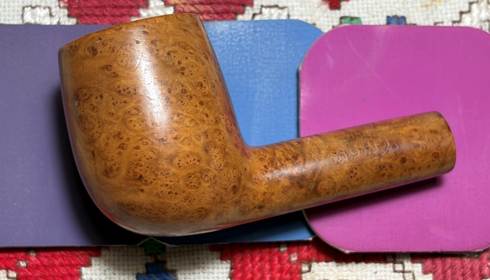
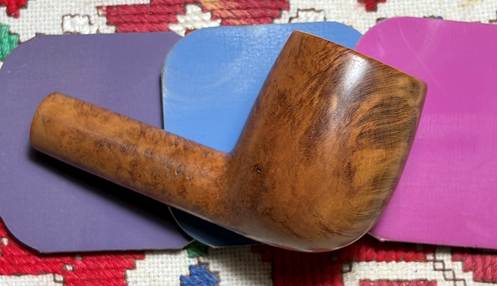
Taking a look at the small fill, to help blend it a Burnt Sienna dye stick was applied to darken the hue.
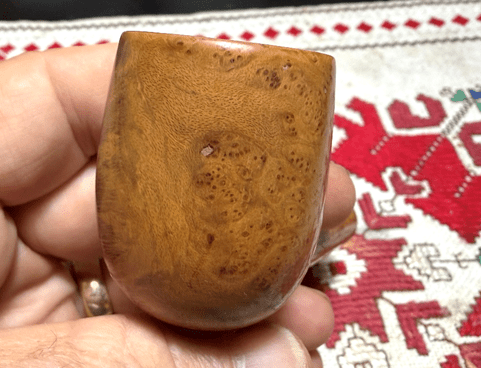
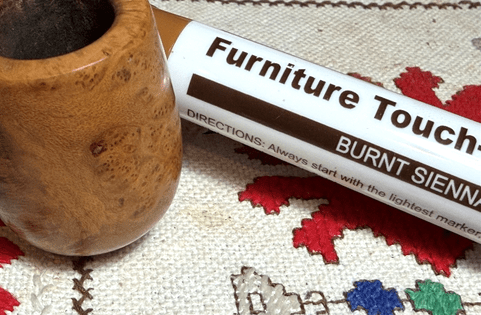
The briar looks good and the application of ‘Before & After’ Restoration Balm (www.Lbepen.com) brings out the natural hues in a striking way. After some Balm is placed on the finger, it is worked into the briar and then set aside for about 10 or so minutes allowing the Balm to be absorbed.
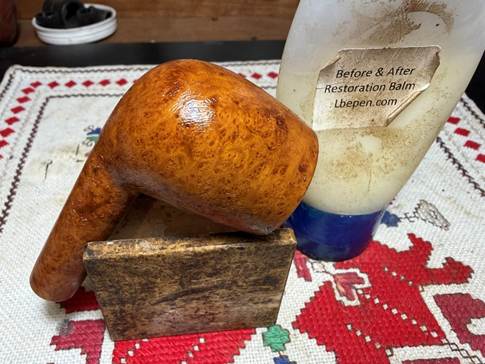
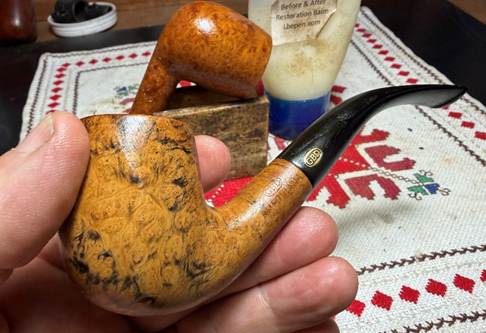
While the Balm was still on my fingers, I never want to waste the liquid gold so one of my vintage pipes becomes the benefactor of the Balm as well. This a beautiful classy GBD Americana which is a great smoker. (Later in the evening, it was loaded with Sasini’s Balkan and I shared a bowl with my son-in-law visiting from California – very nice) 😊.
After the time has passed, the excess Balm is wiped off with a dedicated microfiber cloth. The stummel is then buffed up with the cloth. It looks great.
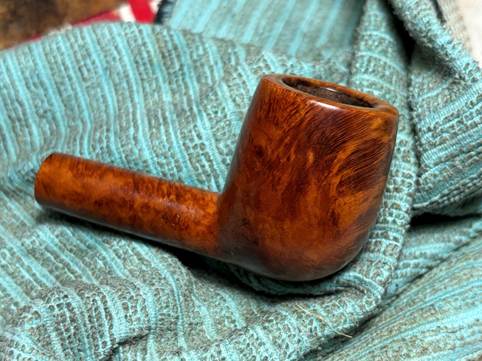
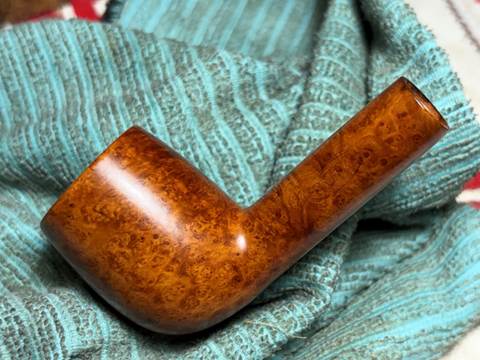
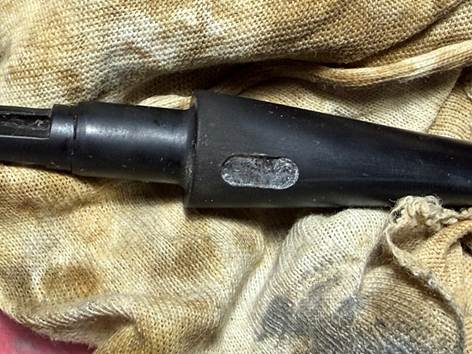
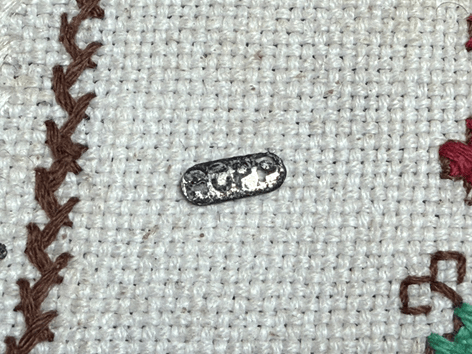
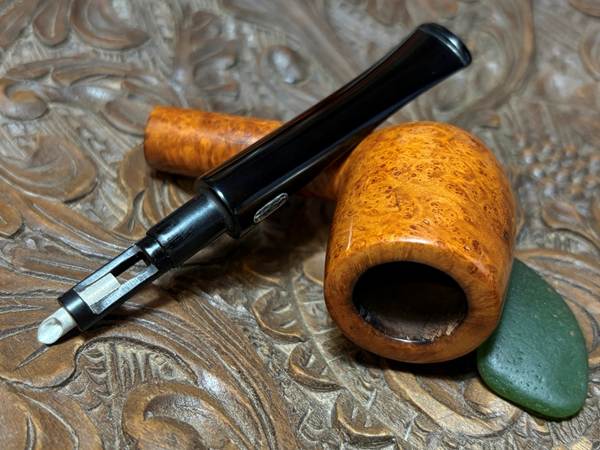
The stem has been soaking in Briarville’s Pipe Stem Oxidation Remover and when it was fished out, the stem was vigorously rubbed with a cloth to remove the raised oxidation. Unfortunately, the aluminum rondel did not fair well in the soak.
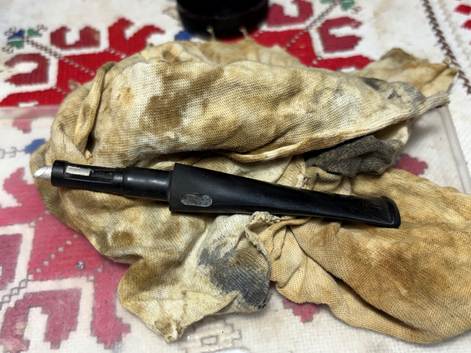
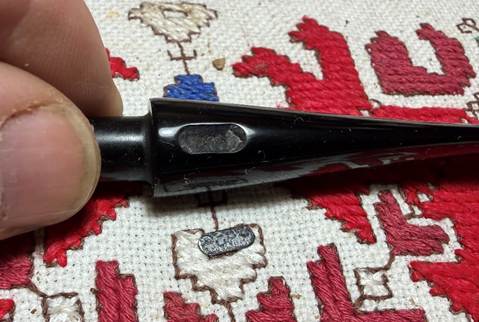
As the next two pictures show, the rondel came off and it appears that the soak caused the metal to deteriorate. I used a metal cleaner (Brasso) to clean the rondel gently, but it did not help much. What I see now is a place on the rondel where one can see through it – in the last P lettering where the metal was pressed. Hmmm. The last thing anyone wants to do restoring a pipe is to contribute to its deterioration…. I’ll see if I can help things out. The rondel will be attached again after the stem is sanded and it will become its badge of honor limping forward. Upon reflection, and for future projects, I’ll cover the rondel with petroleum jelly to guard it. ☹
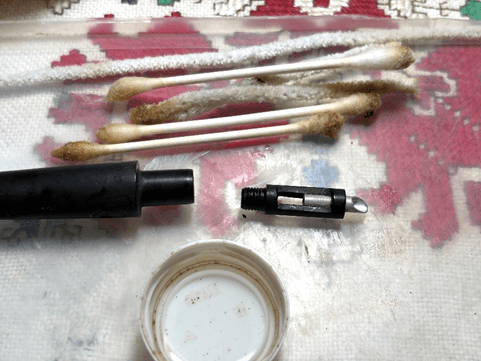
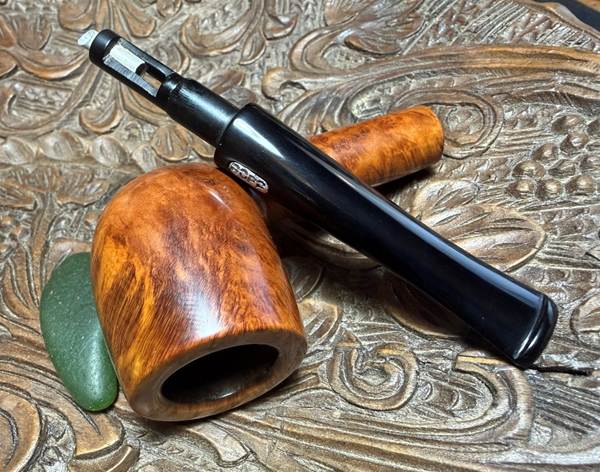
Well, while looking at the stem and considering what’s next, I fiddled with the ‘air-o-dry’ tenon set up and twisted it a bit. It started moving and I discovered that the end is threaded. Nice to know this for future cleaning. With ‘odd’ fitments and such, it’s always a bit nerve racking when you start pulling or twisting because you don’t want to crack or break material. Thankfully, this is a successful extraction!
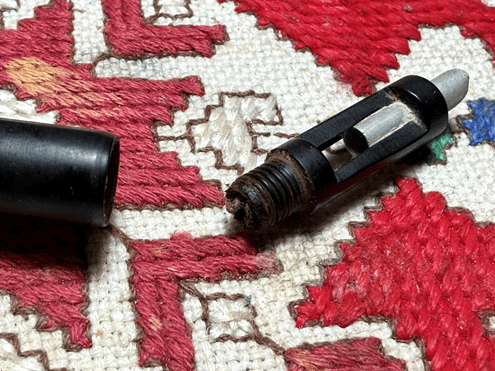
A few more cotton buds and pipe cleaners moistened with isopropyl 99% help to clean up the new access point.
Looking next at the upper bit, there is a bit of scratching left over from applying 000 steel wool earlier and some small compressions.
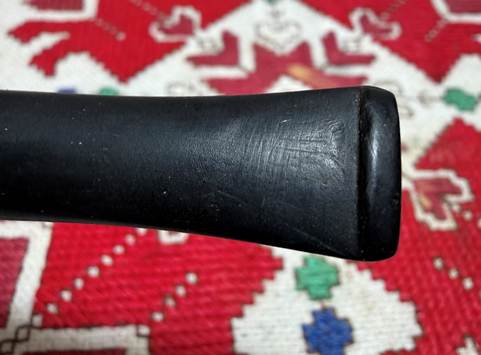
The lower bit has some tooth chatter, but what gets the attention is the button lip. I appears to be a combination of a crack in the vulcanite and a chip.
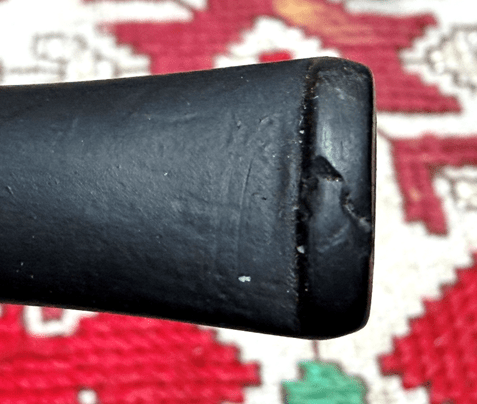
Looking at the slot view, there is no crack going over the lip. This is good news. So, it appears that the injury is on the lip alone – a compression that put too much pressure on the lip and damaged the lip surface.
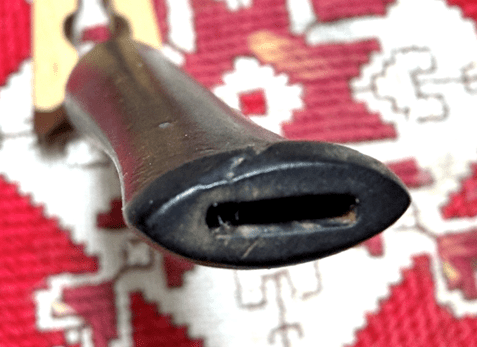
Before working on the lower lip repair, the heating method is used first for both the upper and lower bit. The upper and lower bit are painted with the flame with the Bic lighter. The vulcanite expands as it’s heated and hopefully regains its original disposition or closer to it. After heating, both the upper and lower bit appear somewhat improved and simple sanding will be sufficient moving forward. However, the lower lip needs to be patched.
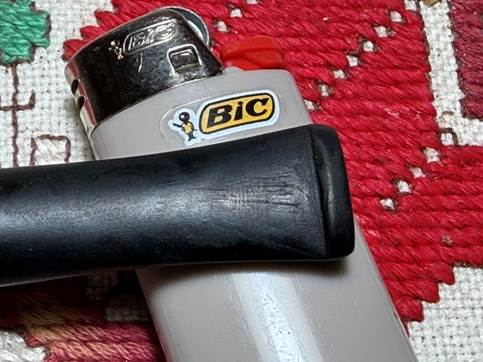
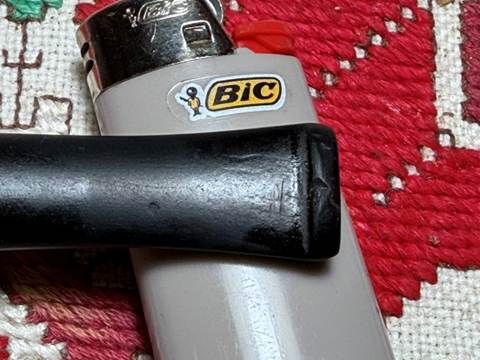
To address the lower lip issues, Black CA glue is used. A stream of the glue is lined on the lip and allowed to fully cure.
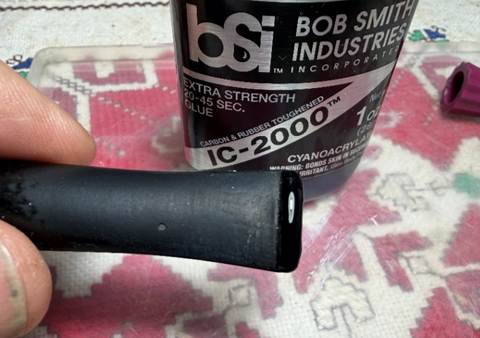
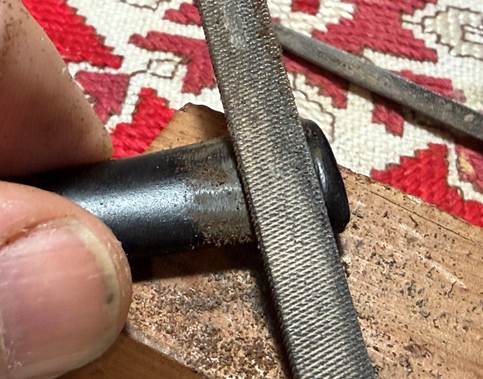
After the patch on the lip has cured needle files start shaping it.
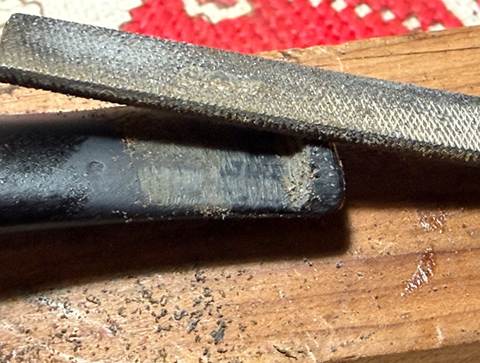
Along with shaping the button, both upper and lower button lips are refreshed by filing the hang walls.
The filing has done the initial job and leaves the area looking rough.
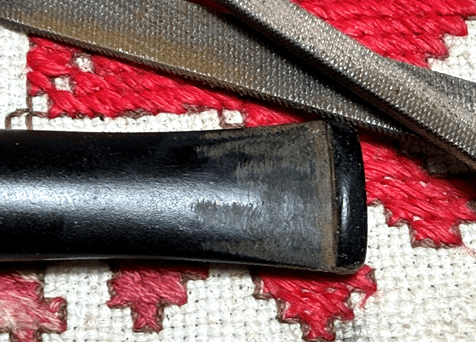
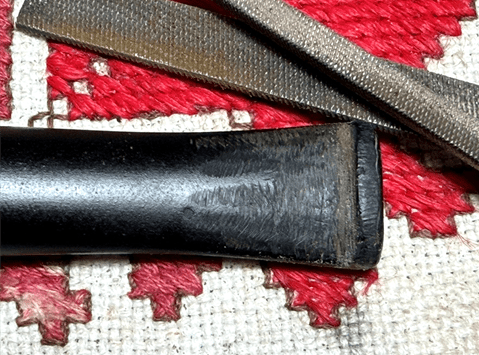
To remove the filing tracks and continue to smooth and shape the button, 220 grit paper is used.
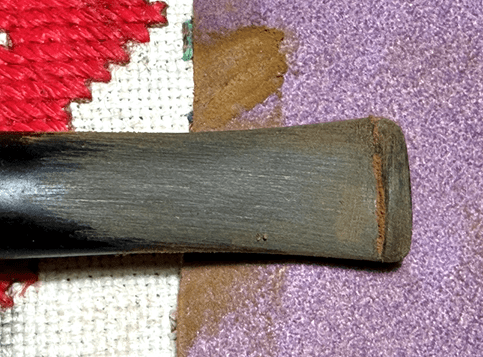
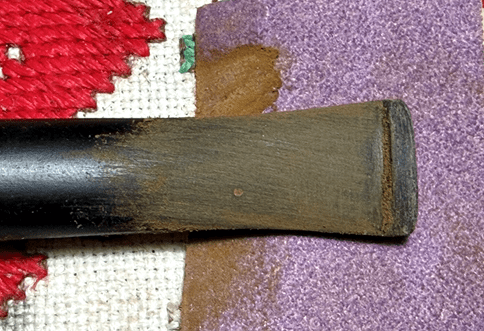
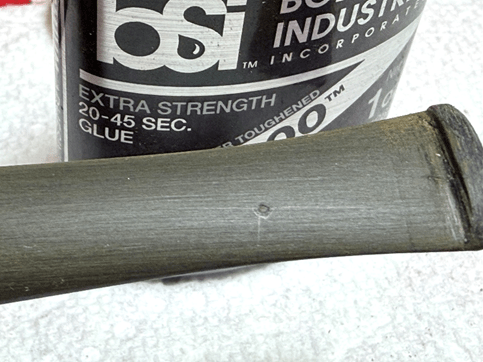
You can see in the picture above the appearance of a small pit which was probably an air bubble in the vulcanite. After the area is cleaned with alcohol, the pit is filled with black CA glue and allowed to thoroughly set.
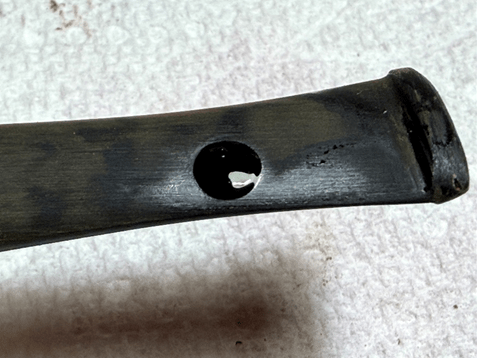
The needle file then files the patch flush with the vulcanite surface.
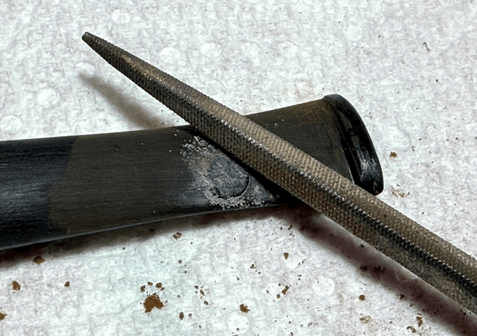
The sanding continues with 220 grit paper expanding to the entire stem including the patch. To guard against shouldering the shank facing, a plastic disk is used to sand against.
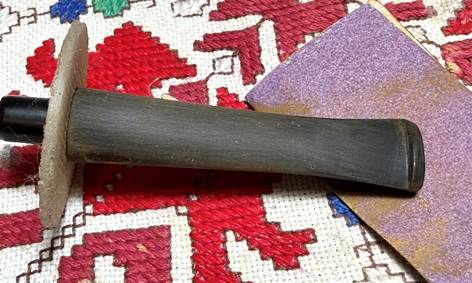
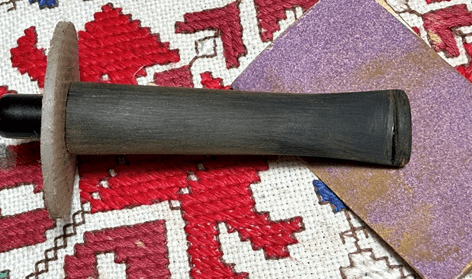
The 220 paper is followed by 320 paper continuing to use the shoulder guard.
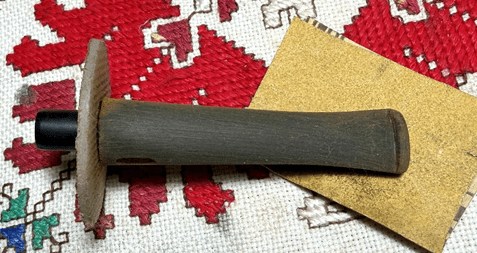
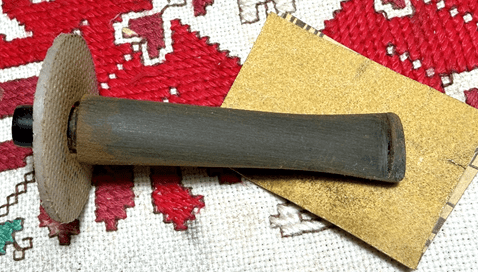
Wet sanding the stem follows using 600 grit paper and then applying 0000 grade steel wool. The injury to the lower button lip is gone and long forgotten.
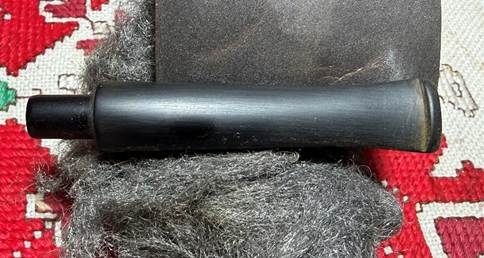
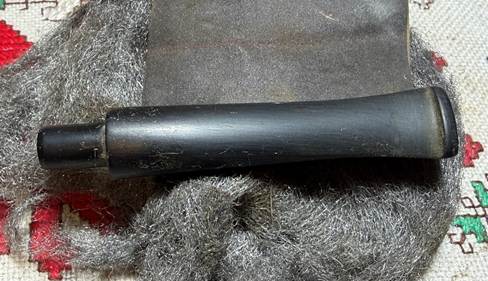
The sanding/polishing continues by applying micromesh pads. Between each pad, Obsidian Oil is lightly applied to the stem helping to condition the vulcanite and to guard against oxidation. The first set of 3 pads are grades 1500, 1800 and 2400.
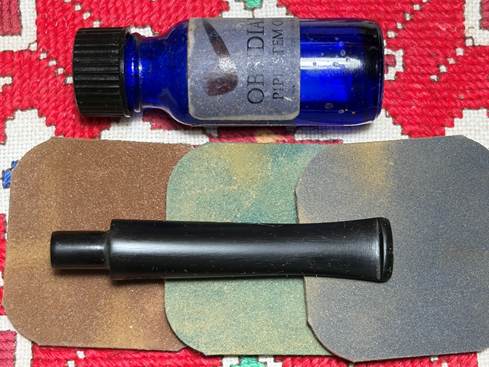
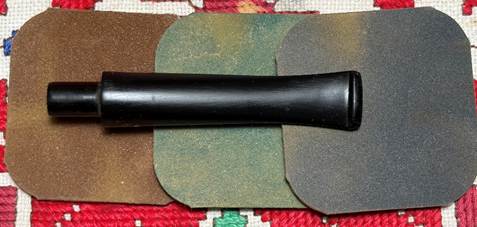
The second set of pads are grades 3200, 3600 and 4000.
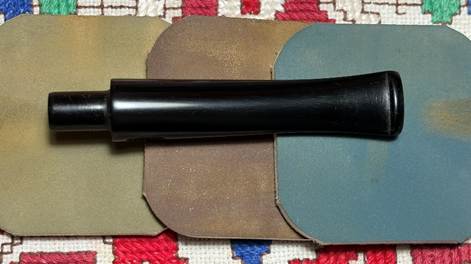
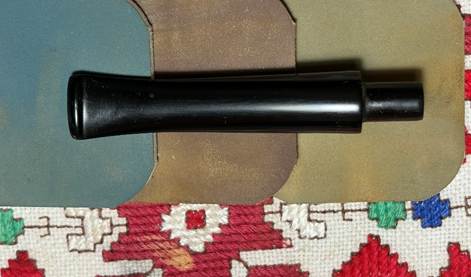
The last set of pads are grades 6000, 8000 and 12000. The stem’s gloss has come out nicely.
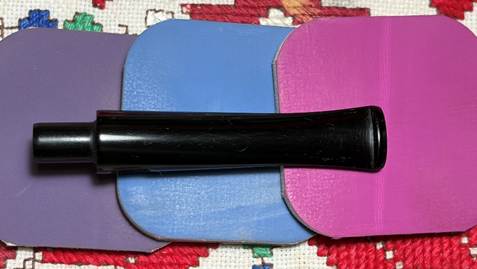
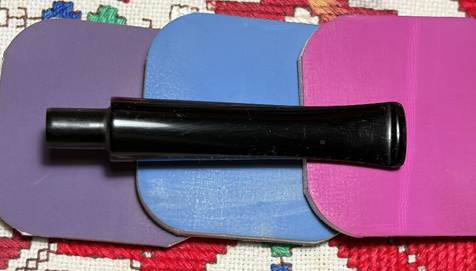
Ugh…. Next, remounting the injured Ropp aluminum rondel. I mentioned before that there was a miniscule hole in the metal in the second ‘P’. I simply wore too thin. For this reason I decide to remount the rondel using black CA glue so that it will have a black background behind the hole. The trick here is to fill the rondel oval with enough glue to hold it without glue squishing out the sides. The second picture shows the rondel pressed in and mounted with no glue overage.
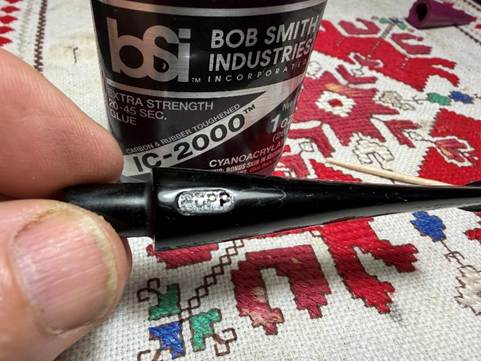
In an attempt to clean the rondel some, it is sanded with the last four micromesh pads – grades 4000 to 12000. The rondel is a little bit cleaner, but he definitely will limp forward with this badge of honor😊. I had considered trying to fill the letters with black paint but fearful that it would look worse.
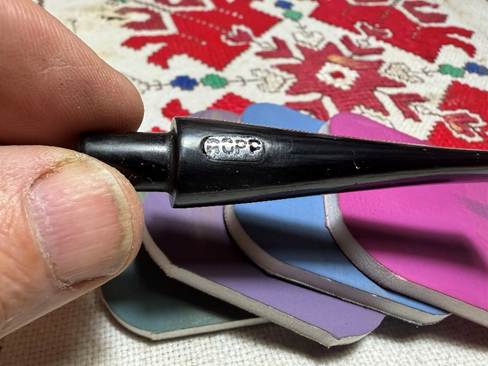
With the stem and stummel reunited, and a dedicated cotton cloth buffing wheel mounted on the rotary tool, Blue Diamond compound is applied to the pipe with the speed set at about 40% full power.
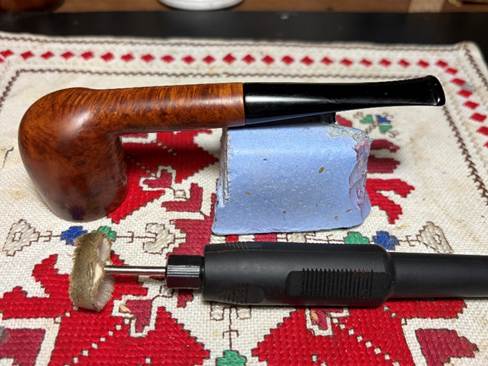
The compound creates a lot of dust on the pipe, and this is wiped away with a felt cloth preparing the surface for the wax.
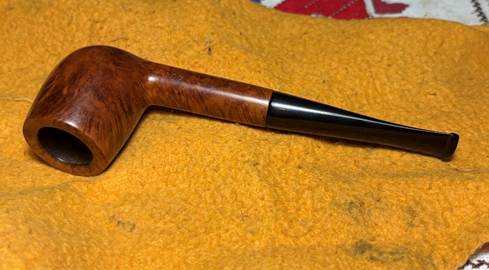
With another dedicated cotton cloth wheel mounted at the same speed, carnauba wax is applied to the pipe. After application, the pipe is given a rigorous hand buffing with a microfiber cloth to remove excess wax and to raise the shine.
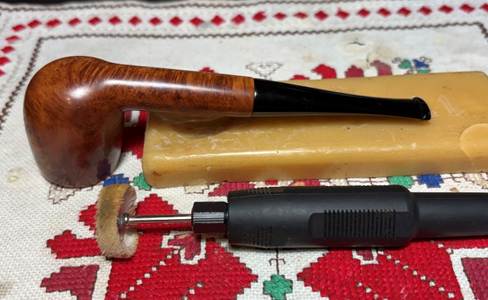
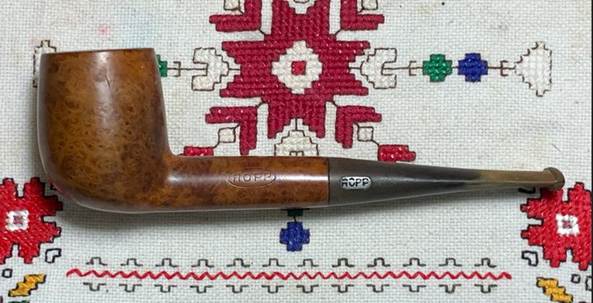
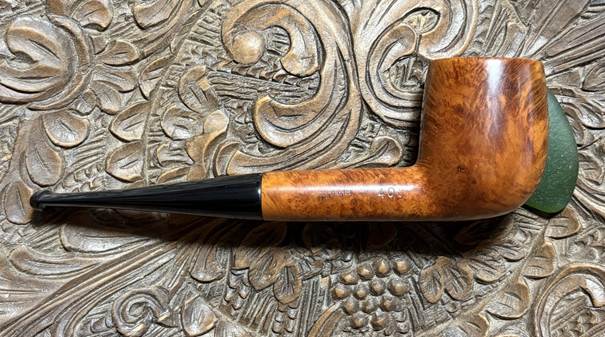
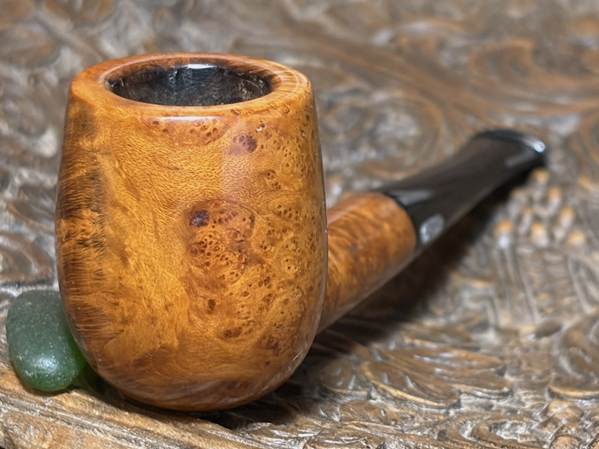
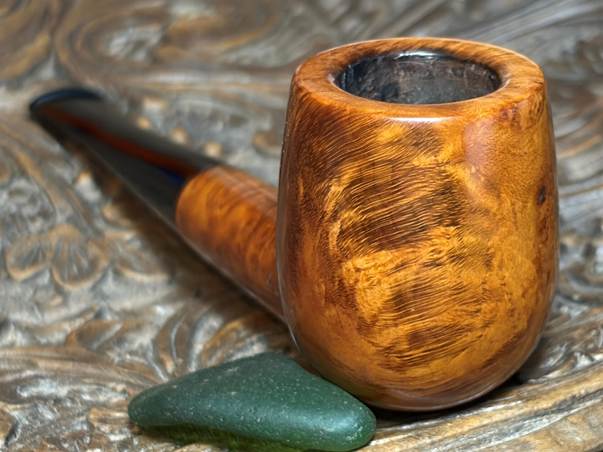
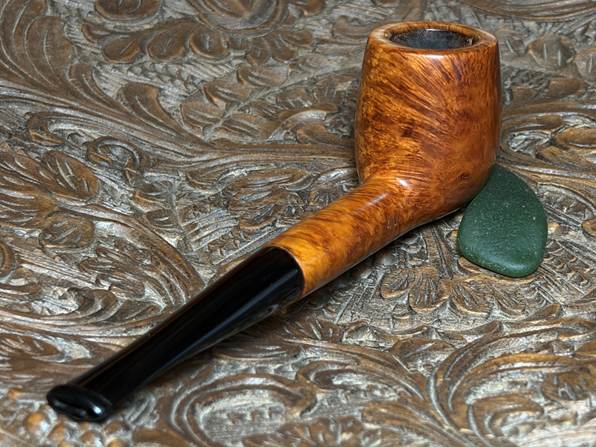
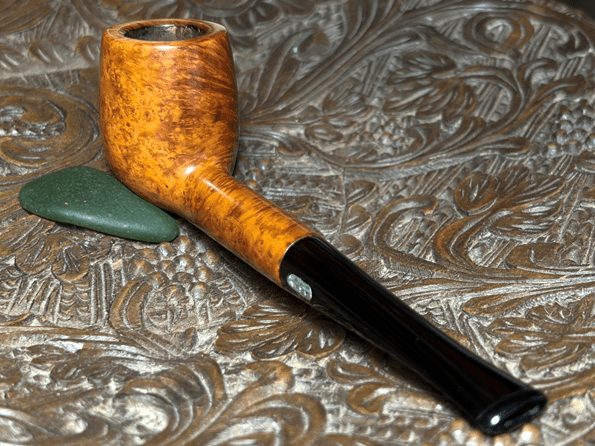
This 1950s to 1960s French made Ropp Grand Duc came out nicely. I enjoyed doing a deep dive on the Ropp name and discovering more of the provenance of this pipe. The grain has emerged nicely giving a steward a nice landscape to view. It has the characteristics of a smaller French profile with nice lines and tapered stem. The Grand Duc also brings with him an artifact from his time – the ‘air-o-dry’ system tenon. This was Ropp’s attempt at capturing the holy grail of pipedom – the dryer, cooler smoke. The dimensions of the Duc are Length: 5 9/16 inches, Height: 1 3/4 inches, Rim width: 1 3/8 inches, Chamber width: 3/4 inches, Chamber depth: 1 1/2 inches. This is the next pipe that pipeman Steve commissioned and he will have the first opportunity to claim him from the Pipe Store. A portion of the proceeds of each pipe restored helps to support the work of the Daughters of Bulgaria, now called Spring of Hope. Thanks again to the generous pipe man who donated the Ropp! A ‘before’ picture helps to remind us of how far we’ve come. Thanks for joining me!
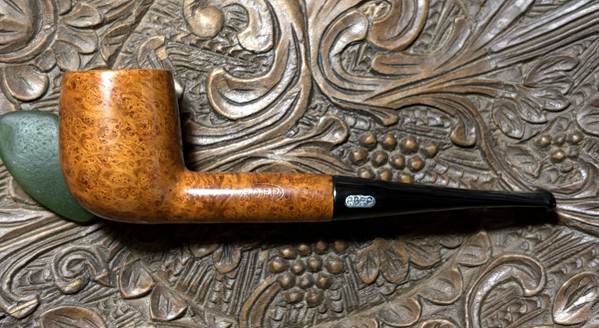


Pingback: Diving Deeper into the Provenance of a Silver Match Safari Saint-Claude France – The Pipe Steward