The next pipe on the worktable came to me from a generous pipeman who lives in the state of Georgia. This pipeman has not only commissioned several pipes but has donated some very nice pipes to The Pipe Steward. His donations help to support the work of the Daughters of Bulgaria, now called, Spring of Hope, a work that my wife and I co-founded several years ago when we lived in Sofia, Bulgaria. The effort seeks to help women and girls who have been trafficked and sexually exploited. Today, the work continues and has expanded by creating prevention programs to protect the vulnerable. The generous pipeman donated 10 pipes for which I am grateful. They all are in the Help Me! Baskets in the For “Pipe Dreamers” ONLY! online collection where pipemen and women can commission pipes that get their attention. The Unbranded Vertical Grain Freehand now on the worktable and is in the center below.
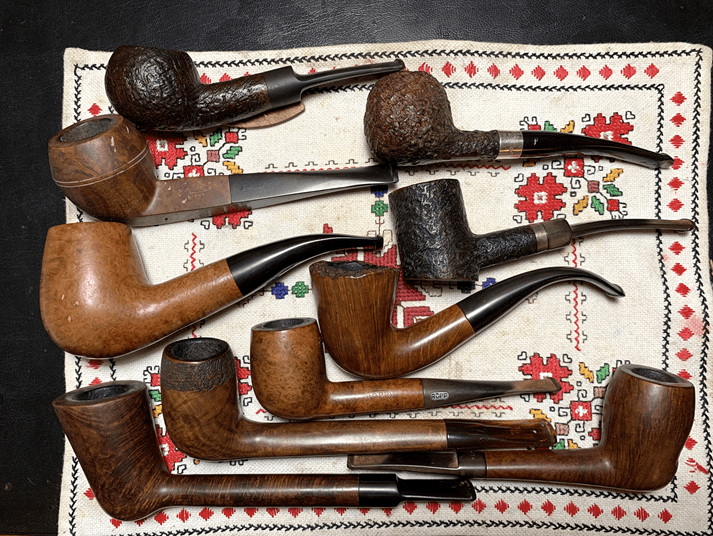
The Freehand got pipeman Pete’s attention. Pete is lives in Seattle and is a family man with two college-aged kids and a pug as his pet. Pete shared with me that his work as a software coder puts the bread on the table. Even though Pete lives in Seattle, he said he considered himself a refugee from the South. He became attached to Seattle when he realized, “My God, it’s air-conditioned outside, all year round!!” It was that moment that he decided that he would never leave the great Northwest. Pete said that he follows Steve on Rebornpipes and my work and is partial to GBDs, and also that he appreciates the focus that is brought to the work of the Daughters of Bulgaria – Spring of Hope. This I appreciate a lot.
Pete commissioned the Freehand as well as an Unbranded Bruyere Garantie Bent Horn Stem Bulldog which is next on the table. I like the bent lines of this Bulldog as well as the horn stem. It should shape up nicely.
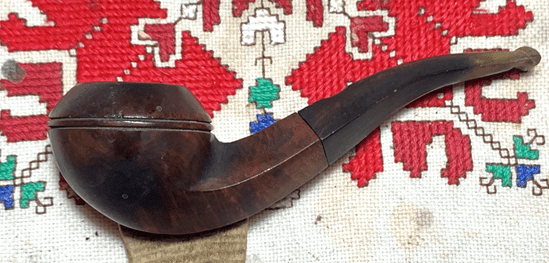
But first, the Unbranded Freehand with striking vertical grain.
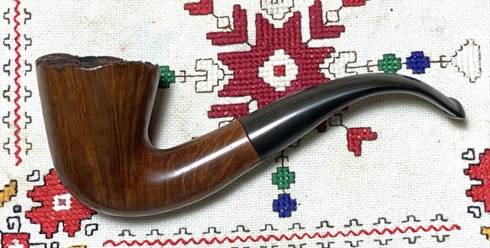
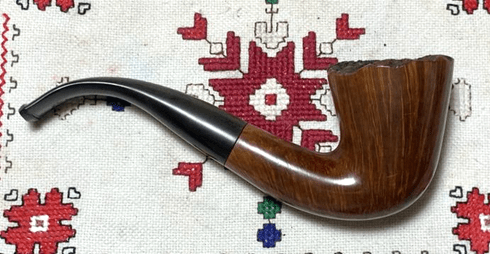
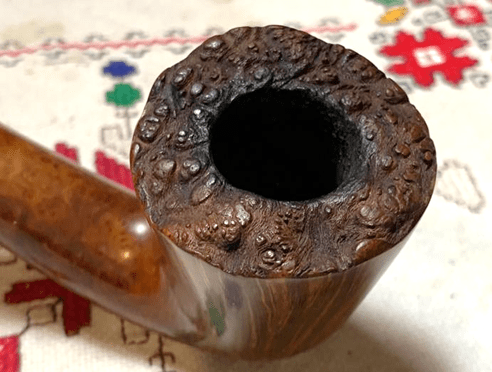
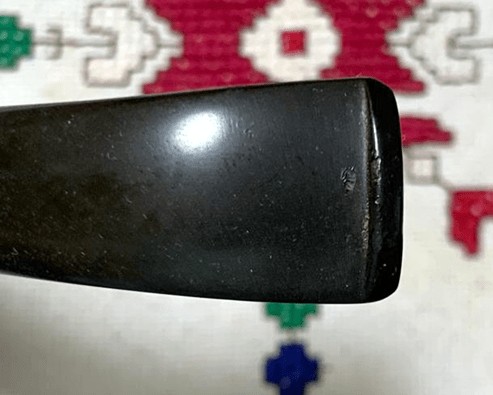
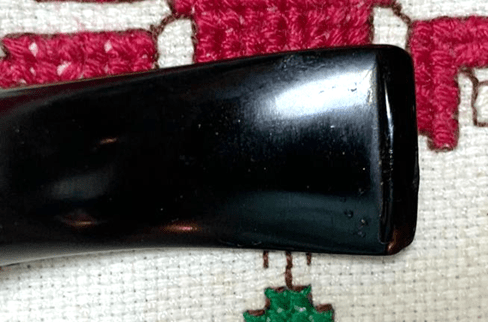

This Freehand is unbranded. I took another look just to make sure that I didn’t miss something. As a Freehand, the pipe was possibly produced in the home of the Freehand, Denmark, but I can’t be certain. Bill Burney’s information about the Freehand from Pipedia (Freehand – Pipedia) is helpful.
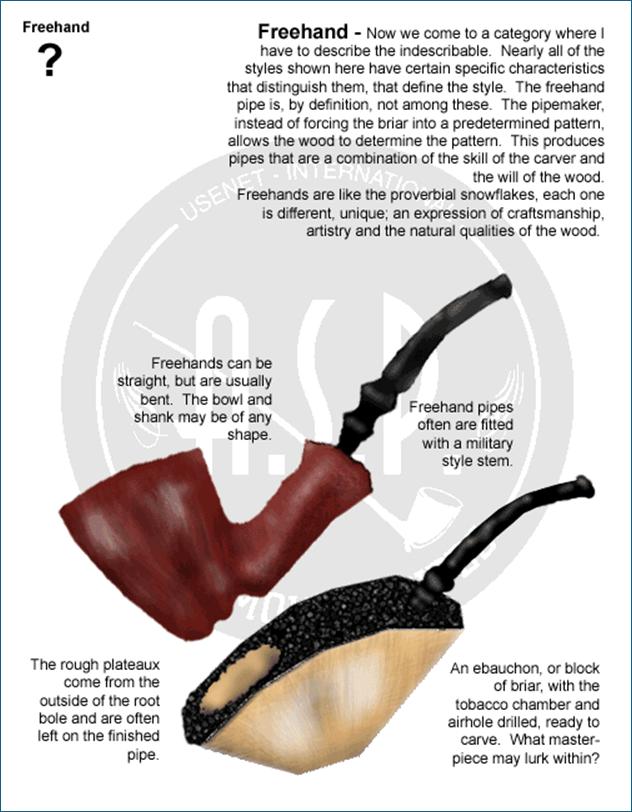
I especially like what Bill says about the Freehand maker, “instead of forcing the briar into a predetermined pattern, allows the wood to determine the pattern”. The mantra of the Danish Freehand movement, pioneered by Preben Holm, is “Follow the grain!” This unbranded Freehand does this very nicely with very distinctive vertical grain and the rough plateau.
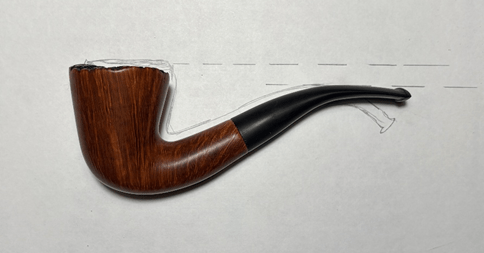
Looking at the pipe itself, to me the stem is over-clocked and needs to be straightened a bit. The picture below shows the line representing the plane of the plateau to which the end of the stem should be parallel.
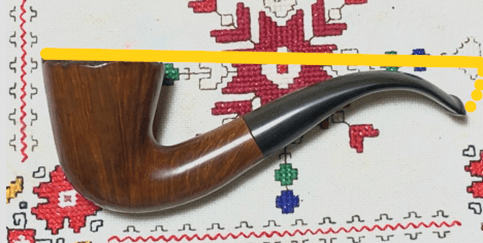
The chamber has a very light cake buildup. The plateau has expected grime which needs to be cleaned. The dark hue of the plateau also needs refreshing.
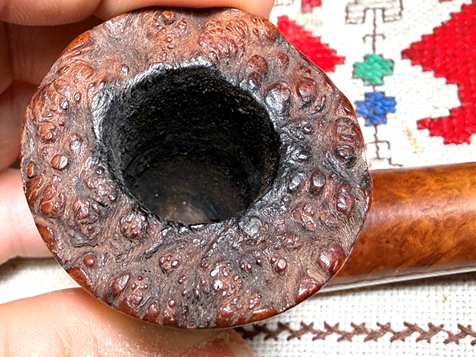
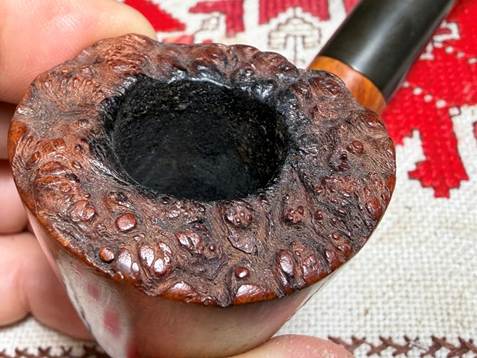
There is one significant dent on the right side of the stummel. Hopefully, this dent can be addressed by simple sanding.
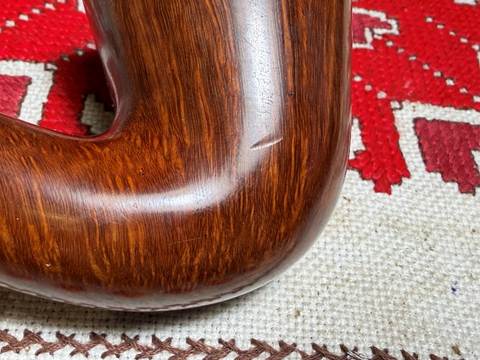
There are other scratches from normal wear that will be addressed.
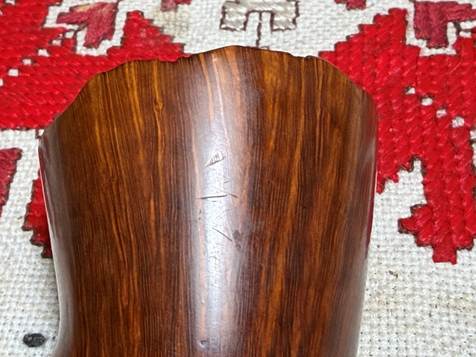
The stem has very little tooth chatter on the bit, but it does have oxidation that will be addressed.

To begin, the stem is cleaned with a single pipe cleaner moistened with isopropyl 99% alcohol.
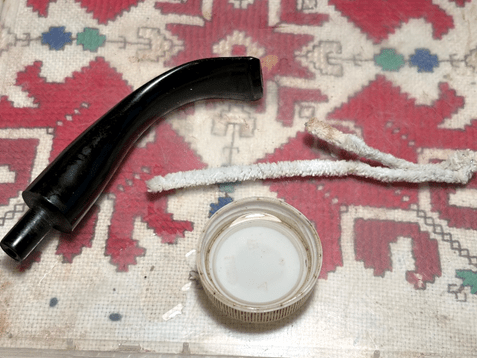
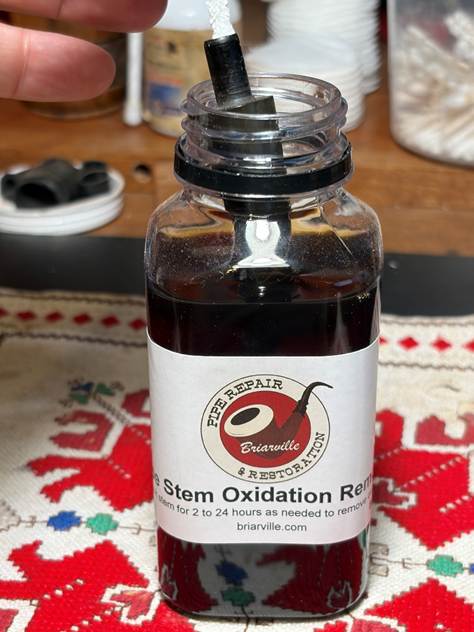
To address the oxidation, the stem is given a soak in Briarville’s Pipe Stem Oxidation Remover. The stem will soak for several hours.
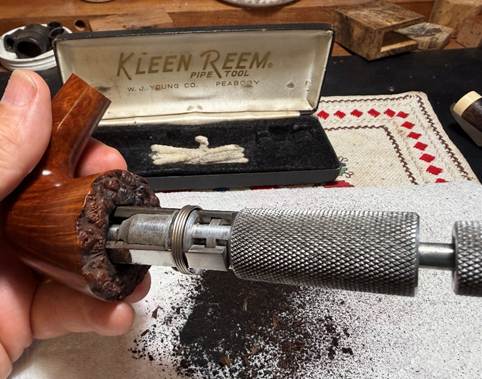
The light cake buildup is reamed out easily using the Kleen Reem Pipe Tool which navigates the tapered chamber that narrows more severely than classic pipe shapes. The knob on the end of the tool turns which expands incrementally the blade arms. This enables the tool to expand hugging and scraping the chamber wall as the tool works upwardly as the cylindrical chamber widens.
Following the reaming tool, 220 paper is wrapped around the Sharpie Pen and sands the chamber clearing away more of the carbon. Focus is also on sanding the edge of the chamber at the plateau. My practice with Freehands is to create what I have dubbed the ‘Steward’s Peek’. I like to sand the upper briar of the chamber to bring the grain out to give a nice view from the steward’s perspective.
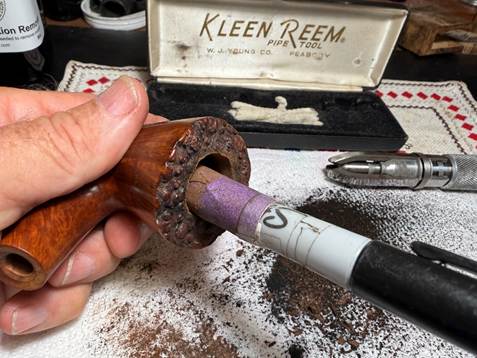
Sanding the ‘Steward’s Peek’ continues with sanding the upper chamber with 320 and 600 grit papers wrapped around the dowel rod.
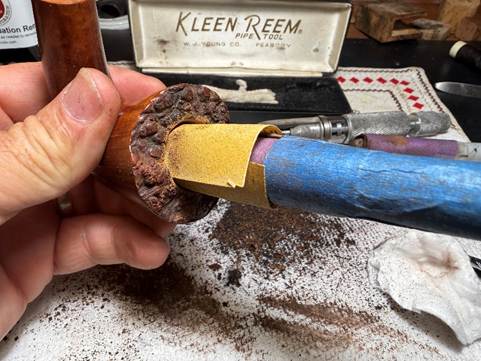
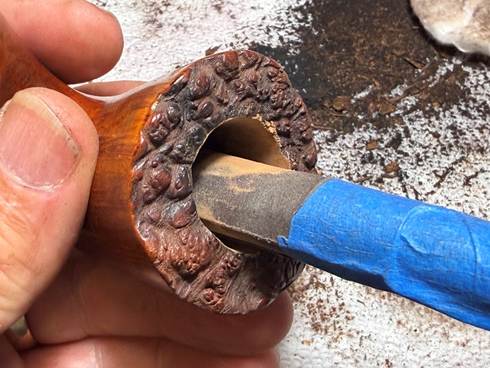
The pile shows the carbon cake that was removed from the chamber and the tools to do it.
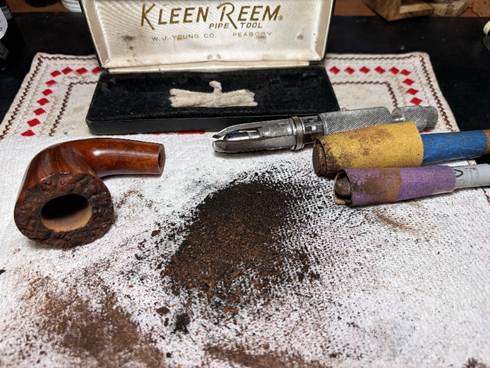
A quick inspection of the chamber reveals healthy briar with no heating issues.
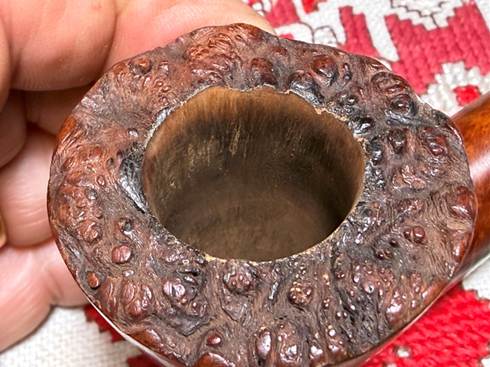
The external briar surface is cleaned next using undiluted Murphy Oil and a cotton pad. The soft brass brush is also used to clean the plateau’s rough surface.
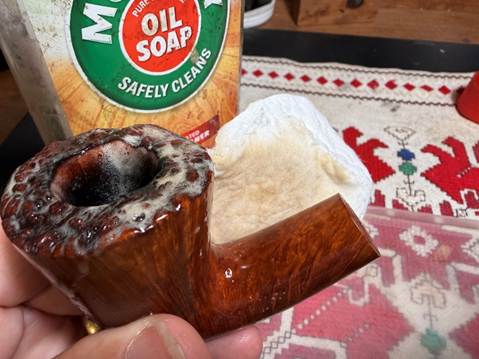
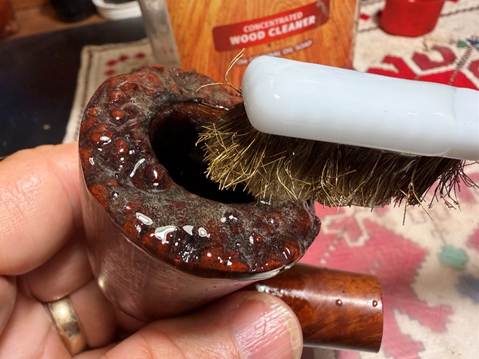
The stummel is next taken to the utility sink where the internals are scrubbed using hottish water with shank brushes and anti-oil liquid dishwashing soap. My choice is Dawn soap. After scrubbing, the stummel is rinsed thoroughly and taken back to the worktable.
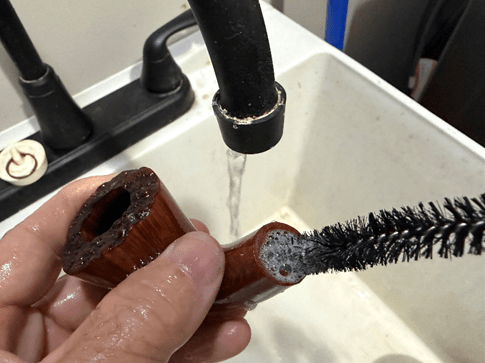
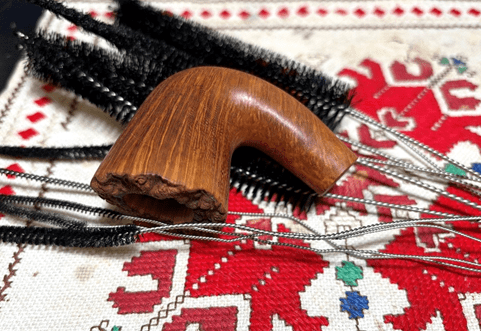
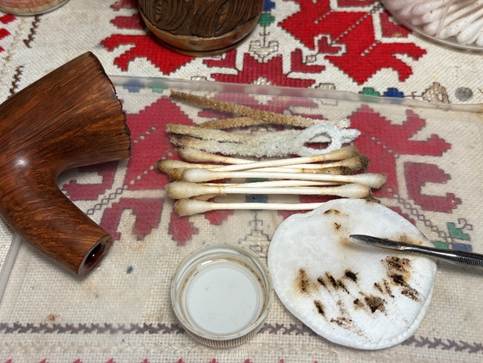
Continuing with the internal cleaning, cotton buds and pipe cleaners moistened with isopropyl 99% alcohol are used. A small dental spoon is also helpful scraping the mortise wall to remove tars and oils. When the buds and cleaners began to emerge lighter, it was time to move on.
To address the dent and scratches I noted earlier, 5 sanding sponges are used. Starting first with the coarse sponge, each successive sponge is less abrasive until the last fine sponge. The sponges did a great job cleaning up the surface.
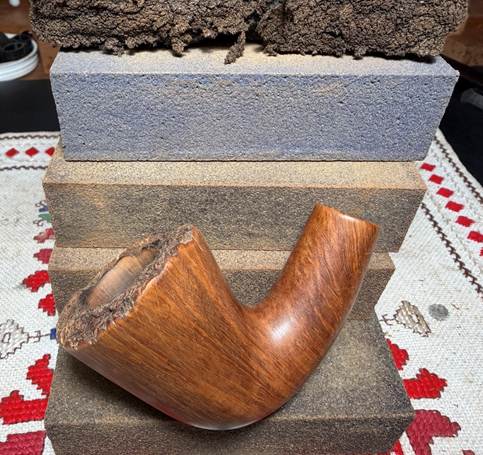
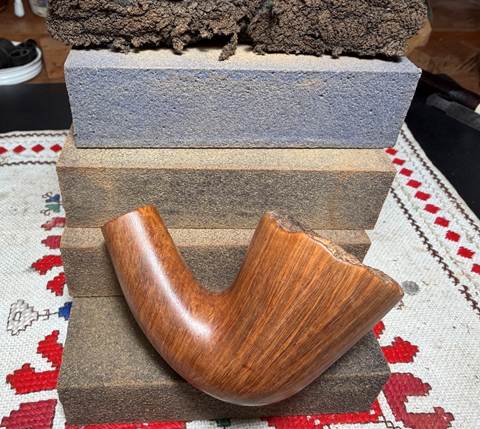
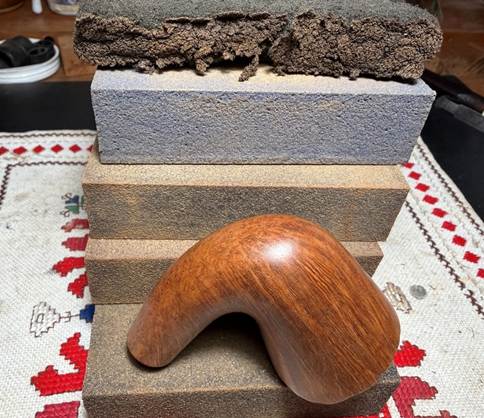
The sanding continues with the finer micromesh pads. The pads are applied to the briar surface as well as to the ‘Steward’s Peek’ area. To clean the briar dust created and to give the next pad better traction, the stummel is wiped between each pad with a moist cloth. The first set of 3 pads are grades 1500, 1800, and 2400.
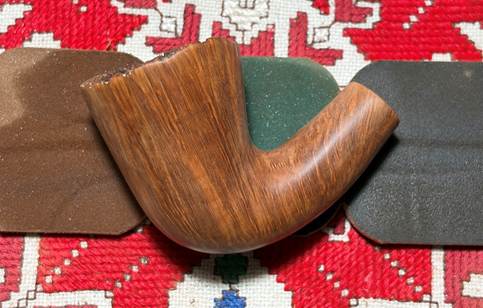
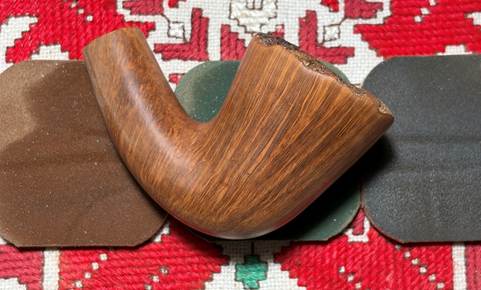
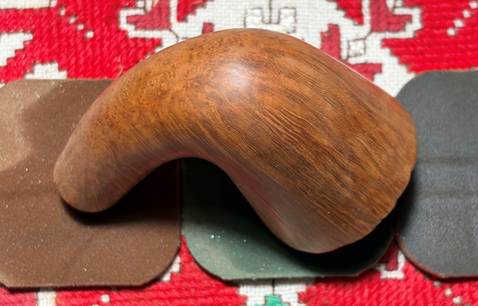
The second set of pads are grades 3200, 3600, and 4000.

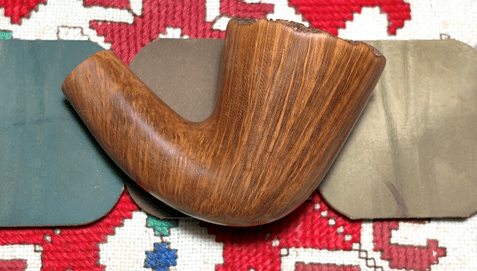
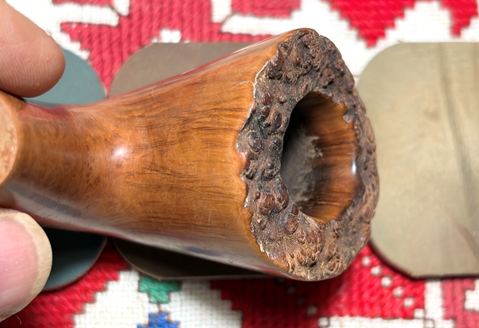
The final pads are grades 6000, 8000, and 12000. The grain looks great.
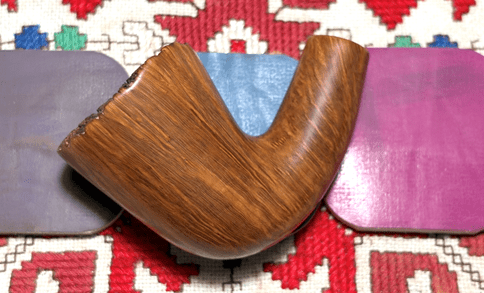
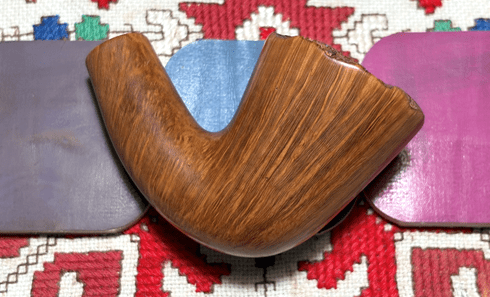
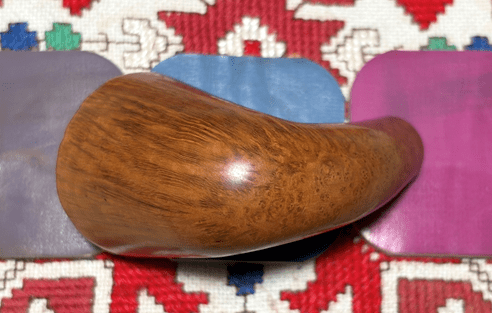
The next mini project for the stummel is to refresh the plateau. The plateau with Freehands in general are darkened. The finish on this plateau has worn off. Vestiges of the old dark finish can be seen.
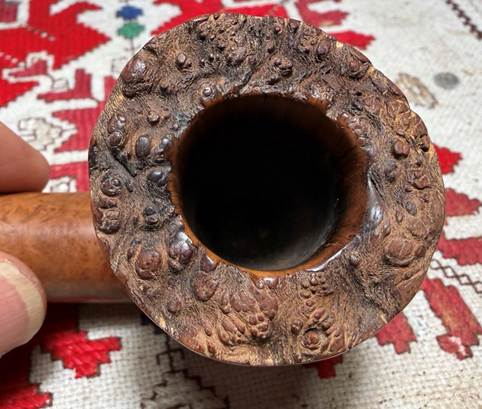
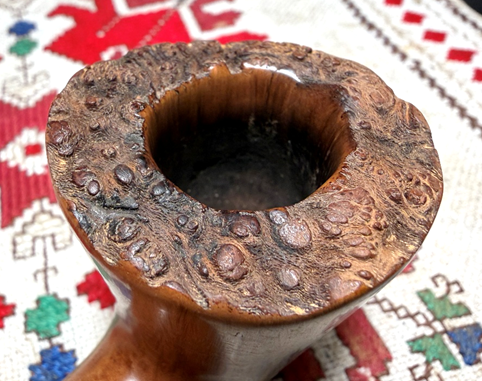
First, the plateau is darkened with a black dye stick.

The dye stick leaves the plateau looking too new without contrast. To remedy this and to create a new ‘old’ look the plateau is sanded first with the coarser micromesh pads to remove dye from the peaks which creates a nice contrasting. Then, the rest of the pads are applied to shine the bald areas. I like it!
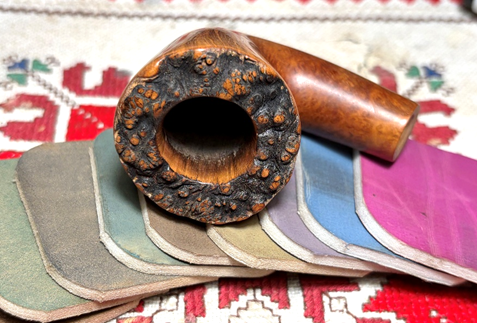
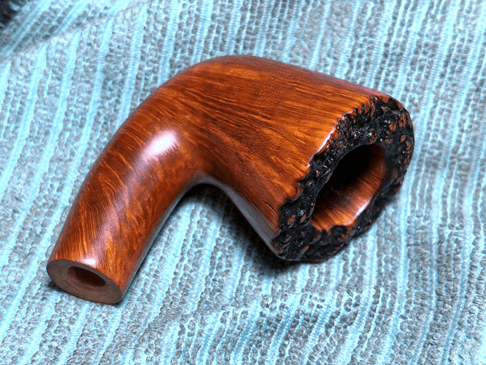
To bring out the natural hues of the briar and to condition the wood, Mark Hoover’s ‘Before & After’ Restoration Balm is used (www.Lbepen.com). With some Balm on the fingers, it is worked into the briar, plateau and the Steward’s Peek. The stummel is then set apart for about 10 minutes allowing the Balm to do what it does.
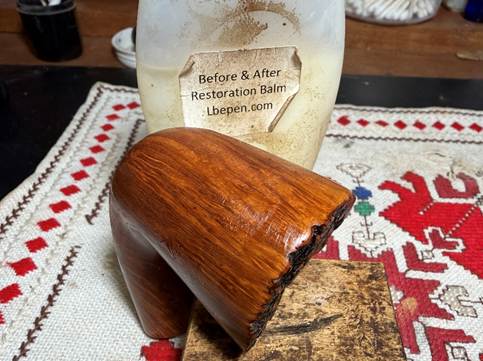
After the elapsed time a dedicated microfiber cloth is used to remove excess Balm and to raise the shine. I’m never disappointed with applying the Restoration Balm to pipes.
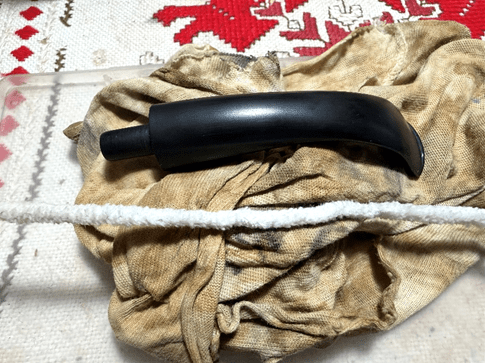
The stem has been soaking in the Pipe Stem Oxidation Remover. It is fished out and using a cloth the surface is vigorously rubbed to remove the raised oxidation. The fluid was also cleared from the airway with a pipe cleaner moistened with isopropyl 99% alcohol. The soak did a great job.
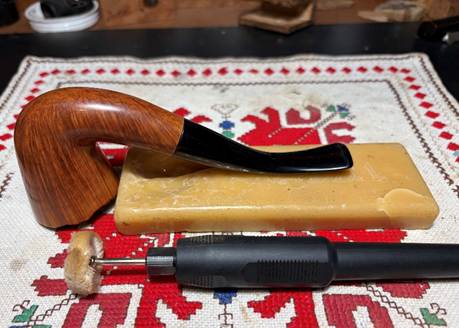
Before continuing with the sanding of the stem, I will address the bend of the stem. After rejoining the stem and stummel, I get another look at the profile of the Freehand. To me the stem is overclocked and the bend needs to be lessened. The sketch below shows the plane of the plateau. The stem should be on a parallel with this horizontal plane but it is several degrees off. The goal is to lessen the bend so that it culminates parallel with the rim plane.
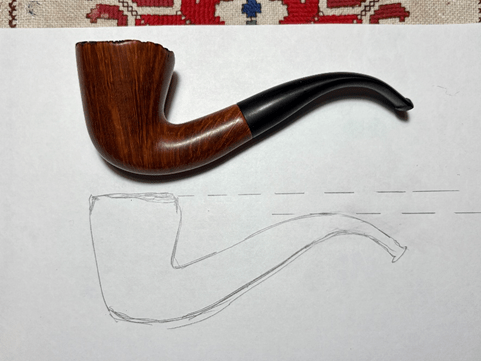
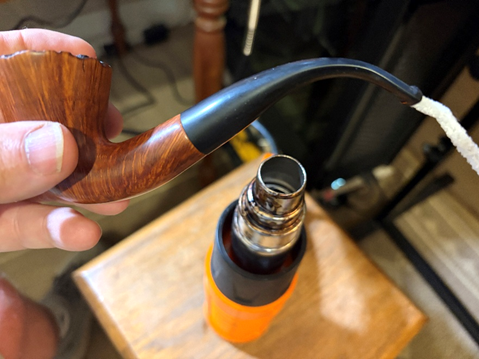
A pipe cleaner is inserted into the stem to act as a handle and to keep the airway and slot open. The hot air gun heats the vulcanite at the point of the bend. The natural movement of the stem as the vulcanite heats and becomes supple is to widen. I don’t need to manual widen the bend – it did it on its own. When the bend was right, the pipe was taken quickly to the utility sink where cool tap water cooled the vulcanite to hold the bend in place.
After heating, the pipe is placed on the template to see how we did. I like this orientation much better with the bend ending parallel to the plateau.
With the bend corrected, work continues with the stem. The bit has almost no chatter and will sand out nicely.
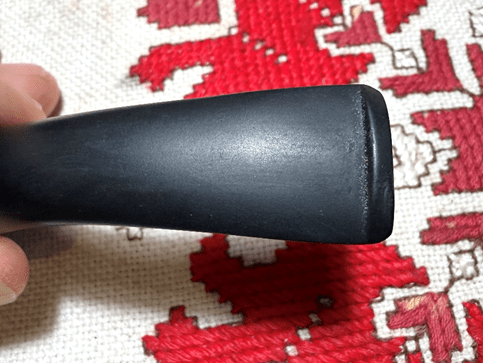
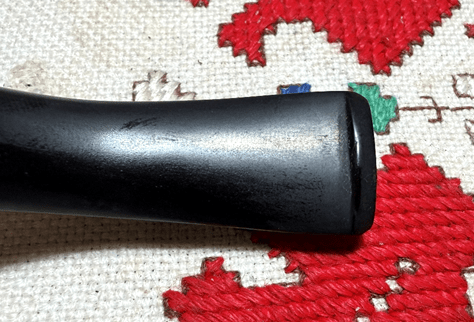
Since the stem is in relatively good condition, the coarser 220 grit paper is bypassed and 320 grit paper is used to sand the entire stem removing any remaining oxidation and small nicks and scratches. A shoulder guard is used to sand against so that the stem facing is not rounded.
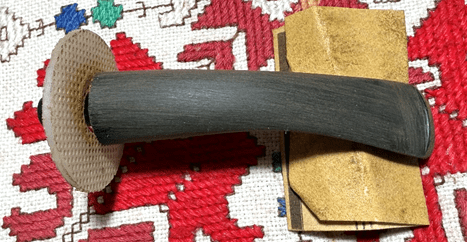
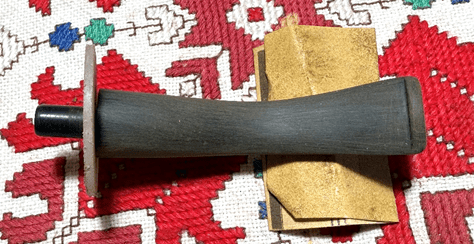
Following the 320 paper, the stem is wet sanded with 600 grit paper then 0000 grade steel wool is applied.
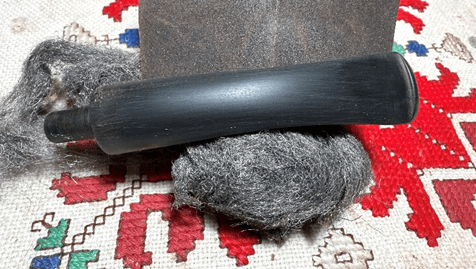
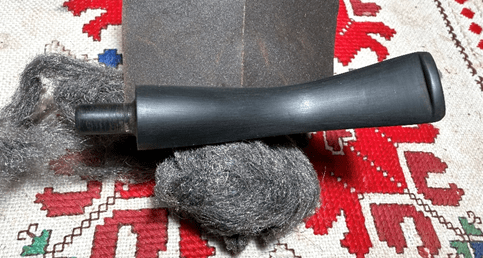
The sanding continues by applying the full regimen of 9 micromesh pads to the stem. Between each pad, a light application of Obsidian Oil is applied to the vulcanite to condition the stem and to guard against oxidation. The first set of pads are grades 1500, 1800 and 2400.
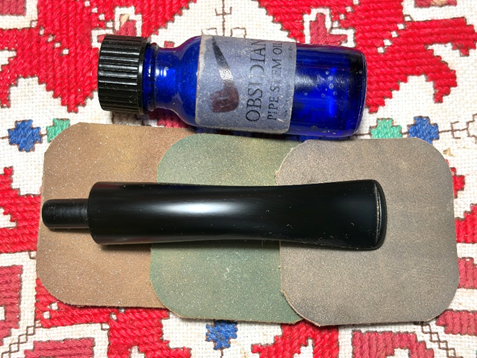
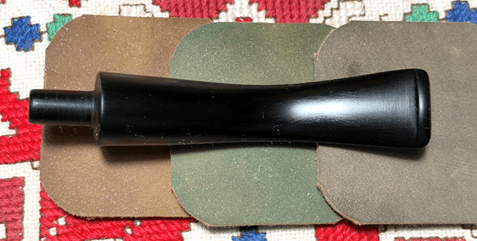
The second set are grades 3200, 3600 and 4000.
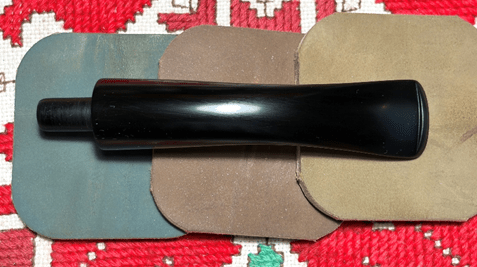
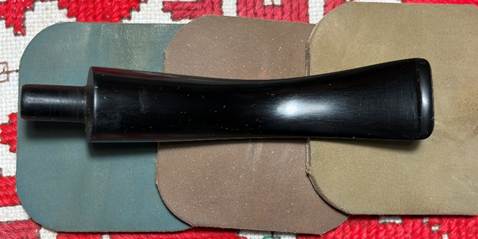
The final set are pads 6000, 8000, and 12000. The glossy sheen of the vulcanite has come out nicely.
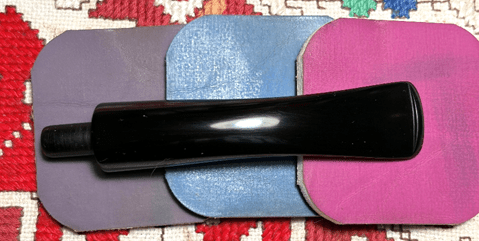
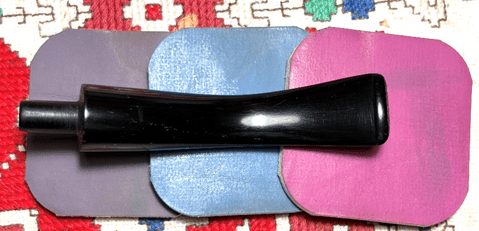
Now we begin the home stretch with stem and stummel reunited. With a dedicated cotton cloth buffing wheel mounted on the rotary tool with the speed at about 40% full power, Blue Diamond compound, a very fine abrasive, is applied to stem and stummel. The compound is also applied to the Steward’s Peek but not to the plateau. The rough surface would just get fouled with the compound and it would be a bear to clean.
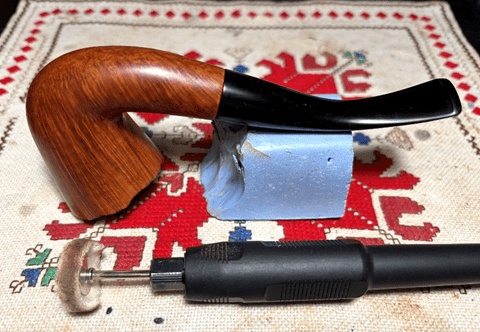
Applying the compound produces a lot of dust. The dust is wipe off with a felt cloth to clean the surface and preparing it for the wax.
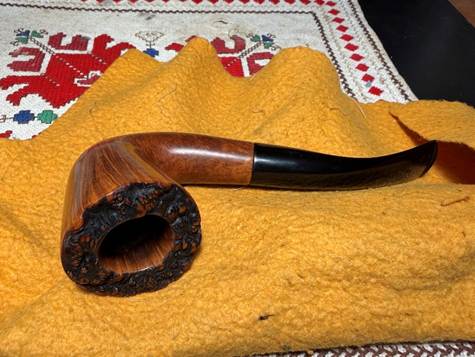
Next, another dedicated wheel is mounted at the same speed, and carnauba wax is applied to the entire pipe, including the plateau. The pipe is then given a rigorous hand buffing with a microfiber cloth to remove excess wax and to raise the shine.
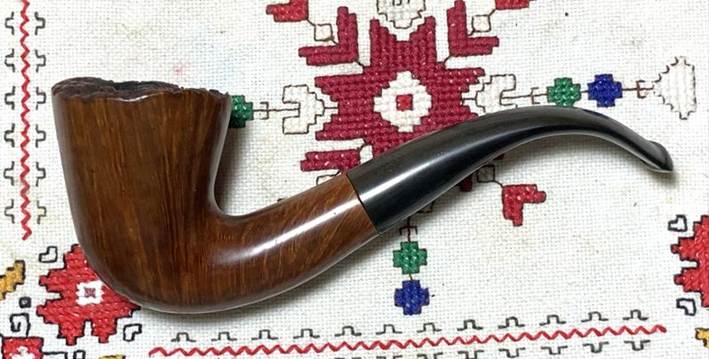
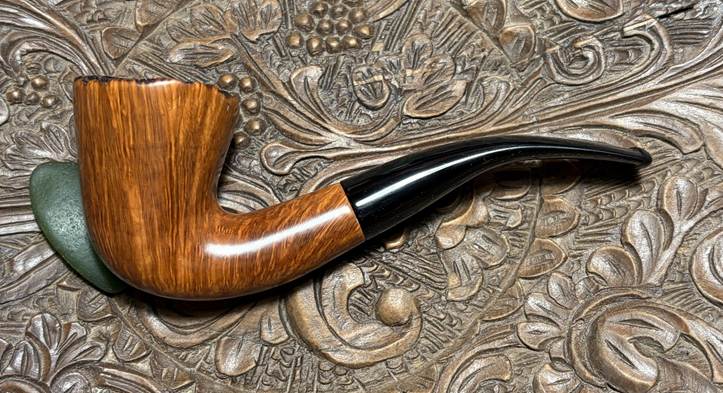
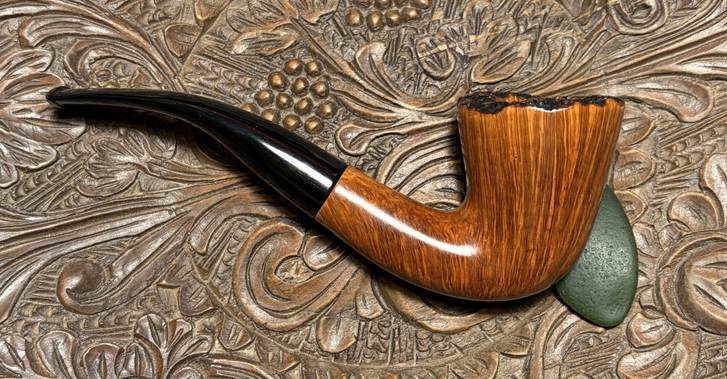
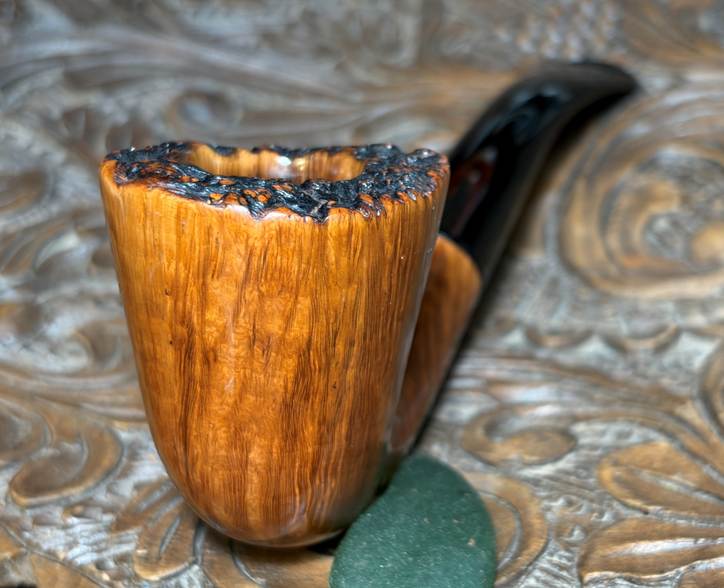
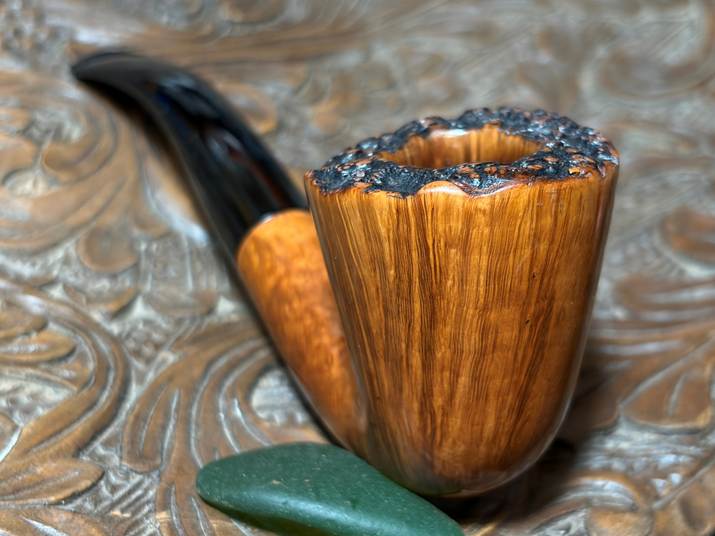
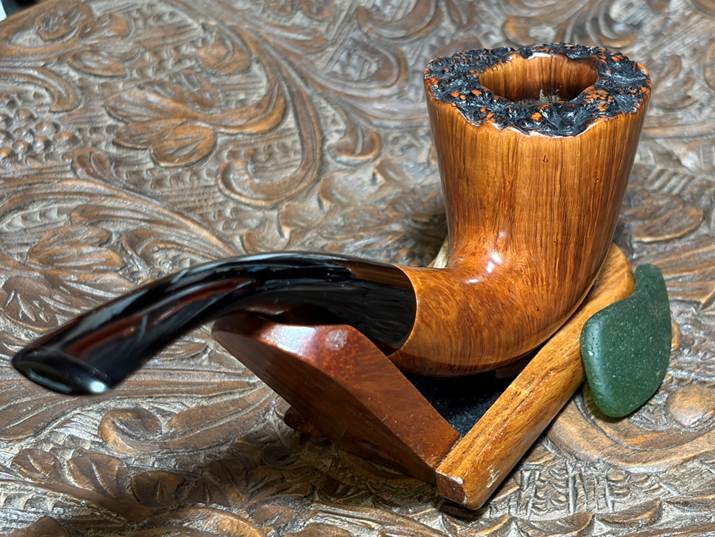
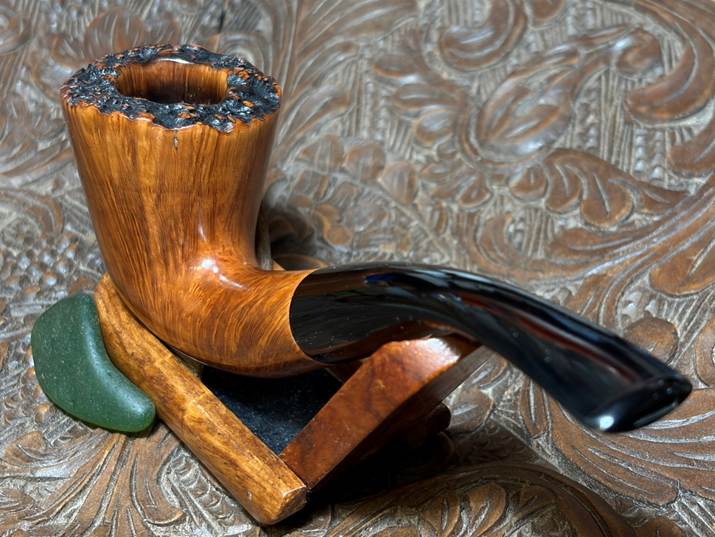
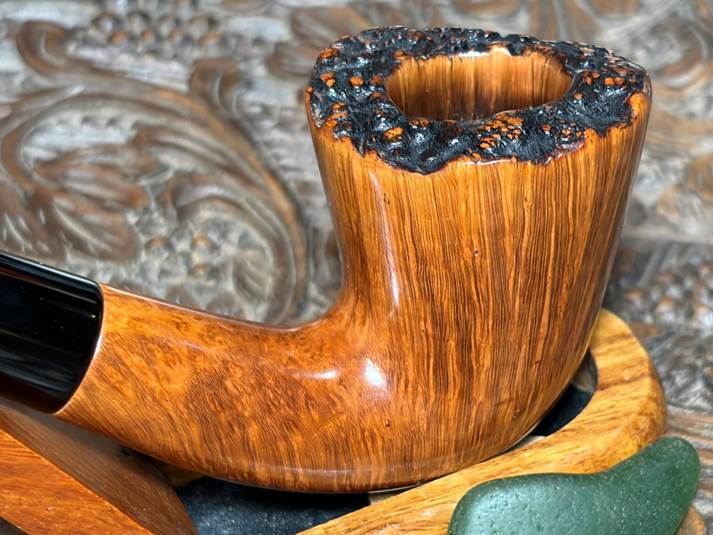
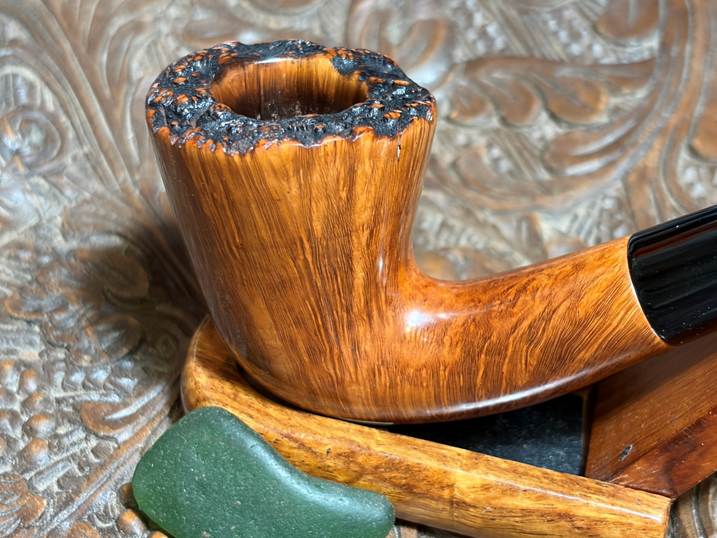
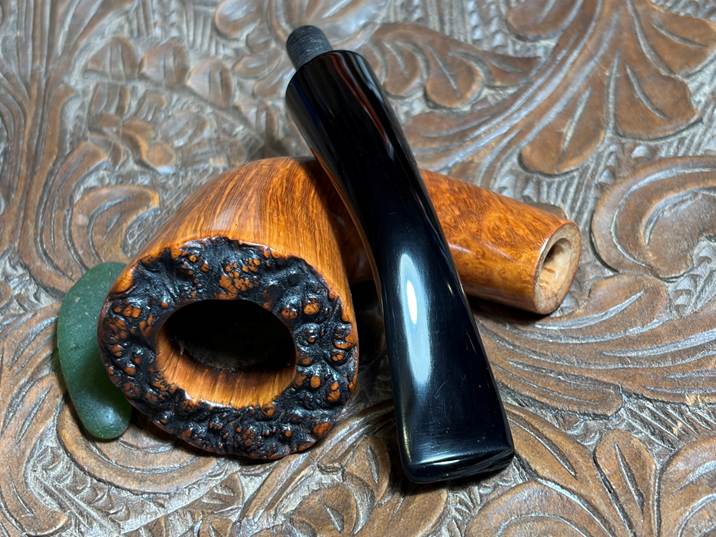
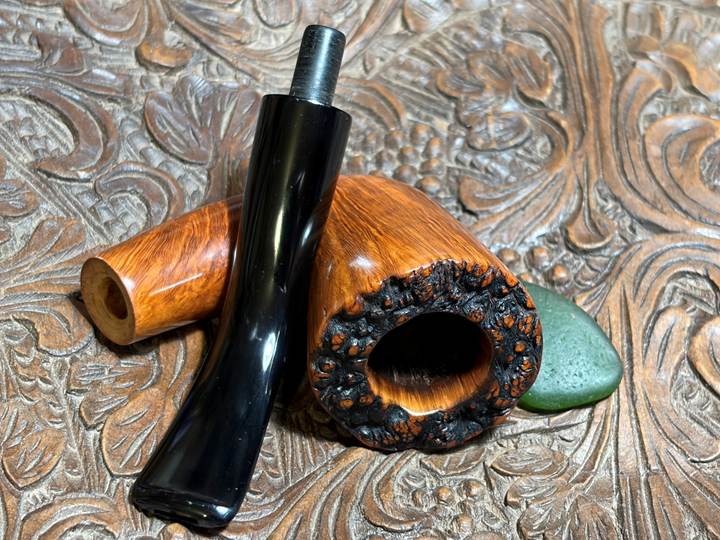
My, oh my! The vertical grain on this Unbranded Freehand is spectacular. The lack of branding does not deter from the desirability of this pipe. The rough plateau adds a rustic vibe which is nicely complemented by the grain revealed inside the upper chamber with the creation of the Steward’s Peek. The dimensions of this Freehand are Length: 5 7/8 inches, Height: 2 1/8 inches, Plateau width: 1 5/8 inches, Chamber width: 11/16 inches, Chamber depth: 1 11/16 inches. This is the first of Pete’s commissions and he has the first opportunity to claim him from the Pipe Store. The proceeds of all pipes help to support the Daughters of Bulgaria, now called Spring of Hope. Thanks for joining me!


Pingback: New Life for an Unbranded Bruyere Garantie Horn Stem Bulldog from Bulgaria – The Pipe Steward